Enterprise Product and UX Architecture
A consistent desktop web system organizes a broad operational scope through clear hierarchy, shared navigation, search, and reusable interaction patterns.
 +971 50 774 5600
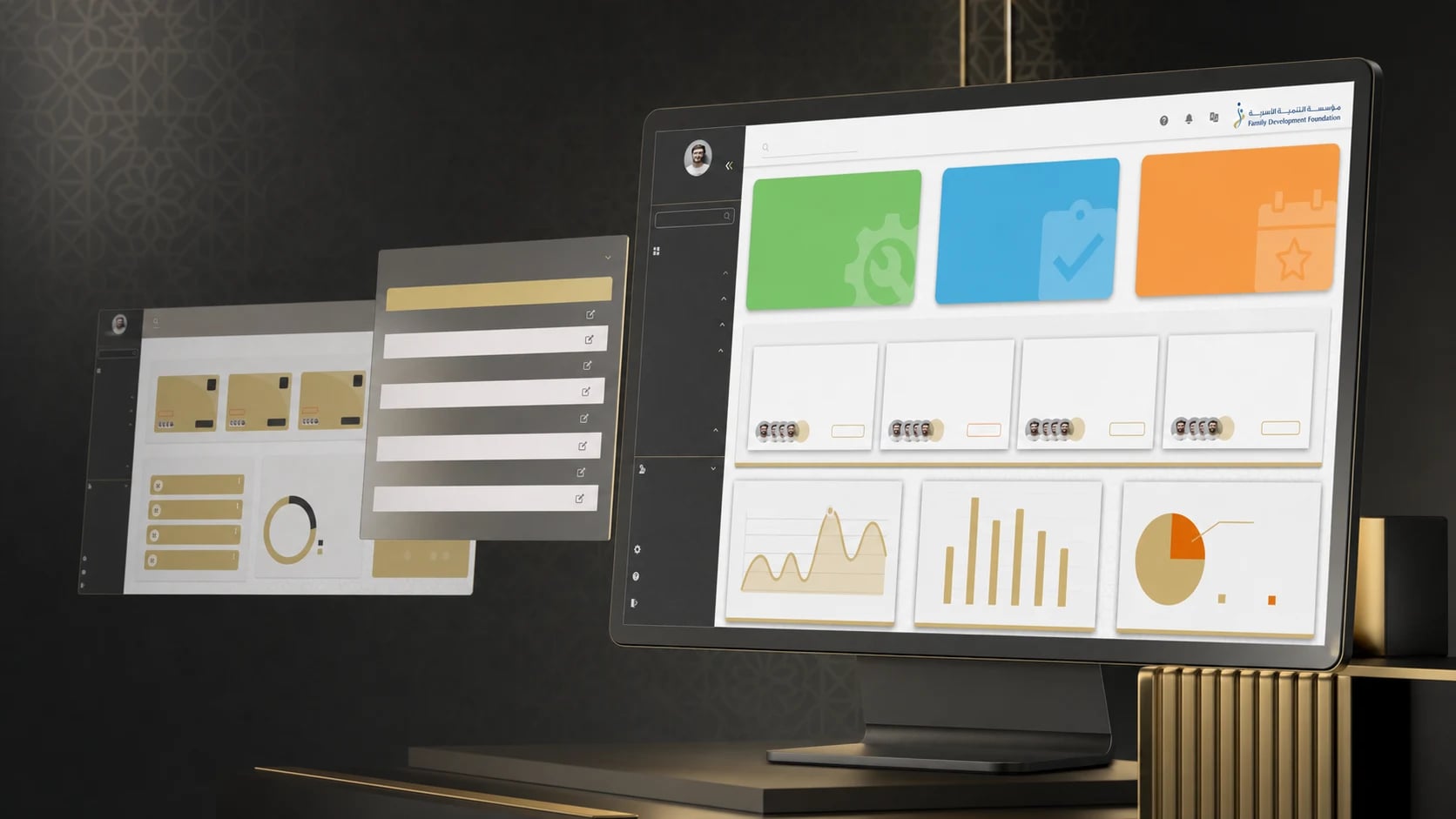
MMC Global designed a unified enterprise operations experience for the Family Development Foundation, bringing role-based dashboards, task and meeting management, correspondence, committees, workflows, and reporting into one coherent platform for day-to-day coordination and leadership visibility.
Platform
Enterprise Web
Core Functions
Tasks · Meetings
Connected Work
Correspondence · Committees
Experience
Role-Based Dashboards
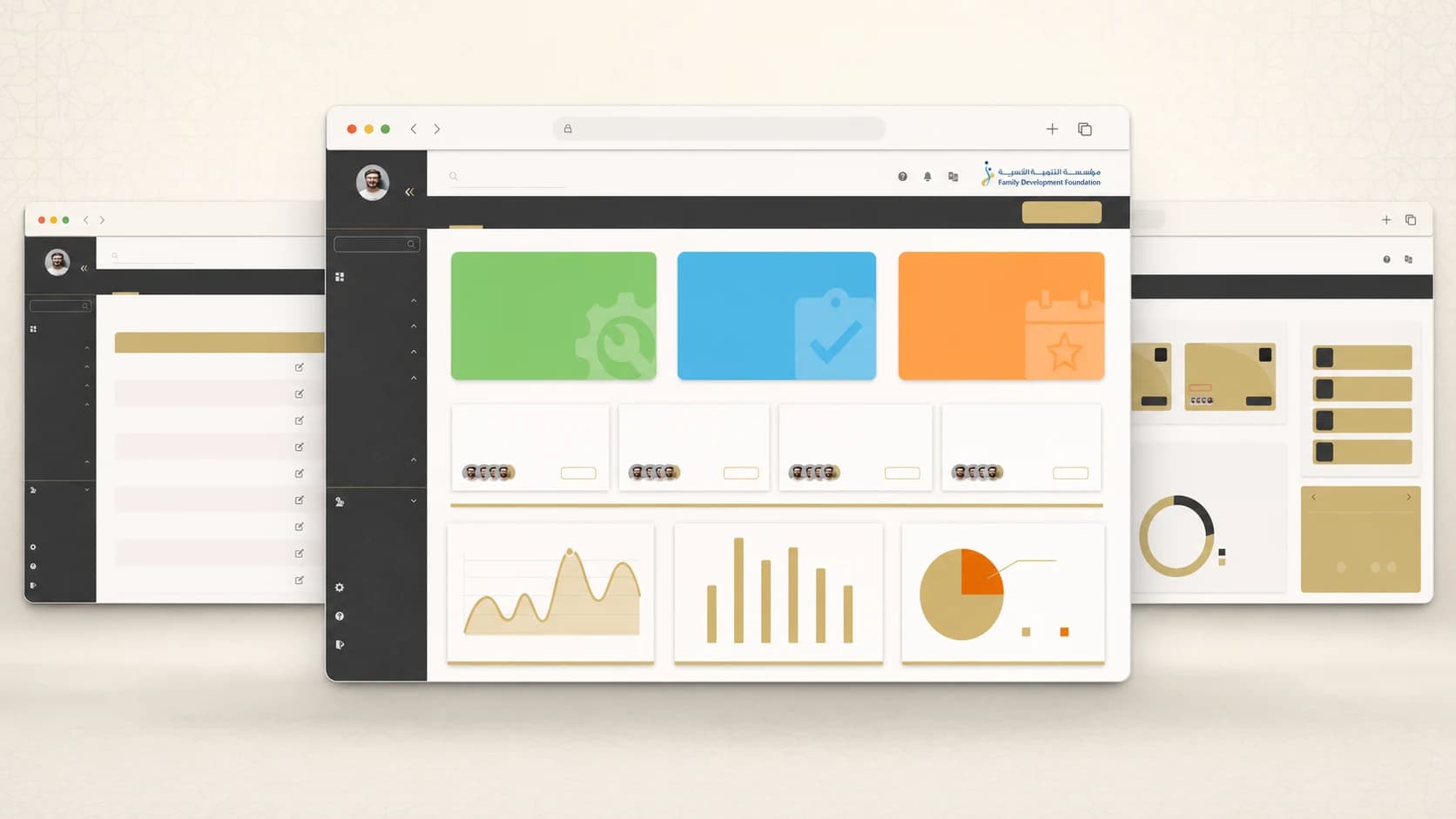
The FDF product flow connects the operational journeys that teams use every day. A shared navigation model gives users access to dashboards, divisions, departments, e-services, task management, meeting management, committee management, correspondence, service catalogues, and reports. Role-appropriate views then surface active work, upcoming events, workload progress, calendars, and administration controls without forcing users to move between disconnected tools.
FDF's operational work spans departments, services, tasks, meetings, committees, correspondence, and reporting. When those activities live in separate processes, teams have to reconcile ownership, status, deadlines, and decisions manually.
The product needed to support both focused daily work and broader organizational oversight while keeping a complex information architecture understandable for different roles.
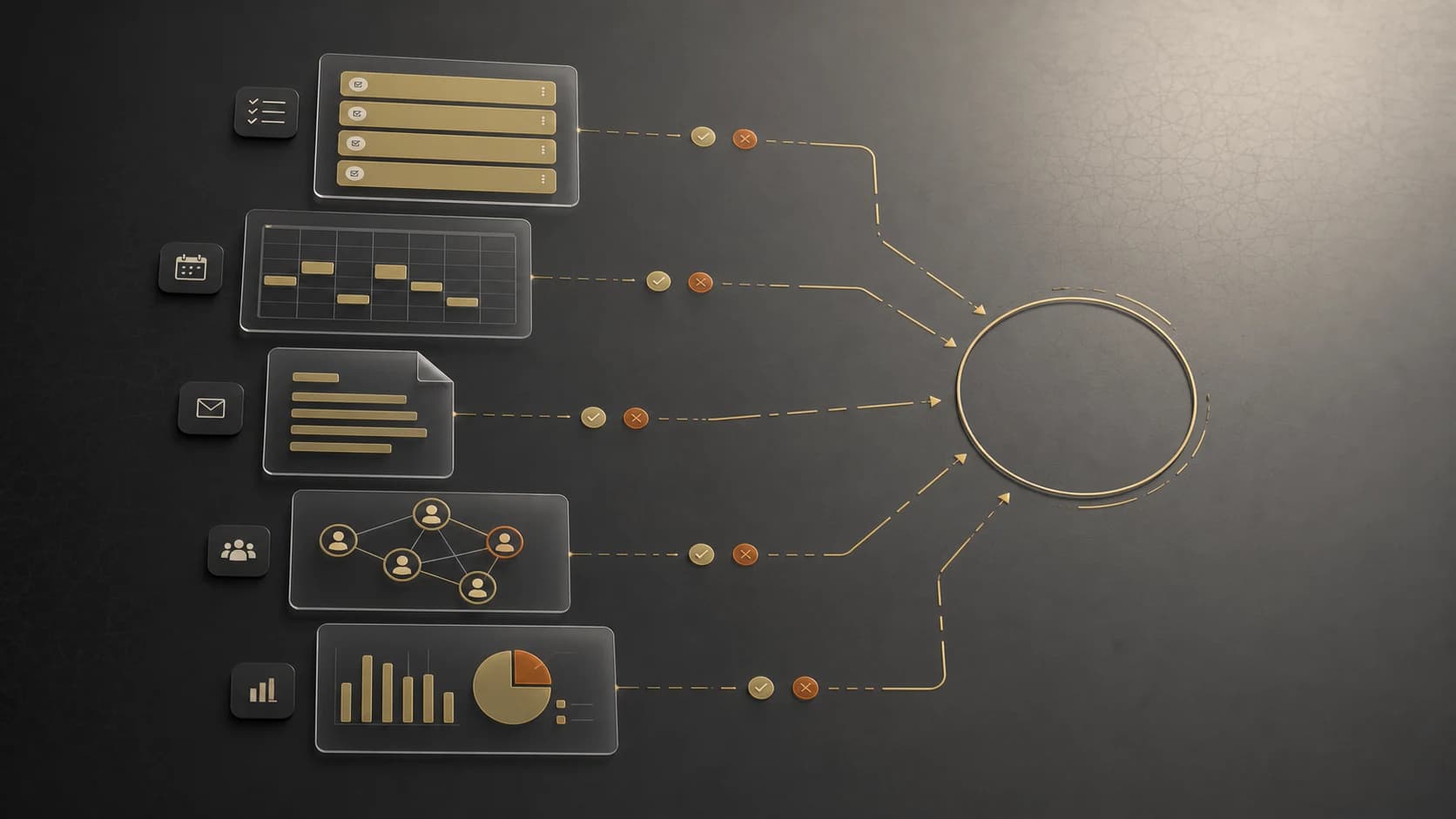
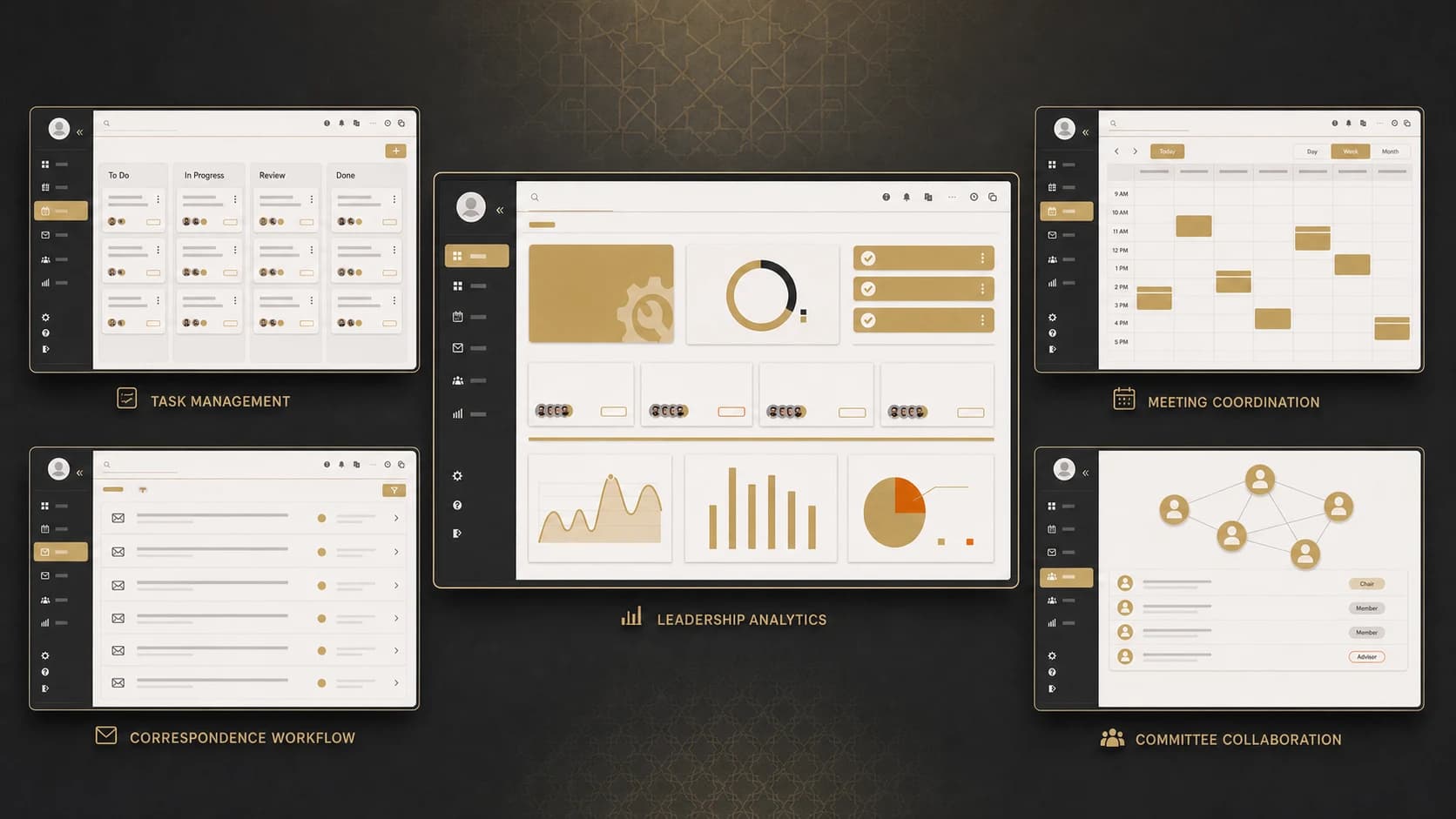
The experience brings connected operational capabilities into one structured product system, from everyday team coordination to administrative control and leadership reporting.
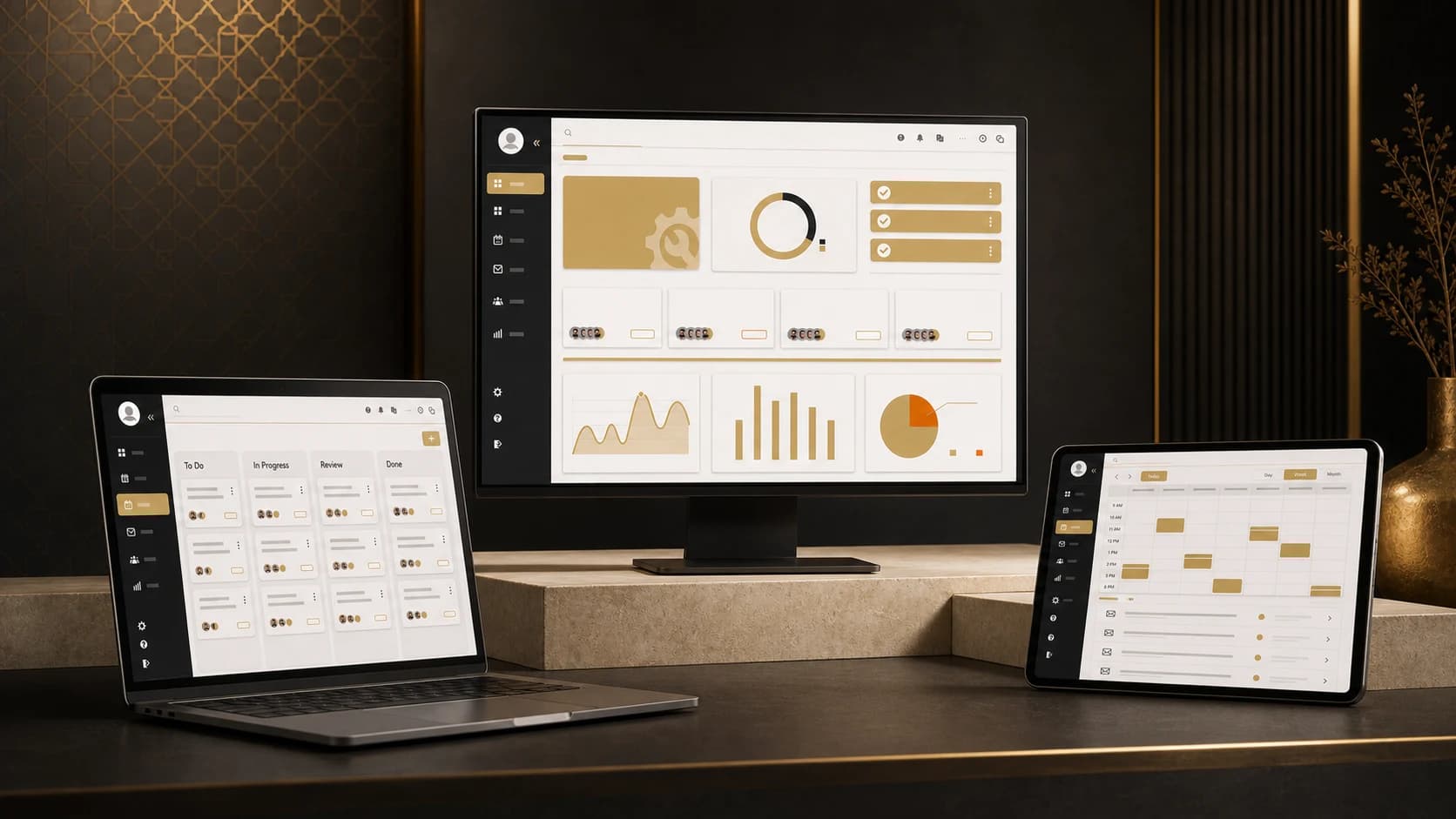
A consistent desktop web system organizes a broad operational scope through clear hierarchy, shared navigation, search, and reusable interaction patterns.
Tailored dashboard views surface active tasks, events, team participation, workload indicators, meeting progress, calendars, and reporting context.
Teams can create and update tasks, assign members, define objectives, review lists, and manage progress through structured task and Kanban views.
Meeting and committee workspaces support scheduling, participation, recurring operational views, and clearer coordination around shared responsibilities.
Guided correspondence flows, form design, workflow design, and administrative controls create a consistent route for structured organizational processes.
Reports, service catalogues, divisions, departments, settings, and support functions give administrators a central place to govern the wider platform.
Always busy and want to book an exact time to call?