
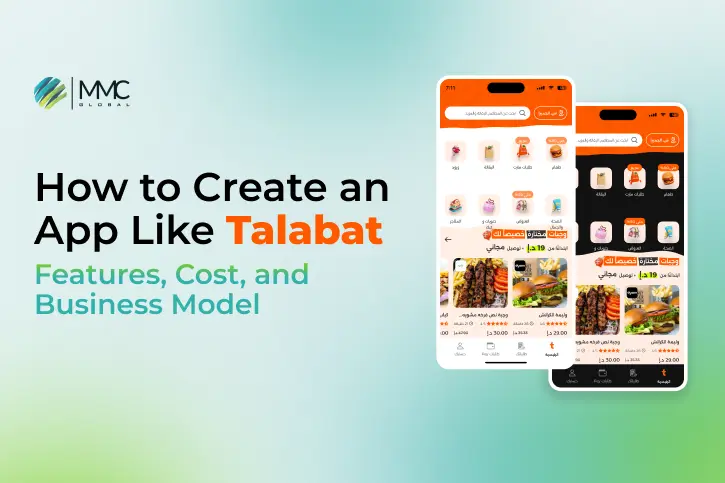
Ever wonder how a food delivery app like Talabat really works behind the scenes?
With just one tap, we can get our favorite food, groceries, or pharmacy items delivered straight to our doorstep in minutes. But while it feels easy for customers, there’s a lot of smart planning and technology making it happen.
Behind this convenience is a powerful business model, an innovative mobile app, and a smart strategy that keeps everything running smoothly.
If you want to develop a food delivery app like Talabat, our mobile app development company in Dubai offers strong, scalable solutions to help you succeed.
Since its launch in 2004, Talabat has tackled the challenges of the competitive MENA market, becoming one of the top food delivery services in the region. Today, it serves more than 6 million active users, works with 65,000+ partners, and has 119,000+ riders delivering orders across several countries connecting customers with restaurants, grocery stores, and pharmacies.
In this article, we’ll explain how the Talabat business model works and why its mobile app is so popular.
Talabat Stats: How the App is Growing and Winning in the Market
The online food delivery market is booming, with global revenue expected to grow at a 13.4% CAGR and hit US$ 90.3 billion by 2030 a huge leap from US$ 3.7 billion in 2023.
And the growth isn’t slowing down anytime soon.
For foodtech startups in the GCC or investors interested in creating food delivery apps like Talabat, now is a golden opportunity.
Talabat is one of the biggest names in the Middle East online food delivery market, with a strong presence in the UAE, Saudi Arabia, Bahrain, Kuwait, and Oman.
Its business model connects three main groups:
- Customers who enjoy quick, easy food ordering with options like real-time order tracking, AI-based recommendations, and multiple cuisine choices.
- Restaurants and vendors who use Talabat as a digital storefront to boost their reach and sales.
- Delivery riders who benefit from flexible earning opportunities.
The Talabat Prime subscription adds even more value with free deliveries and exclusive deals, keeping customers coming back.
Talabat earns through commissions on orders, usually between 15% to 35% depending on vendor agreements, and invests heavily in technology, marketing, and operations to stay ahead.
The key to Talabat’s success is solving real problems for everyone involved:
- Convenience for customers
- Growth opportunities for vendors
- Flexible income for riders
- Multiple revenue streams for the business
Talabat App Performance Snapshot
| Metric | Value |
| Active Users | 12+ Million |
| Customer Locations | UAE, KSA, Kuwait, Bahrain, Oman |
| Parent Company | Delivery Hero |
| Core Services | Food, Grocery, Pharmacy, Courier |
| Loyalty Program | Talabat Prime |
| Top Features | AI recommendations, real-time tracking |
| Sustainability Efforts | Eco-friendly packaging, CSR campaigns |
Why Invest in Talabat Clone App Development for Your Business?
The demand for food delivery apps like Talabat is skyrocketing, and entering the market now could be a game-changing move for your business.
With the right features, customizations, and support from an experienced food delivery app development company, you can launch your app faster and start serving customers immediately.
If you’re a business owner planning to tap into this fast-growing industry, choosing a Talabat clone app can be one of your smartest investments.
Instead of spending huge amounts of money and time building everything from scratch, you can take advantage of a proven business model that already works.
This approach helps you launch quickly, reduce risks, and maximize revenue potential from your food delivery app.
Here are some key reasons why going for a Talabat clone app makes sense:
Proven and Reliable Business Model
One of the biggest advantages of choosing a Talabat clone app is that you start with a trusted business model instead of building everything from the ground up.
It saves you from months of heavy market research, complex coding, and endless trial-and-error testing.
By following a ready-made blueprint that has already worked in the market, you reduce the risk of trying unproven ideas and boost your chances of success from day one.
Faster App Launch
Creating a food delivery app from scratch can take months or even a full year.
With a Talabat clone app, you get a ready-made core structure that cuts down development time significantly.
This means you can launch your app faster, start onboarding restaurants and customers, and begin generating revenue while your competitors are still planning their first steps.
Cost-Effective Development
For many startups, creating a food delivery app like Talabat from scratch can be very costly.
The total expense can range from $40,000 to $80,000 or more, covering design, backend development, testing, and ongoing maintenance.
A Talabat clone app can cut these costs by almost half thanks to pre-built frameworks.
You still get the freedom to customize features, design, and branding without overspending.
Also read: Explore our complete guide on food delivery app development costs to help you plan your project and get the best value for your investment.
Packed with Features for Every User
A Talabat clone app comes with all the essential features to make the experience seamless for every type of user customers, restaurants, delivery riders, and admins.
With this feature-rich setup, your food delivery app can become the go-to choice for users while also making your business operations more efficient.
Here’s a look at some of the key features you can expect in an app like this:
Multiple Ways to Earn Revenue
Talabat clone apps are designed to grow with your business starting small and expanding to more restaurants, cities, and delivery riders without rebuilding the system.
They offer several ways to maximize earnings from your food delivery app, including delivery charges, commissions from restaurants, sponsored listings, subscription plans, and in-app advertising.
This variety of income streams helps keep your revenue stable, so you’re not depending on just one source for profitability.
Want to make extra money in the UAE without any upfront investment? Explore our guide on money earning app development in UAE and discover how these apps work to boost your income.
Simplified Technical Setup
For business owners without a tech background, creating a food delivery app like Talabat can seem complicated and intimidating.
A Talabat clone app simplifies this by providing a ready-made, easy-to-use structure.
A trusted app development company in Saudi Arabia for example, MMC Global can also handle hosting and ongoing technical support.
This way, you don’t need to worry about managing the backend. You can focus entirely on growing your brand and running your daily operations.
How to Create a Food Delivery App Like Talabat
The key to a successful food delivery app is creating a Talabat-like mobile experience that users trust and enjoy.
Whether you’re a startup, an entrepreneur, or a restaurant chain, you can develop a food delivery app like Talabat with the right plan and support.
With a solid idea, the essential features, and some expert guidance, you can position yourself to become the next big name in the Middle East online food delivery market.
1. Decide Your Business Model
Before creating a food delivery app like Talabat, it’s important to understand how Talabat’s business model works.
Instead of jumping straight into design or coding, think about which business model fits your goals:
- Aggregator model: Like Talabat, it connects multiple restaurants with customers.
- Cloud kitchen model: Delivers food prepared in your own central kitchens.
- Logistics support model: Provides delivery services for other restaurants.
Choosing the right business model is crucial because it influences how your app works, how it generates revenue, and even its design.
2. Select the Core Features for Your App
A successful food delivery app is more than just an online menu.
When creating a Talabat-style app, think of it as a complete ecosystem rather than a single app.
To make sure everything runs smoothly from placing an order to delivery you need four main parts:
- Customer App – for ordering and tracking food easily.
- Restaurant Panel – for managing orders, menus, and promotions.
- Delivery Agent App – for accepting orders and handling deliveries efficiently.
- Admin Dashboard – for overseeing operations, analytics, and app management.
Every user in the system should have a simple, seamless experience that makes their job or interaction easier.
Also read: Looking to explore more ride-hailing options in Dubai? Check out our roundup of top taxi apps in Dubai.
3. Choose the Right Tech Stack
The tech stack is the backbone of your food delivery app like Talabat everything depends on it.
To make sure your app is fast, secure, and easy to manage, it’s important to select the right tools.
Here’s an example of a technology stack for creating a Talabat-style app:
| Component | Technologies |
| Frontend (App) | Flutter, React Native, Swift, Kotlin |
| Backend | Node.js, Laravel, Django |
| Database | PostgreSQL, MongoDB, MySQL |
| Real-time Tracking | Google Maps API, Mapbox, Firebase |
| Payments | Stripe, PayPal, Telr, Apple Pay |
| Notifications | Firebase Cloud Messaging, OneSignal |
| Admin Dashboard | React.js, Vue.js |
| Hosting | AWS, Google Cloud, Azure |
4. Design a Smooth and Engaging UI/UX
Even if your food delivery app like Talabat has a powerful backend, a confusing or slow interface will drive users away.
That’s why UI/UX is so important. An app that feels fast, simple, and enjoyable to use keeps customers engaged.
Keep the interface clean with clear buttons, attractive images, and easy navigation.
If you’re targeting markets like the UAE or Kuwait, make sure to include multilingual support, especially Arabic and English.
Also, ensure the ordering process is simple and seamless from browsing menus to completing payments so users have a hassle-free experience.
5. Start Development with an MVP
Instead of creating a full-featured food delivery app like Talabat right away, begin with a Minimum Viable Product (MVP).
An MVP is a simplified version of your app with just the essential features needed to test your idea in the real world.
Research shows that many successful startups around 67% according to Leaware credit their growth to launching an MVP first.
This approach helps you save money, launch faster, and understand what your users truly want. With real user feedback, you can improve and refine your app step by step.
MVPs are a smart way to explore consumer behavior in the food delivery market without investing heavily upfront.
You can either hire an in-house team if resources allow, or partner with an experienced custom app development company, such as MMC Global.
With the right tools, expertise, and support, they can handle everything from design to deployment efficiently.
6. Ensure Compliance and Seamless Integration
Many new founders overlook an important point local laws and user expectations.
If you’re creating a food delivery app like Talabat in the UAE or the GCC, it’s essential to follow all regional regulations to avoid problems later.
Your app should comply with data privacy rules, tax regulations (like VAT), and payment laws.
Also, think about local logistics:
- Can delivery riders easily locate addresses?
- Should deliveries be limited to specific areas or allow scheduled times?
Paying attention to these details helps your app stand out with region-specific features and better user satisfaction.
Additionally, make sure your app can handle currency changes, multiple languages, and different commission structures, so it’s flexible enough to grow with your business.
7. Launch, Promote, and Grow
Once your food delivery app like Talabat is ready, it’s time to get it into users’ hands.
Start by offering promo codes, referral bonuses, or free delivery to attract your first customers.
Use social media platforms like Instagram, TikTok, and Google Ads to spread the word.
Partnering with local influencers or food bloggers is also a great way to create buzz and get noticed in your target market.
Don’t stop at launch keep an eye on ordering trends in cities like Dubai and observe how your users interact with your app.
Update your app based on user feedback, fix bugs quickly, and continue adding useful features.
The most successful apps, including Talabat, didn’t become popular overnight it took years of consistent effort and improvement to reach the top.
Challenges of Creating an App Like Talabat
Food delivery apps like Talabat have completely changed the way we order food.
Instead of waiting hours for a meal, you can just open your app and have your favorite dishes delivered in minutes.
Behind this convenience are countless hours of effort from custom app developers, delivery riders, and business owners.
Although it looks simple on the surface, there are many challenges for anyone trying to replicate Talabat’s business model.
Let’s take a closer look at the biggest hurdles in developing an app like Talabat and how our mobile app development company can help you overcome them.
Handling a Multi-User Platform
Most apps usually focus on a single type of user, but apps like Talabat serve multiple groups at once:
- Customers placing orders
- Restaurants preparing the food
- Delivery drivers delivering meals
- Admins managing the platform
Each group expects a smooth and enjoyable experience, similar to what they get from Talabat’s mobile app.
This means you need to design different interfaces and features for each user type while keeping everything balanced.
To manage this complexity, it’s a good idea to use a modular architecture for your food delivery app like Talabat. This approach makes it easier to organize features, ensure reliability, and give every user a great experience.
Perfect Real-Time Tracking Without Errors
Live order tracking is one of the most exciting features in the Talabat business model app.
Customers love knowing exactly where their food is and when it will arrive.
Studies show that about 90% of users want the ability to track their orders in real time, highlighting the importance of transparency in food delivery.
For smooth real-time tracking, your app must synchronize orders, restaurant updates, and delivery drivers seamlessly.
Using technologies like WebSockets for instant updates and geotracking APIs such as Google Maps or Mapbox helps ensure precise location tracking.
You also need a robust backend system that can handle the constant flow of real-time data without slowing down.
Efficient Logistics and Route Management
The Talabat business model depends heavily on delivery drivers. Factors like traffic, weather, and unexpected delays can affect timely deliveries.
It’s important to make sure drivers follow the shortest routes, avoid congestion, and deliver orders on time.
Managing a fleet of drivers and coordinating deliveries can be challenging and complex.
To handle this, developers often use AI-based route optimization to calculate the best paths based on traffic, weather, and order priority.
This approach makes deliveries faster and more reliable, improving the experience for both customers and drivers.
APIs like the Google Distance Matrix are also used to optimize routes in real time and ensure smooth operations.
Also read: Interested in creating an app like CAFU? Check out our complete guide covering costs, features, and step-by-step development.
Scalability for High Traffic
Food delivery apps often face sudden spikes in traffic, especially during meal times or special promotions.
Studies show that around 70% of users uninstall food delivery apps after just one use, often because the app performs poorly during high-traffic periods.
If your app cannot handle these surges, users will have a bad experience and may switch to competitors.
To prevent this, host your app on cloud platforms like AWS or Azure with auto-scaling to manage sudden traffic spikes.
Using a microservices architecture can also help, as it allows different parts of your app to scale independently without affecting the whole system.
Customer Support and Handling Complaints
Sometimes things don’t go as planned with a food delivery app like Talabat.
Orders can be delayed, the wrong items may be delivered, or there may be payment issues.
How you handle these problems can make a big difference for your business.
Set up a live chat support system or an AI chatbot to answer common questions instantly.
For more complicated issues, have a clear system for managing customer complaints and disputes, so users feel valued and heard.
Final Thoughts
The food delivery app market in the UAE is growing fast, led by major players like Talabat, Deliveroo, and Zomato.
To compete, your app needs to be fast, reliable, feature-rich, and built using the latest technology.
Whether it’s a busy Friday night or a big promotional event, your food delivery app must handle peak demand smoothly.
At MMC Global, we specialize in building high-performance, user-friendly apps that help startups and businesses succeed.
We’ve already launched over 200 successful apps in Dubai and across the UAE and we’re ready to help you bring your app idea to life.
Commonly Asked Questions
Why the Talabat Business Model Succeeds?
The Talabat business model is popular across the UAE because it prioritizes convenience.
Customers enjoy a wide selection of restaurants and quick delivery. Talabat also leverages data effectively to build strong local partnerships and provide a user-friendly app, making its business model tough to beat.
How to Create a Food Delivery App Like Talabat?
Creating a food delivery app like Talabat requires a clear strategy and a strong technology base.
Following the Talabat business model, your app should include essential features such as:
- Live order tracking
- Restaurant management dashboards
- Delivery rider apps
- Secure payment options
- Simple and intuitive design
With these features, your app can deliver a smooth and reliable experience for customers, restaurants, and delivery drivers alike.
How Much Commission Does Talabat Charge?
The Talabat business model usually charges a commission of 15% to 35% on each order.
The exact percentage depends on factors like your agreement with Talabat, the number of orders you receive, and whether you use their delivery fleet or manage deliveries yourself.
How Much Does it Cost to Create an App Like Talabat?
Creating a Talabat clone app can cost anywhere between $20,000 and $100,000+.
The final price depends on factors such as the features you want, the number of user roles, the platforms you target (iOS, Android, web), and any additional tools like loyalty programs or AI features.
How to List Your Business on Talabat?
To join the Talabat business platform, visit their vendor sign-up page, fill in your business details, and submit the form.
A Talabat representative will guide you through the setup process, including menu uploads, delivery options, and document verification.