
“How much is it going to cost?” A common question asked by countless founders at the time of outsourcing software to offshore developers. The answer is not as simple as just stating one fixed hourly rate.
The offshore software development cost ranges from a few thousand dollars to create a minimum viable product to a much larger investment for enterprise-grade complex platforms. All this depends on what you intend to build, who you are planning to hand over your development to, and how the development process is managed.
In 2026, more than half of the business owners in the USA are partnering with reliable offshore software development teams. With this rise, it has become important to know the clear breakdown of factors that contribute to the overall price tag. A mobile application and a business automation system all require different resources, timelines, and expertise.
Well, let’s get to the real talk. We are writing this blog to guide you clearly on offshore developer hourly rates and what elements directly impact them.
Offshore Software Development Cost at a Glance
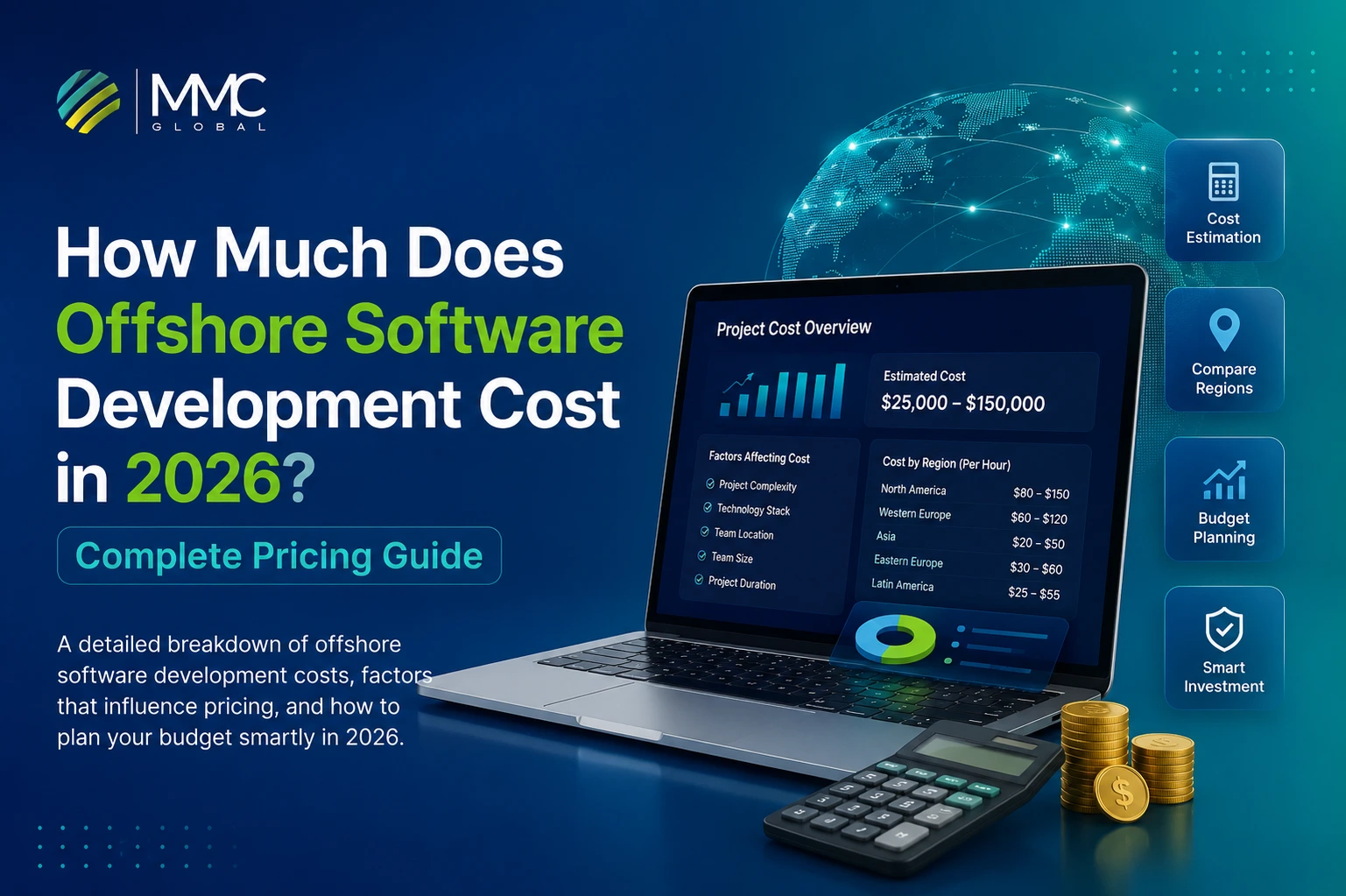
Before picking an offshore development partner, you must get a clear idea of the expected investment. The offshore software development cost usually falls between $25 and $100+ per hour. It all depends on the location of the developers and the level of expertise your application requires.
Offshore rates are not the same across every region. Countries with huge talent pools often provide competitive prices, whereas other regions may have increased prices because of specialized skills or working in continuous collaboration with Western markets.
Let’s understand these concepts of regional differences to help you set realistic expectations.
Average Offshore Software Development Cost in 2026
The region of your preferred offshore software development team plays a key role in identifying the complete project budget.
| Region | Average Hourly Rate |
| South Asia | $20 to $50 |
| Eastern Europe | $40 to $70 |
| Latin America | $35 to $60 |
| Middle East | $35 to $65 |
| Africa | $20 to $45 |
These numbers are a general ballpark of offshore software development rates. The exact pricing can change as per the skills and project requirements.
Offshore Software Development Cost Snapshot by Project Type
Although location decides the hourly rate, the type of software you want to create also determines the amount of development work that will be involved. An MVP with basic features needs a different investment compared to a large business platform with personalization. The table below shows the estimated ranges of each project type:
| Project Type | Estimated Cost Range |
| MVP Development | $20,000 to $80,000 |
| Mobile App Development | $60,000 to $300,000 |
| Website Development | $5,000 to $50,000+ |
| SaaS Platform Development | $150,000 to $600,000 |
| Enterprise Software Development | $300,000 to $1,200,000+ |
| Custom Software Development | $50,000 to $350,000+ |
To optimize the mobile app development cost, we prefer to go with cross-platform development frameworks like React Native and Flutter to smoothly create experiences for both iOS and Android devices.
Note: The cost to develop a website also differs greatly on how you prefer to create it. Planning to go with custom frameworks or headless CMS greatly affects the budget.
What Determines Offshore Software Development Cost?

Why do 2 companies quote entirely different prices if they are building the same product? Simple, the answer lies in the project itself. The offshore software development cost depends on multiple pricing variables. Each one of them affects the final cost in a different way.
Knowing these factors helps in comparing proposals, setting a realistic budget, and avoiding unexpected offshore software development cost surprises in the future.
Offshore Developers Location
One of the core factors behind the offshore software development cost is the location. Development rates differ from one country to another as each region has its own labor market, operating prices, and technical specialists.
For instance, when you hire offshore developers from South Asia, they often offer lower rates than Eastern European or Latin American teams. This difference alone does not make one region better than the rest. The right choice still depends on your collaboration goals.
Project Scope and Complexity
The more work your software requires, the higher the investment. A simple website is easier to develop and requires far less effort than a SaaS tool with multiple user accounts, payment gateways, API development and integrations, custom workflows, and role-based access systems. Each said features adds more development and quality assurance work.
Transparent project requirements help in creating an accurate pricing list. When the scope keeps changing frequently, the overall development efforts also increase, impacting costs by 10 to 25%.
Team Size and Developer Seniority
Your project development requires the right mix of skills. A simple MVP only needs 2 or 3 specialists; meanwhile, larger products often involve different teams of designers, front-end and back-end engineers, QA specialists, project managers, and DevOps professionals.
Moreover, experience also influences the cost of offshore software development. Senior developers charge more, but they also help overcome complex challenges in less time and make better architectural decisions with reduced technical risks.
Technology Stack and Specialized Skills
There are multiple professionals for different types of technologies used in software. Any project developed over the most commonly used frameworks is easier to staff than those needing AI, blockchain, cloud, cybersecurity, and other niche emerging tools.
Expect increased offshore software development rates if your project requires deployment of next-generation frameworks.
Engagement Model
The way you partner with an offshore development team also affects the complete budget. A skilled offshore software development company offers distinctive pricing models, which go like:
- Fixed Price: Best for software development projects with a clearly defined scope and timeline.
- Time And Materials (T&M): Suitable if requirements change during the development phase.
- Dedicated Development Team: For businesses that need an extended team working solely on their project for the long-time.
- Staff Augmentation: Ideal for incorporating specific skills into the current in-house team without hiring full-time developers.
Development Timeline
The overall deadline also impacts the offshore developer hourly rates to a greater extent than most business owners actually expect.
A realistic timeline lets the team plan resources properly. Urgent deadlines mostly require parallel workstreams to meet delivery dates, often ending up in chaos.
Urgent delivery can indeed shorten the launch time, but it also increases the overall offshore development rates, since more resources are needed within a shorter period.
Communication And Collaboration Requirements
Custom software development involves more than writing code. Communication and coordination remain the major part of the entire process from the beginning.
Projects that need overlapping working hours, regular workshops, multilingual communication, detailed documentation, or a project manager mostly require more effort from the dedicated development team.
These requirements are part of the initial proposal as they affect the amount of time and resources needed to successfully deliver the project.
Offshore Developer Hourly Rates by Country
The exact location of the developer can create a noticeable difference in your entire budget. For organizations planning offshore outsourcing, understanding regional pricing lets you create a realistic expectation before talking to a vendor.
It was also reported by Deloitte that 67% of businesses are now outsourcing their critical software development project for better results and innovations. This means identifying the costs to adapt this method has become crucial if you are targeting multiple regions.
The average offshore software development cost is determined based on the estimated rates present in different markets. Every region has its own price range as per the local development trends.
Asia
Asia emerges as one of the most established regions for offshore outsourcing, providing a massive range of development services at competitive rates. Whether you are creating a simple digital product or a large custom platform, countries across Asia offer options for different budgets and business needs.
| Country | Average Hourly Rate | Best For | Watch Out For |
| India | $18 to $50 | Enterprise projects and large engineering teams | Vendor quality varies significantly |
| Pakistan | $15 to $42 | Cost-effective custom software development | Smaller talent pool than India |
| Vietnam | $18 to $45 | Agile product development and startups | Limited expertise in some niche technologies |
| Philippines | $18 to $40 | Communication-focused projects and support | Smaller engineering ecosystem |
| China | $20 to $45 | Large-scale digital products and emerging technologies | Higher costs and language barriers for some businesses |
Bottom Line: Asia is a top pick for companies trying to maintain a balance between affordability and access to experienced development talent.
Eastern Europe
Eastern Europe is widely recognized for its skilled engineering teams and strong technical capabilities. Although overall offshore development rates are typically higher, businesses prefer working with Eastern Europe for projects that require deeper technical expertise.
| Country | Average Hourly Rate | Best For | Watch Out For |
| Poland | $30 to $70 | Enterprise software and cloud solutions | Higher hourly rates |
| Ukraine | $25 to $65 | Full-cycle software development | Regional geopolitical risks |
| Romania | $25 to $60 | Fintech and enterprise applications | Smaller talent market |
| Hungary | $30 to $65 | High-quality engineering teams | Higher operating costs |
Bottom Line: Eastern Europe suits businesses that prioritize quality of project development over the lowest cost.
Latin America
It is one of the most popular offshore development destinations for North American businesses that need real-time collaboration. Similar working hours make coordination simple and easier.
| Country | Average Hourly Rate | Best For | Watch Out For |
| Brazil | $25 to $70 | Enterprise applications and product development | Rates are higher than many Asian markets |
| Mexico | $30 to $70 | US-based collaboration and agile teams | Limited availability of senior specialists |
| Argentina | $30 to $70 | SaaS products and web development | Economic fluctuations |
| Colombia | $30 to $65 | Growing startups and digital platforms | Smaller talent pool than Brazil |
Bottom Line: Offshore software development costs in Latin America are a bit higher, but it provides a perfect balance for businesses that look for smooth collaboration.
Middle East
The Middle East is gaining momentum as a preferred destination for offshore software development, supported by large-scale digital transformation initiatives like Saudi Arabia’s Vision 2030. Organizations operating within the GCC are investing in fintech, healthcare, smart cities, and enterprise technologies to stay aligned with the fast-paced market, increasing the demand for skilled offshore developers who understand regional business needs.
| Country | Average Hourly Rate | Best For | Watch Out For |
| Jordan | $25 to $50 | Enterprise software and government projects | Smaller developer community |
| UAE | $45 to $95+ | Digital transformation and enterprise solutions | Premium pricing |
| Qatar | $40 to $80 | Industry-specific software solutions | Limited outsourcing market |
| Saudi Arabia | $40 to $85 | Large enterprise initiatives | Higher operating costs |
| Bahrain | $35 to $70 | Fintech and regulated industries | Smaller talent ecosystem |
Best Suited For: Organizations looking for regional expertise, regional compliance knowledge, and close alignment with GCC business requirements.
Africa
Africa is becoming an attractive offshore software development destination as it is continuously expanding and adapting to advanced technologies.
| Country | Average Hourly Rate | Best For | Watch Out For |
| Egypt | $20 to $35 | Web applications and enterprise software | Smaller senior talent pool |
| Kenya | $20–$40 | Startup products and digital services | Limited niche expertise |
| Nigeria | $25 to $40 | Custom software projects | Infrastructure challenges in some areas |
| South Africa | $25 to $50 | Enterprise software and cloud solutions | Higher rates than other African markets |
Why Africa? It is a practical choice for stakeholders needing competitive offshore rates for software development while gaining access to quickly increasing technology communities.
Which Offshore Destination Offers the Best Value?
Cheapest hourly rate does not make any offshore destination the best. A lower quote can help in reducing the initial offshore software development cost, but the overall value relies on the availability of the team to provide measurable outcomes, maintain quality standards, and support long-term business needs.
When analyzing country-wise pricing, some regions offer competitive offshore developers’ rates with access to broad technical specialties, while others justify an expensive quote through specific expertise and advanced development capabilities.
The right choice depends on finding the right striking balance between investment and expected results. A successful offshore software development partnership is built around value.
A Quick Note: From startups to Fortune 500 firms, businesses around the globe received ultimate value by partnering with our top-rated software developers in San Francisco.
Hidden Costs Businesses Often Overlook
There is another side of the offshore software development cost that gets hidden during the initial quote. Majorly, organizations only focus on development prices and overlook expenses that occur in the middle of the project lifecycle.
These hidden costs are mostly connected to project coordination, tools, continuous support and maintenance, and unexpected rework after development.
Let’s help you understand these hidden factors so that you can make a realistic cost estimation and save yourself from unexpected budget surprises during offshore outsourcing.
Project Management and Communication
Working with an offshore development team needs proper communication and coordination. Depending on the requirements, businesses may need additional resources for meetings and project tracking.
This can easily become a main part of the overall development team cost, especially when there are different stakeholders involved in the project or need frequent collaboration between internal and external developers.
Common areas to look for:
- Dedicated project management support.
- Communication tools.
- Daily progress meetings.
- Documentation processes.
- Coordination among the teams.
Infrastructure and Third-Party Tools
Software development also needs more than just developer skills. Additional platforms, relevant licenses, and technical resources are often times needed to maintain the product and keep it as per the defined structure.
These expenses often get excluded from the initial quote, increasing the software development cost.
Examples:
- Cloud hosting services.
- Software licenses.
- Testing tools.
- Security platforms.
- Third-party APIs integration.
Maintenance and Post-Launch Support
The real work begins after the software launches in the market. Numerous products need continuous improvements, debugging, and technical support after deployment.
Post-launch price list includes:
- Bug resolution.
- Performance maintenance.
- Security patches and updates.
- Feature upgrades.
- Technical support.
Rework Caused by Choosing the Cheapest Vendor
Choosing to cut off upfront expenses also leads to higher costs later. Working with an unreliable vendor may result in poor-quality code and additional development work.
It increases the real cost for offshore developers as owners might need to spend time fixing issues or rebuilding parts of the product.
Common rework causes:
- Poor development practices.
- Lack of quality testing.
- Incomplete documentation.
- Unclear communication process.
- Misaligned expectations.
How to Estimate Your Offshore Software Development Budget
Offshore outsourcing is becoming a common strategy for organizations around the globe. That is why accurate budgeting has become more crucial. The outsourcing market is also noticing a massive growth from $877.4 billion in 2026 to $1219.3 billion by 2030. Numbers are nowhere near slowing down.
However, impactful outsourcing is not about finding a number and starting development instantly. Realistic pricing requires understanding your goals, planning development stages, and managing the needed resources throughout the product lifecycle.

A proper cost estimation approach lets a company create a clearer picture of its offshore software development cost.
Define Business Goals Before Estimating Cost
Before calculating your offshore software development cost, begin with identifying the outcomes you want your software to achieve. Without a clear direction, you will end up creating unrealistic budgets or make changes that increase expenses later, breaking the entire development momentum.
Consider knowing the “W’s” of your software before jumping into the development process.
- What problems will this software solve for your business?
- Who will be the end user of your digital product?
- What results should the software deliver?
- Which features are essential for the initial release?
- What future improvements should be considered?
Break the Budget into Development Phases
The software budget becomes manageable once it is divided into clear development stages. A typical development budget includes:
Discovery:
This phase focuses on understanding requirements, defining workflows, and preparing the project roadmap.
Design:
The team creates user interfaces, user experiences, and product designs based on business requirements.
Development:
This is where engineers build the software, integrate required functionality, and bring the solution to life.
QA and Testing:
Testing ensures the software performs properly, meets requirements, and provides a reliable user experience.
Deployment:
The product is prepared for launch, including final configurations and release activities.
Maintenance:
Ongoing improvements, updates, and technical support help keep the software functional after launch.
Breaking down the budget by phase creates better visibility into the overall development team cost and makes financial planning easier.
Create a Cost Estimation Checklist
A structured checklist helps businesses consider all major elements before finalizing their software budget.
Use these points during your cost estimation process:
- Define clear project goals and expected outcomes.
- List the core features and required functionality.
- Identify the required development resources.
- Select the most suitable engagement model.
- Review regional pricing differences and country-wise pricing.
- Consider long-term maintenance requirements.
- Add a realistic contingency amount for unexpected changes.
A detailed checklist allows businesses to evaluate the complete investment instead of focusing only on initial development expenses.
How to Reduce Offshore Software Development Cost Without Sacrificing Quality
Going with the lowest hourly rates or cutting corners does not mean you have successfully reduced the offshore software development cost.
Numerous businesses only focus on the initial offshore developer hourly rates and forget about how a lack of planning and unclear requirements keep adding up in the budget.
Create Clear Project Scope
Before initiating custom software development, you must clearly outline your objectives, required features, and user expectations. This lets the offshore teams have a clear direction and reduces confusion throughout the development process.
A transparent scope helps with:
- Better budget planning.
- Accurate cost estimation.
- Less revisions.
- Smoother collaboration with the development team.
Once requirements are clearly defined from the start, you can easily dodge increases in the entire development budget.
Prioritize Essential Features
You do not have to add in every feature you see. Prioritizing the most important functionality lets offshore software developers focus on creating features that matter the most.
A focused feature plan lets businesses:
- Reduce unnecessary development work.
- Improve delivery efficiency.
- Allocate resources effectively.
- Make better use of their dedicated development team.
Hire Skilled Offshore Developers
Businesses choosing an offshore development partner based only on the lowest quote also adds up in the expenses. Experience, technical knowledge, and delivery reliability play an important role in achieving better value.
Skilled offshore teams can identify issues earlier, follow better development practices, and reduce the chances of costly rework.
Automated Testing Practices
Quality assurance should remain a priority when optimizing offshore development cost. Reducing testing may lower short-term expenses, but it can create expensive fixes after launch.
Automated testing helps development teams identify issues faster and maintain consistent software quality throughout the project lifecycle.
It supports:
- Faster bug detection.
- Reliable software performance.
- Reduced manual testing effort.
- Smoother future updates.
For businesses investing in custom software development, strong testing practices help protect the overall investment.
Plan for Long-Term Collaboration
A long-term relationship with an offshore development partner can create better efficiency over time. When a team understands your business goals, technical environment, and product requirements, future development becomes smoother.
Working with the same partner can help reduce repeated onboarding efforts and improve overall project coordination.
A reliable dedicated development team can provide continuous support for improvements, updates, and scaling needs while maintaining consistency throughout the product lifecycle.
The best way to manage offshore outsourcing costs is to build a partnership focused on sustainable growth rather than short-term savings.
Make Your Offshore Development Simple With MMC Global
Offshore software development costs become easier once you have an idea of what you are exactly looking for. Understanding the cost factor is only the baseline. The real difference appears from choosing a team that can align with your goals, manage the development process smoothly, and deliver software that supports your organization.
To solve all your major and minor worries for your customized solution, MMC Global helps in navigating offshore development with highly skilled teams and a structured approach.
Founded in 2013, our offshore software development company clearly focuses on staying on building the right solution with the right resources. We have vetted teams experienced in advanced toolkits that give your websites, apps, and enterprise systems the kick to boost your daily operations.
Let’s make your offshore development simple. Optimize your costs and join the next wave of innovation by partnering with MMC Global.
Frequently Asked Questions
How much does offshore software development cost?
The offshore software development cost typically ranges from $20,000 to $150,000+. Smaller Minimum Viable Products (MVPs) usually start around $20,000, while complex enterprise platforms can exceed $250,000 depending on scope. Overall costs rely heavily on project complexity, team size, and the developers’ geographic location.
What is the average hourly rate for offshore software development?
The average hourly rate for offshore software development generally falls between $25 and $65 per hour across popular global regions. Rates in South Asia typically range from $20 to $40 per hour, while nearshore locations like Latin America and Eastern Europe charge between $35 and $75 per hour for experienced engineers.
Why should I choose offshore software development?
You should choose offshore software development because it significantly reduces labor expenses while giving you access to a massive global pool of skilled tech talent. It allows businesses to scale their engineering teams rapidly, launch products faster, and cut internal recruitment and office overhead costs.
How to manage offshore software development?
To successfully manage offshore software development, establish clear daily communication channels using tools like Slack and Jira, and enforce agile two-week development sprints. Setting precise scope documentation, appointing a dedicated project manager, and scheduling regular code reviews will keep your remote team aligned and on schedule.
Which countries are the best for offshore software development?
The best countries for offshore software development include Pakistan, India, the Philippines, and Vietnam for maximum cost efficiency and large talent pools. For real-time time zone overlap with North America, Latin American hubs like Mexico and Brazil offer ideal nearshore balance, while Poland and Ukraine excel in complex enterprise software.
What are the hidden costs in offshore software development?
The main hidden costs in offshore software development include internal management overhead, paid third-party API licenses, cloud infrastructure fees, and post-launch maintenance. Additionally, choosing an inexperienced low-cost vendor can trigger unexpected rework expenses to fix poorly written code.