
To hire offshore development team partners who really deliver what you ask for, you need to look past the strong sales pitches and cheap hourly rates to keep it “affordable.” In 2026, standard coding practices have already shifted to powerful AI tools.
What really matters the most now is getting a team that clearly understands your business goals, communicates clearly, and takes real ownership of your software structure. That’s what we call affordable development.
However, surfing through numerous agencies around the world to find reliable offshore developers to hire results in a serious burnout. A single bad choice can easily cost you 6 months of delay and thousands of additional dollars.
The main question: How do you actually spot the offshore developers that deliver the real value? This blog solves the problem that almost every business owner faces. So, let’s get started right now!
What Does It Mean to Hire Offshore Development Team?
Hiring an offshore development team means partnering with talented individuals working in a different country and time zone, often across the globe, to work on your software. It also gives you the ease of collaborating with remote professionals instead of managing an entire team in your office, running from here to there endlessly.
What began as a cheap way to offload basic maintenance tasks has completely changed the reality today. Aside from saving money, businesses should hire offshore software developers to secure high-level architects and reliable full-stack development that sometimes becomes difficult to find locally.
Offshoring has also become a core strategy for modern tech companies. This significant shift is also highlighted in research that the offshore software development market is going to hit a whopping $204.32 billion in 2026.
To smoothly work in this market, you have to know which operational model actually fits your setup.
Offshore Company vs. Individual Developers
The first choice you will have to make is to decide if you want to hire an offshore development company or independent freelancers.
- Freelance Developers: Great for isolated fixes or minor, highly specialized tasks. The downside is that you have to manage all the responsibility and have zero backup if the developer suddenly stops responding.
- Offshore Companies: These are established agencies that supply a cohesive team. They come with project managers, QA protocols, and proper communication. It costs more upfront, but you are paying for reliability and continuous progress.
Dedicated Teams vs. Other Models
If you have chosen to work with an agency, you have to decide how they integrate with your internal team:
- Dedicated Teams: This model functions like your own full-time employees. They join your project management platforms, participate in your regular standups, and focus entirely on your product roadmap.
- Staff Augmentation: You add 1 or 2 external developers straight into your current team to fill a specific skill spot.
- Project-Based: You provide an in-depth, detailed specification document, and the firm builds the digital product for a fixed price with less daily input from you.
Choosing The Right Hiring Approach
Selecting the right model depends completely on your current team’s size and how much time you can realistically spend managing developers:
| Hiring Model | Best For | Management Overhead | Scalability |
| Freelancers | Simple, well-defined, short-term tasks | High (You manage the project directly) | Low |
| Staff Augmentation | Fast-growing teams that need specialized skills | Medium (Managed by your internal team leads) | High |
| Dedicated Team | Long-term product development, scaling, and complex system design | Low to Medium | Very High |
Path To Hiring The Right Offshore Software Development Partner
Now, you know what offshore hiring really is and the multiple ways you can build a remote team. The next challenge is making the right decisions. If you tend to skip one step, you will end up spending months fixing problems that could have been avoided easily.
Do not treat planning to hire offshore software development team partners like a simple vendor search in 2026. It is building a long-term technology partnership. The process below will take you through each stage to make your hiring decisions reliable.
Step 01: Define Your Project Goals
Before you compare agencies or request proposals, be sure of what you want to build. Many organizations begin hiring offshore development teams with nothing more than a rough idea and a feature list. This is why most delays and endless revisions begin, giving rise to unexpected costs.
Define your product vision in the beginning, create clear business objectives, know your target users, and finalize expected launch timelines and budget. After that, identify essential features for an MVP.
A clear roadmap helps potential partners estimate effort accurately and recommend the right team instead of making assumptions.
Quick Checklist:
- Define objectives and expectations.
- Prioritize must-have features.
- Set a realistic budget and timeline.
- Prepare any existing wireframes, user flows, and technical documents.
- Decide the success metrics after launch.
Step 02: Identify Required Skills
Once you have a clear direction for your project, it’s time to figure out who will build it. A software product requires a different mix of expertise, so hiring the wrong team can slow down the development.
Begin with your tech stack. Do you need frontend and backend developers, or a full-stack team? Check the needs of UI/UX designers, QA specialists, DevOps professionals, cloud developers, and AI engineers as per your software development demands.
If you are aiming to create an MVP, a lean team will be enough. For an enterprise offshore development team, you will need multiple specialists working with a project manager to keep delivery on track.
Quick Checklist:
- List required technologies.
- Define the roles and seniority levels.
- Decide on team size.
- Identify any specialized expertise.
Step 03: Select The Right Offshore Development Region
Not every offshore region provides the same benefits. A lower hourly rate looks attractive, but if communication is not clear or the required expertise is not available, you will most likely end up paying for delays more than for the actual development.
Compare regions based on quality of work, time zone overlap, language proficiency, technical maturity, and experience with projects similar to yours.
Eastern Europe offers complex engineering, South Asia has one of the largest software development talents, while LATAM is mostly preferred by North American organizations due to closer working hours.
Quick Checklist:
- Compare technical expertise.
- Check working hours compatibility.
- Evaluate communication clarity.
- Review regional experience in your industry.
A Short Note: North America is advancing in emerging technology every day. Businesses are climbing up the ladder to adopt these advancements to speed up their growth more efficiently. Have a look at how our talented software developers in Austin are contributing to this exciting new wave.
Step 04: Select The Right Engagement Model
One of the major hiring mistakes is choosing the wrong engagement model. Even the most experienced developers can struggle if the collaboration model does not match your project’s requirements.
If you are creating a long-term product, an offshore dedicated software development team provides you with the flexibility to scale, plan future releases, and retain project knowledge.
Choose staff augmentation when your in-house team needs extra support, while project-based outsourcing is a reliable option for clearly defined projects with fixed requirements,
Quick Checklist:
- Align the engagement model to your project scope.
- Decide the day-to-day involvement requirement of your team.
- Consider scalability.
- Clarity deliverables, documentation, and source code ownership.
Step 05: Shortlist Potential Partners
This is where the real search starts. Whether you are looking to hire an offshore development agency or build an offshore development team online, do not try to contact every provider you come across. A qualified shortlist will save you weeks of unnecessary meetings.
Look beyond impressive design and ask one simple question: are they able to solve your problem properly? Experience with your business domain is often far more valuable than a long list of technologies.
Quick Checklist:
- Review portfolio.
- Check verified client testimonials.
- Experience in your industry.
- Compare team size and capabilities.
- Shortlist 3 to 5 strong candidates.
Step 06: Review Technical Expertise
A decorative digital footprint does not explain the technical experience of the teams. Before you hire offshore development team, see if they have the technical depth to create and maintain your product after launch.
Ask about the toolkits they use, the way they handle software structure, code reviews, testing, CI/CD pipelines, and cloud deployments.
Do not hesitate to ask them about their similar projects or even speak with the engineers who would work on your project. A capable partner will clearly explain complex technical decisions in easy terms.
Quick Checklist:
- Verify experience with your frameworks.
- Check technical case studies.
- Code reviews and technical practices.
- Understand their deployment and DevOps workflow.
- Schedule a meeting with developers who may work on your project.
Step 07: Evaluate Communication Process
Great software is built on clear communication. Even highly skilled individuals can become difficult to work with if updates are inconsistent, responsibilities are unclear, or decisions get lost between meetings.
See the collaboration tools they use and the way they respond to blockers. The best hiring reliable offshore development partners prioritize transparency and make you feel like a part of the entire development process.
Quick Checklist:
- Confirm communication channels and response times for regular collaboration.
- Review sprint planning and reporting practices.
- Understand project management tools and workflows.
- Verify how issues and scope challenges are handled.
Step 08: Check Security Standards
Your customer and business data and source code are valuable assets. Sharing these things with an external team requires clear security practices backed by documented processes.
Before signing an agreement, confirm the way the team protects IP, manages repository access, stores sensitive data, and complies with industry regulations where applicable. Although NDAs play a vital role here, they are only a single part.
A professional offshore software development partner should also have secure development environments, role-based access controls, and documented security policies that protect your product in the future.
Quick Checklist:
- Sign NDAs beforehand.
- Confirm IP ownership.
- Review access control and repository permissions.
- Verify compliance with relevant security standards.
- Understand backup recovery practices.
Step 09: Run A Discovery Sprint
A discovery sprint lets you see how the team really works. This phase validates technical thinking, communication style, and problem-solving skills through a small POC. Keep a close eye on the way they ask questions and handle feedback.
Quick Checklist:
- Begin with a pilot or proof of concept.
- Evaluate technical decision-making and collaboration.
- Assess response to feedback and changing priorities.
- Measure delivery quality.
Step 10: Finalize Contracts And Onboarding
Once you have selected the right partner, do not let a weak onboarding process slow everything down. A clear kickoff helps both teams start with the same expectations and reduces confusion during the initial development sprints.
Define the scope of work, set milestones, communication, payment terms, and service-level expectations. Then provide the teams with the right tools, documentation, and stakeholders. The strongest partnerships mostly begin with a structured onboarding process.
Quick Checklist:
- Clarify contracts, scope, and delivery milestones.
- Share product documentation and system access.
- Introduce key stakeholders.
How You Can Hire Offshore Development Team
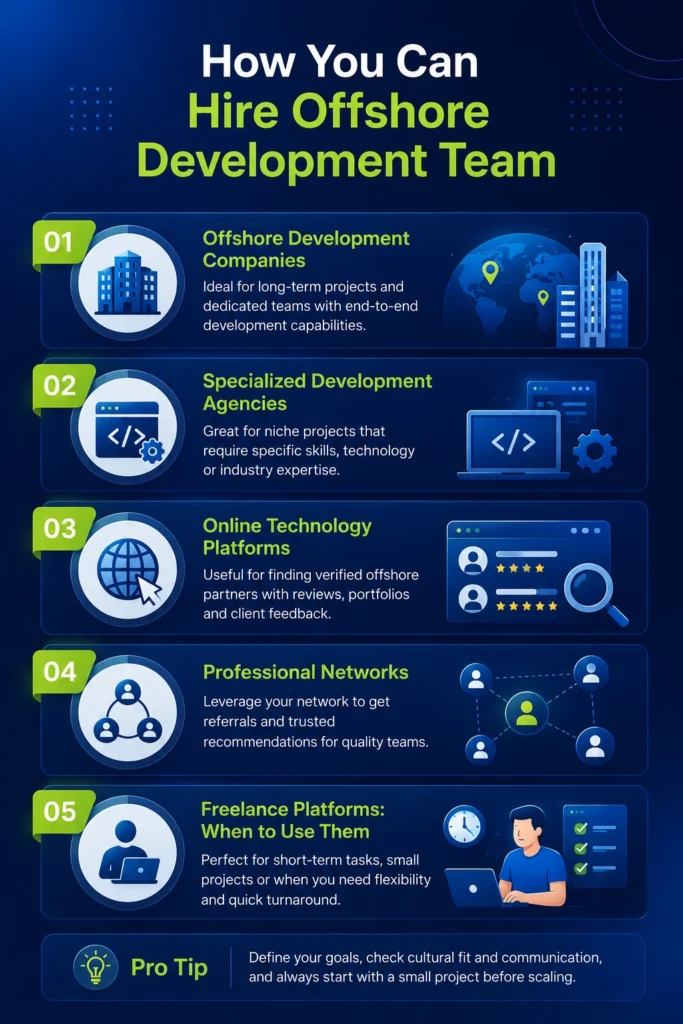
Now, it’s time to know the right hiring channel for outsourcing your software to offshore developers. Once you are clear about the requirements, choosing where to hire offshore software development team becomes easier, since every source serves a different business need.
With that being said, the software development outsourcing market is also expanding continually across organizations. While large enterprises still account for the massive share of 70.95%, small and medium-sized businesses are also increasing their outsourcing investments rapidly.
With this huge shift, let’s see the channels you can explore to hire the right fit for your development needs.
Offshore Development Companies
Building an entire product from scratch needs complete development. if you are aiming for that, you should consider offshore companies. It offers access to dedicated teams under one delivery process for long-term software projects.
Specialized Development Agencies
Need deep expertise rather than a general development team? Agencies skilled in areas like AI, healthcare, fintech software development, or enterprise marketplaces often have proven domain knowledge and follow best practices that shorten the learning curve.
Online Technology Platforms
When you need to compare different service providers in the nick of time, an offshore development team online can often be found via trusted B2B marketplaces and technology platforms. It is easier to review their details through these platforms before engaging in a conversation.
Professional Networks
Referrals from founders, CTOs, investors, or LinkedIn connections can easily partner you with someone having a proven track record. Personal recommendations often provide insights that portfolios and presentations cannot.
Freelance Platforms: When to Use Them
Freelancers are suitable for small fixes and short-term support. If your goal is to maintain and scale a product, hiring reliable offshore development partners through platforms like Fiverr and Upwork is usually the safer investment.
Common Hiring Mistakes That Cause Offshore Project Failure
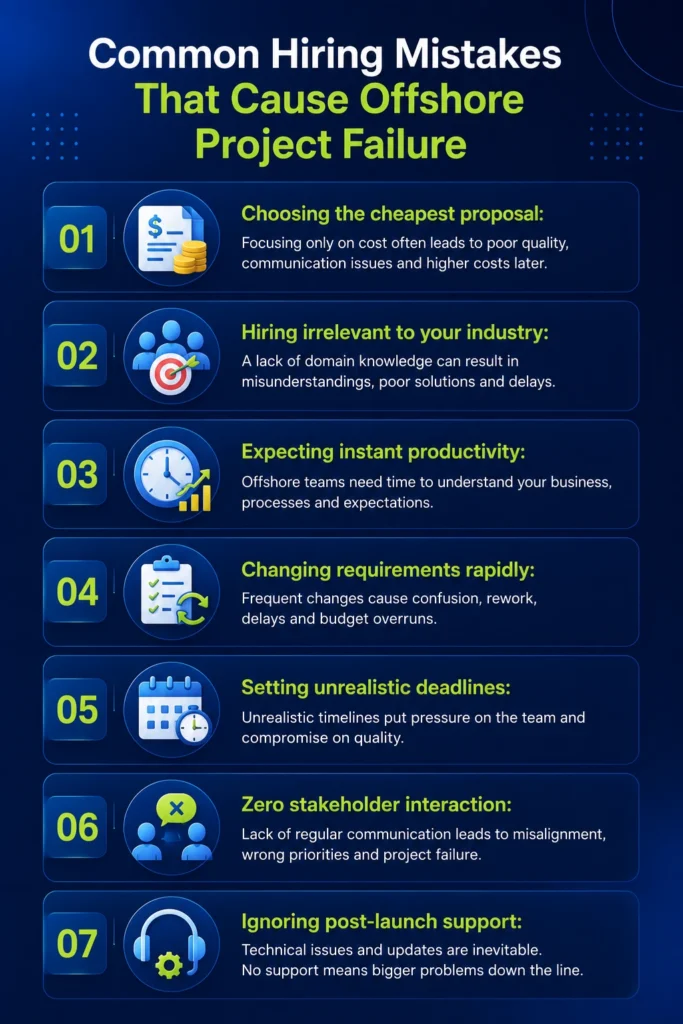
Numerous offshore projects run into different challenges due to rushed or overlooked key hiring decisions. A few development decisions can cost up a fortune if not avoided early in the development phase. Recognizing these mistakes beforehand can reduce delays and multiple delivery risks.
- Choosing the cheapest proposal: Slashing 20% upfront can turn into months of rework and missed deadlines, increasing the cost of offshore software development.
- Hiring irrelevant to your industry: teams with little to no domain knowledge often require longer onboarding and may struggle with industry-specific compliance or user expectations.
- Expecting instant productivity: Even the most experienced developers need time to understand your product, users, and business priorities.
- Changing requirements rapidly: Continuous scope changes every week create confusion and make delivery dates unreliable.
- Setting unrealistic deadlines: Aggressive timelines affect testing, documentation, and software quality before they improve delivery speed.
- Zero stakeholder interaction: Slow approvals and delayed feedback often create more massive complexities than development itself.
- Ignoring post-launch support: A mobile app, website, or custom software needs continuous technical support for overall enhancements after deployment.
What Is The Cost Of Hiring An Offshore Software Development Team?
Once you have decided to hire offshore development team, the next thing is knowing the total cost of an offshore team. The truth is that there is no accurate price, as every project comes with different specifications.
Instead of chasing the lowest quote, understand what shapes your budget before you hire an offshore development firm.
Factors That Determine The Budget
- Project scope, complexity, and expected delivery timeline.
- Team size, seniority, and required technical expertise.
- Engagement model, whether dedicated team, staff augmentation, or project-based.
- Offshore development region and local market rates.
- Technology stack, third-party integrations, and infrastructure requirements.
- Industry-specific compliance or security requirements.
- Team scalability for future product growth.
Hidden Cost Factors
- Knowledge transfer and initial onboarding time.
- Scope changes after development begins.
- Third-party software licenses and API usage costs.
- Cloud hosting, monitoring, and infrastructure expenses.
- Additional QA, performance testing, and security audits.
- Post-launch maintenance, updates, and technical support.
- Delays caused by slow approvals or changing business priorities.
What Makes an Offshore Development Partner Worth Choosing?
The right partner does more than build software. They become an extension of your team and help your product move in the right direction. Before you hire offshore development team, look for qualities that continue creating value long after development begins.
Strategic Collaboration
The best partners invest time in understanding your business. Every recommendation supports your product goals and every decision is made with long-term growth in mind, helping you avoid costly technical missteps.
Dedicated Engineering Teams
A stable team stays focused on your product from start to finish. This builds stronger product knowledge and creates better consistency throughout the development journey, keeping your timeline completely on track.
Transparent Delivery
Progress should never feel uncertain. A reliable partner keeps you informed through every milestone, so you always know what has been completed, what comes next, and how the budget stands.
Scalable Resources
Your software will grow over time. Your development team should grow with it. The ability to expand resources quickly without disrupting delivery is a sign of a dependable partner.
Long-Term Support
Development does not stop after launch. Ongoing improvements and regular maintenance keep your software secure, relevant, and completely ready for changing business needs as your active user base expands.
Business-Focused Outcomes
Great partnerships create measurable business value. They help you launch faster, drastically improve user experience, and build stable software that directly supports your future growth and bottom-line revenue goals.
How MMC Global Can Help
Selecting the perfect team should not result in delayed project timelines or broken budgets. When you partner with MMC Global, you get a reliable way to hire offshore development team experts who become a direct extension of your business.
We offer flexible models that fit right with your product development needs. Our talented engineers clearly identify your scope and understand your goal while integrating into your daily communication channels.
Moreover, we prioritize clear communication, complete delivery transparency, and milestone-driven progress. So, take the stress out of your offshore development hunt and start building your next legacy.
Frequently Asked Questions
What is an offshore development team?
An offshore development team is a group of remote technical professionals that work in another country to handle the needs of your business software. It offers you access to global development talent without the overhead of expanding your physical office.
How to hire a dedicated offshore development team in 2026?
To hire offshore development team in 2026, you have to map out your exact frameworks and shortlist trusted global firms. Screen service providers as per their past delivery records and communication style instead of just picking the lowest price. Run a quick and paid pilot sprint to verify if their expertise and workflow align with your requirements or not before finalizing a long-term contract.
How does an offshore development company work?
An offshore development company works by offering a managed team of developers, managers, and QA specialists as per your requirements. The agency handles local human resources and administrative compliance while the team plugs directly into your communication channels.
What is the hourly rate of an offshore software development company?
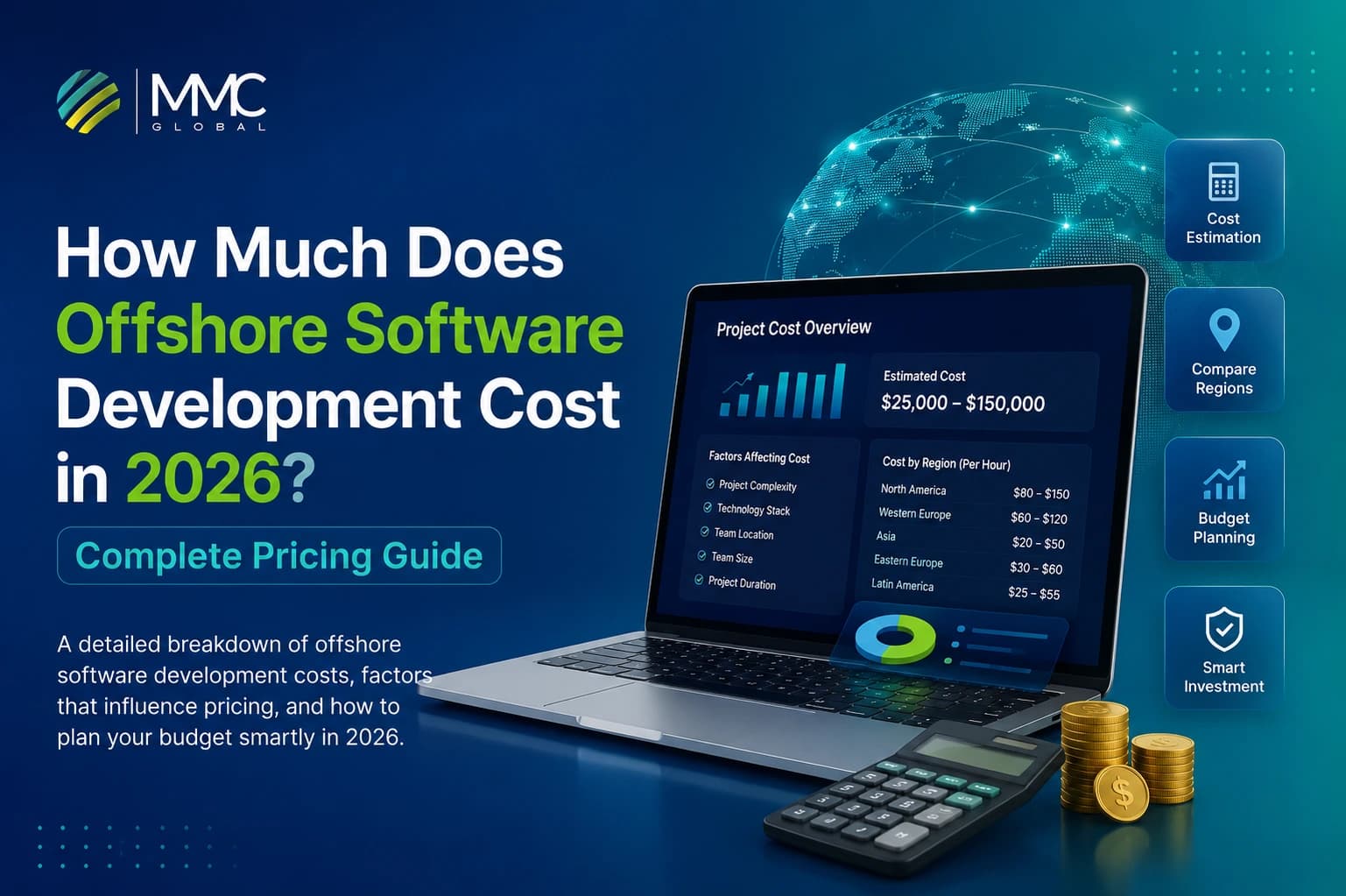
The hourly rate of an offshore software development company ranges between $20 and $80+ per hour, depending on region and expertise. South Asian development hubs average $20 to $50/hr, while nearshore talent in Latin America and Eastern Europe commands $35 to $75+/hr. Niche technical skills like cloud infrastructure or AI development will add a 15% to 30% premium to these baseline rates.
How to effectively manage an offshore development team?
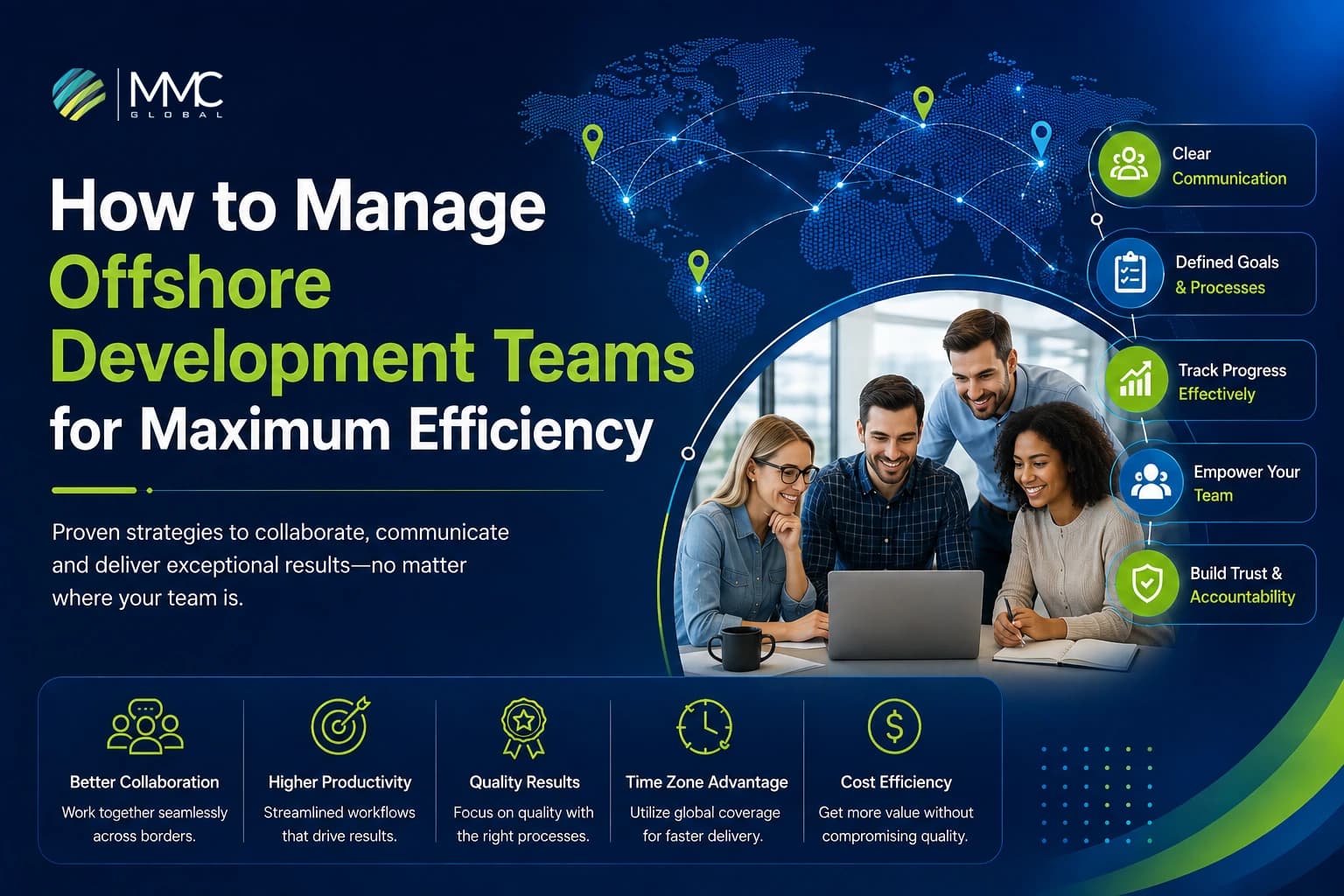
To effectively manage an offshore development team, you must establish clear communication rules and transparent project tracking workflows from day one. You include the remote engineers in your daily sprint planning, code reviews, and Slack channels so they feel like an extension of your office. Using tools like Jira ensures everyone stays completely aligned on feature priorities and upcoming release deadlines.