
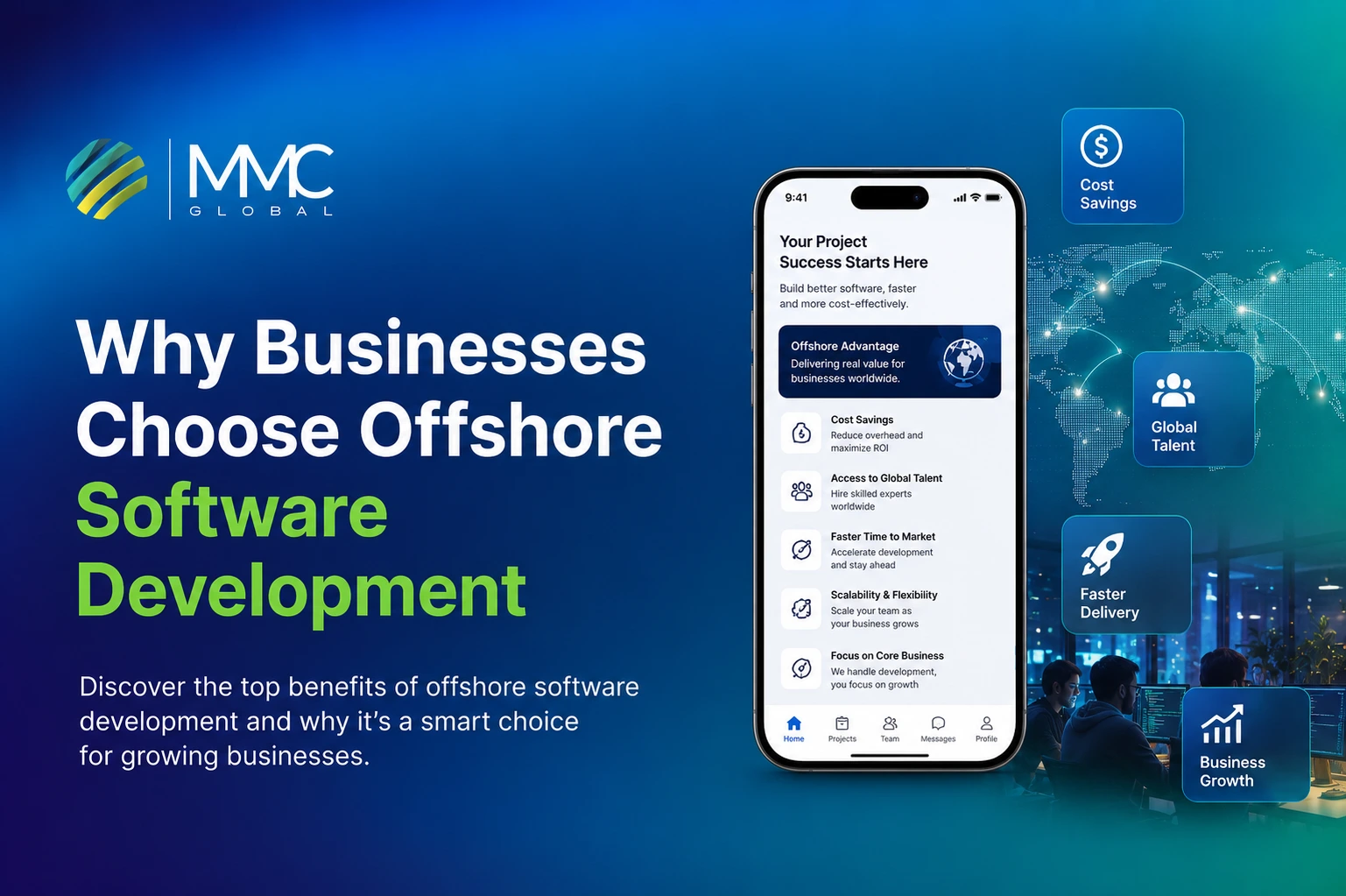
Who does not want their software to be better than the rest and launched faster than the competitors? Building software should move your business ahead instead of slowing it down. Yet, founders out there are still in a race to get themselves skilled developers who do not ask for a fortune or make them wait months. This is why offshore software development has appeared to be a practical option for organizations that want to grow without limitations.
As much as this idea sounds simple, the picture also hides another story. Making the right choice is not a piece of cake in general. With the rising trends of cybersecurity, AI, DevOps, IoT, etc, companies are looking more for teams that clearly understand them. Before finalizing a partner for you, you need to understand what offshore development is and what expectations you should have.
This detailed blog unfolds the truth in simple language. You will learn how offshore development compares with other hiring models, the real offshore software development benefits, and the factors that help you choose the best partner with confidence.
What Is Offshore Software Development?
Answering “What is offshore development?” is really simple. Offshore software development means expanding your team without getting tied to your country’s borders. You collaborate with experienced developers from another country who work closely together to create industry-aligned software for your business.
Over the past few years, hiring offshore developers has turned out to be a better way to outsource projects. Businesses now use this model to establish long-term partnerships, bring in specialized expertise, and keep development moving without holding off on anything that stops their growth.
Offshore vs. Onshore vs. Nearshore: What’s The Difference?
You may have absolutely heard about nearshore, onshore and offshore software development as if they all serve the same purpose. Well, they do not! These models work differently, and knowing where offshore software development fits among these options can help you make smarter investment decisions.
Here’s the clear comparison for your better understanding:
| Factor | Offshore Software Development | Nearshore Software Development | Onshore Software Development |
| Location | Located in a different country, region, or continent from the business. | Located in nearby countries that share similar time zones or geographical proximity. | Located within the same country as the business. |
| Cost | Affordable due to lower development rates and reduced recruitment expenses. | Offers moderate pricing by balancing affordability with easier collaboration. | Higher costs. |
| Time Zone | Different time zones, which can support continuous development with proper coordination. | Teams usually have overlapping working hours. | Teams work in the same time zone. |
| Communication | Requires clear processes, documentation, and collaboration tools to maintain alignment. | Communication is smoother due to closer cultural and language similarities. | Communication is the simplest due to shared location, language, and work environment. |
| Talent Pool | Provides access to a worldwide network of developers with diverse skills and technical expertise. | Gives access to skilled professionals from nearby regions. | Depends on the available talent within the local market. |
| Scalability | Allows businesses to expand teams faster by accessing a larger global talent pool. | Supports flexible growth while maintaining easier collaboration. | Scaling may take more time due to limited local hiring options. |
| Best For | Businesses looking for specialized expertise, flexible teams, and cost-effective development solutions. | Companies that want easier collaboration while still reducing development costs. | Organizations that prefer face-to-face interaction and complete local control. |
Why Going With An Offshore Team Is A Smarter Move For Businesses?

Identifying the perfect development team has become a standard challenge for many businesses. Local hiring often takes longer than expected, while project requirements continue to keep growing with the emergence of new technologies, changing users’ needs. This shift alone has encouraged companies to explore offshore software development as an easier way to access skilled professionals around the globe.
The demand for outsourcing IT services is rising worldwide. According to recent studies made by Mordor Intelligence, the outsourcing market for software development is projected to reach $618.38 billion in 2026 and is on its way to growing to $977.04 billion by 2031 as organizations continue to invest in digital transformation and specialized technology support.
The reason why choosing an offshore partner is a smarter move because:
- Easy Access To Skilled Teams:
Businesses can connect with developers possessing expertise in AI, cloud, cybersecurity, and modern software development. - Faster Support For Growing Software Needs:
External teams let your brand add development capacity without spending months on recruitment and onboarding. - Support For Digital Transformation Goals:
Companies can work with professionals to create new platforms, update existing systems, and adopt emerging tech. - Flexible Team Expansion:
Organizations can easily adjust their development resources based on project scope and overall requirements. - Global Access To Tech Expertise:
Businesses can team up with specialists from different regions via offshore software development outsourcing.
Major Advantages Of Offshore Software Development [A Complete Checklist]

An offshore software development company can pull in measurable improvements to how businesses create and manage their digital products. From improving resource management to accessing specialized capabilities, companies are leveraging partnerships beyond borders to solve common software challenges.
Let’s check each of them one-by-one to see what makes this approach valuable for your organization:
1. Lower Development Costs
Creating custom software requires careful budget planning, mainly when businesses need experienced individuals for ongoing projects in the long run. Hiring local developers often involves a higher salary and additional expenses.
With offshore custom software development, organizations can partner with talented teams from regions with competitive rates. This helps in cutting up approximately 60% of your total budget.
These savings are the outcome of businesses bypassing heavy taxes, insurance, and localized overhead costs associated with hiring full-time in-house developers.
2. Access to Global Tech Talent
Finding teams possessing the right technical background can be challenging when businesses depend on local hiring markets. Few projects need specialized expertise that is not easily available nearby, sometimes.
Collaborating with an experienced offshore software development team offers you to contact professionals from different regions with diverse technical knowledge. It lets you find the perfect skills for your project without being limited by geography.
Also, a study states that a whopping 72% of employers around the world face severe complexity in finding the technical skills they need. Offshoring effectively reduces this problem, opening the door to untapped talent pools in booming tech regions like Eastern Europe, Latin America, and Asia.
3. Accelerated Product Launch
Launching a product quickly in the market to grab a huge pool of users can create a major advantage, especially in competitive industries in which expectations keep changing frequently. Delaying deployment can result in missing actual opportunities.
Through offshore software product development, you can add experienced resources to your critical project without waiting through stretched-out hiring processes.
It is also reported that 70% of organizations have visibly noticed accelerated product launches by using pre-vetted offshore teams. This means that having an immediate team allows you to move from strategy to development faster while maintaining consistent performance.
4. Easier Team Scalability
Software requirements rarely stay the same throughout the entire project development cycle. A business may need additional builders during product expansion and fewer resources after completing major milestones.
Offshore teams offer the ease of adjusting development capacity based on changing requirements. Companies can scale their teams up or down without dealing with long hiring cycles or unnecessary overhead.
This elasticity is a major strategic benefit. If you suddenly need to spin up a secondary team or scale back resources post-launch, your offshore partner handles the transition smoothly.
5. Access to Specialized Technical Expertise
Modern software solutions often require advanced skills in areas like artificial intelligence and data engineering. Building an internal team with every required skill can be difficult.
An experienced offshore software development company helps businesses connect with specialists who already understand these technologies. This allows companies to build solutions with stronger technical foundations.
Instead of spending valuable time training in-house staff on niche frameworks, you gain immediate access to engineers who build these systems daily.
6. Round-the-Clock Development Cycles
Different time zones can become a huge benefit when offshore teams are managed properly. Work can continue even after one team is done with its part of the working hours.
This workflow is commonly known as “follow-the-sun.” As your domestic team is at rest, your offshore team can work on code, run quality assurance tests, and resolve bugs.
Once your local or in-house team logs back in the next morning, they can review the completed work and push the project forward without delays.
7. Reduced Hiring and Infrastructure Costs
Building an internal development team requires more than finding skilled employees. Businesses also need to invest in recruitment, workspace, tools, training, and employee management.
Deploying offshore development services reduces the need for many of these additional investments by providing access to ready-to-work professionals. Your offshore partner provides the physical office space, hardware, licenses, and HR support for the team.
This dramatically reduces your capital expenditure (CapEx). By avoiding massive investments in office leases, high-end workstations, and local recruitment agency fees, you can allocate your capital directly to your core product development.
8. Greater Focus on Core Business Operations
Handling every single technical task internally takes away valuable attention from important business objectives. Teams spend more time dealing with development challenges rather than focusing on customers and strategy.
By working with offshore developers, businesses can hand over software execution to experienced professionals while concentrating on areas that drive growth, creating a better balance between technology development and business priorities.
Challenges Of Offshore Software Development: What To Look For?
There is always another side to the picture. As much as there are benefits of offshore software development, you should also know about the potential complexities this model brings with it. The real challenge is knowing about these problems and finding a way to solve them efficiently without overcomplicating things.
Communication Gaps
Working with experts across multiple regions can often create misunderstandings around the project scope. It mostly happens when the communication process is unclear, or teams do not have a proper documentation practice.
How To Overcome It?
- Set clear communication guidelines from the start.
- Use collaboration platforms like Jira or Slack to track discussions and project updates.
- Initiate regular meetings and transparent reporting to stay aligned throughout the development process.
Time Zone Differences
Different time zones bring delays when teams need quick discussions or immediate approvals. Without proper planning, time zone differences may affect workflow and overall completion timelines.
How To Overcome It?
Create overlapping working hours so that both teams can connect easily when needed. A reliable offshore software development team should also maintain clear task management systems so work keeps progressing even when teams are in different locations.
Cultural Differences
Global teams also bring varying communication styles and working approaches. Without proper understanding, these differences may affect collaboration.
How To Overcome It?
Create a shared work culture via regular interaction, clear expectations, and mutual respect. Selecting an experienced offshore software development company that has previously partnered with multiple international clients can make cross-cultural collaboration much smoother.
Quality Concerns
Some businesses hesitate to choose offshore teams because they associate remote development with lower quality. In reality, software quality depends on the team’s expertise, development process, testing standards, and project management approach.
How To Overcome It?
Thoroughly check the company before signing off on a partnership. A reliable partner must follow structured development practices and offer transparency throughout the project.
Security Risks
Sharing business data and intellectual property with an external team requires strong security measures. Companies need confidence that their information remains protected throughout development.
How To Overcome It?
Connect with the ones that follow security protocols like NDAs, access control, secure development practices, and compliance standards. Proper security planning helps businesses confidently manage offshore software application development projects.
Project Visibility
Some companies worry about losing control when their development team works remotely. Without proper visibility, tracking progress and understanding project status can become difficult.
How To Overcome It?
Use project management tools, regular progress reports, and milestone tracking to maintain complete visibility. A transparent offshore partner keeps businesses involved in important decisions while managing daily development tasks efficiently.
Engagement Models Used In Offshore Software Development
Each development project comes with different requirements, budgets, and timelines. Picking the right offshore software development model lets you find the right level of support by simplifying the complete process.
Dedicated Development Team
A dedicated development team acts as an extension of your internal team. You get a group of offshore developers to focus on your project and cater to it as per your goals.
Great fit for organizations needing long-term support, wanting more control over development, or planning to continuously improve their software product over time.
Staff Augmentation
Staff augmentation lets you involve specific experts in your current team whenever additional support is needed. Instead of hiring full-time developers, you can bring in professionals for a certain period of time.
It works best when you have an internal team but need additional help with areas such as software engineering, UI/UX, cloud development, or other skills.
Project-Based Development
If you have a clear idea, defined requirements, and a specific end goal, then you should go with project-based development. The offshore team handles the project from the planning phase to delivery as per the agreed scope.
This is commonly used for projects like mobile applications, website development, and custom software solutions where businesses need a complete product without managing every task internally.
Offshore Development Center (ODC)
An offshore development center is a setup in which a firm creates a long-term remote development unit in another country. The team works exclusively on the company’s project while following its processes and expectations.
Often used by emerging businesses needing ongoing development support, access to global talent, and a reliable tech team for large-scale initiatives.
The Working Process Of Offshore Software Development
Each project follows a transparent creation flow. Although businesses have different goals, offshore software development usually follows a simple, proven process in distinct steps that keep the project progressing in the right direction.
- It begins with understanding your industry, idea, and what you want to obtain.
- The team crafts a project plan with the scope, timeline, and technologies needed to build your solution.
- Next, the right teams of designers, developers, and project managers are assigned as per your needs.
- The design team takes over the part and prepares the user experience and interface before the development starts.
- Front-end and back-end developers initiate building the software in small phases so feedback can be added throughout the project.
- The software is tested carefully to fix issues and make sure everything works exceptionally well.
- Once approved, the software is launched and made ready for your users.
- After the deployment, the team continues to provide updates, improvements, and support whenever your business needs them.
How Much Does Offshore Software Development Cost?
We have uncovered the benefits, measured the complexities, and even checked the engagement model. However, there is another crucial question most businesses ask, and it is about how much offshore software development actually costs.
If we look up the resources, some might say it is $15/h, and a few even go beyond $100/h. Honestly, there is not a single fixed answer.
Multiple factors come together and affect the entire price tag. Let’s understand these factors first to make it easier to estimate a realistic budget before comparing development rates across different regions.
Factors That Influence Offshore Development Costs
Multiple factors can add to or reduce your overall development budget. Before requesting a quote from an offshore app development company, it’s worth knowing what shapes the final rates.
- Project Complexity: A simple offshore website development will naturally cost less than a complex enterprise or an AI-powered solution.
- Team Size: The total number of experts in different teams involved directly affects the budget.
- Tech Stack: Advanced frameworks, custom integrations, and specialized tools may need experts with advanced technical skills.
- Developer Expertise: Experienced developers usually charge more, but they often complete projects quicker and with less revisions.
- Engagement Model: Whether you select a dedicated team, staff augmentation, project-based, or an ODC, it can influence your investment.
- Project Duration: Long-term projects need a massive budget compared to short-term development, as more resources to stay involved throughout the process.
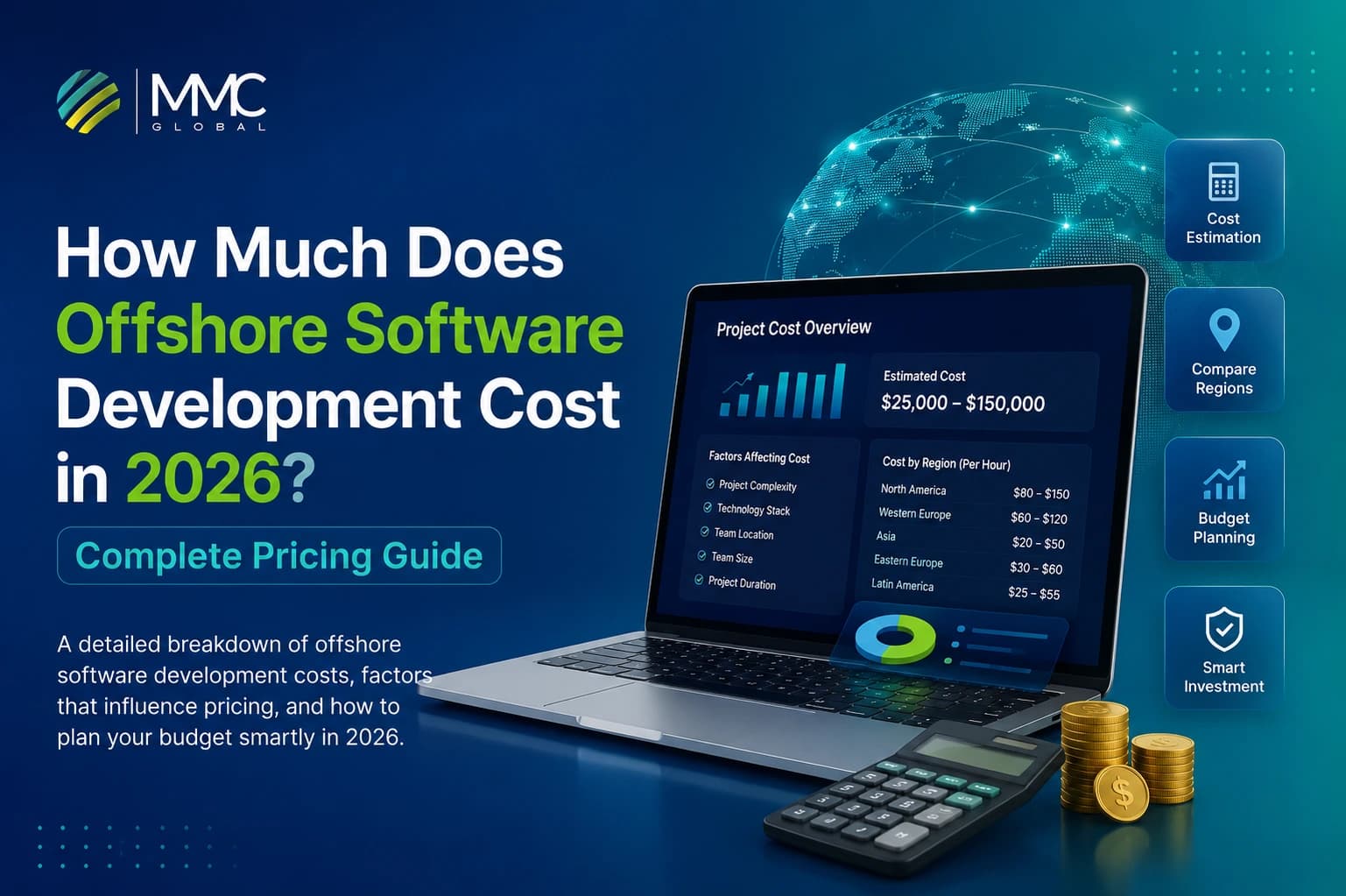
Offshore Software Development Rates by Region
Custom software development costs differ from one country to another based on technical expertise, demand, and the maturity of the technology system. Developers with the same expertise in the USA may charge a bit higher for the same project as compared to offshore software development Philippines. This quick comparative analysis gives a general idea of hourly rates in different regions when considering software development offshore.
| Region | Average Hourly Rate (USD) | Best Known For |
| United States | $100–$250+ | Enterprise software, advanced engineering, AI innovation. |
| Canada | $80–$180 | Cloud solutions, fintech, enterprise applications. |
| Western Europe | $70–$180 | High-quality engineering, cybersecurity, and compliance-driven projects. |
| Eastern Europe | $40–$90 | Strong technical talent, product development, and complex software solutions. |
| Latin America | $35–$80 | Time zone compatibility with North America, agile collaboration. |
| India | $20–$60 | Large talent pool, custom software, mobile, and web development. |
| Pakistan | $20–$50 | Cost-effective development, AI solutions, enterprise software, digital transformation. |
| Vietnam | $20–$45 | Mobile applications, SaaS products, fast-growing technology sector. |
| Philippines | $25–$50 | Business applications, customer-focused development, and English communication. |
Selection Criteria Of The “Best” Offshore Software Development Company For Your Project
Thousands of offshore outsourcing software development companies claim to be perfect, but not all of them will be the right fit. A shiny website or a competitive price must not be the sole reason behind your final decision. Here’s the checklist for you to see what you should be careful about:
How Do They Technically Compete?
A strong development partner must be aware of modern technologies and should know how to use them instead of depending on outdated systems. Ask about their experience with DevOps, AI, mobile app development, and the tools your project might need.
The “best” ones will explain why they prefer a certain tech stack instead of simply naming popular frameworks.
Review Industry Experience
A healthcare software solution is very different than building for retail or fintech. Each industry has its own set of challenges, user expectations, and compliance needs.
Select a firm that has delivered projects similar to yours. Previous industry experience also means fewer learning curves and better decision-making throughout the project.
Assess Communication Practices
Communication is the most underrated part of project development. Even the highly skilled teams can struggle if communication is unclear. Before signing any contract, learn the way teams share updates, handle feedback, and manage project discussions.
A trusted partner will keep you updated via regular meetings, progress reports, and collaboration tools.
Security Standards Practices
Your software will work with business data, user information, and intellectual property that requires concrete protection. Security should never be a secondary option.
Ask the agencies how they protect sensitive information. NDAs, secure development practices, controlled access, and compliance with industry standards all show that security is the core factor in their operations.
Examine Development Methods
Each project follows a structured process. Find out if the company uses Agile, Scrum, or another approach to develop custom software that supports regular feedback and continuous improvements.
This becomes even more important for offshore software engineering, where clear workflows let teams stay on the same page.
Understand Pricing Transparency
Low prices look attractive at first glance; however, hidden costs appear later and take you by surprise. Make sure you know what is included in the price and what could potentially become an additional expense.
Review Client Testimonials and Case Studies
Client testimonials reveal more than marketing claims. Reviews and case studies show the way a company handles real projects, solves challenges, and supports its clients.
Look for more than star ratings. Keep an eye on comments about communication, reliability, project delivery, and long-term relationships.
Confirm Post-Launch Support
Digital products need updates, improvements, security patches, and occasional feature enhancements even after launch.
Pick a partner that continues supporting your business after launch instead of ending the relationship once the project goes live.
Questions to Ask Before Hiring an Offshore Software Development Company
Asking the right questions gives you real insights about a company. Use this checklist while discussing during a discovery call while hiring an offshore software development company to understand how they work and whether they are the right fit for your project or not.
1. Who owns the source code?
You should have the complete source code ownership once the project is finished. A right partner will clearly state this in the contract before starting offshore application development.
2. How do you manage communication?
Ask how often you will be receiving updates and what channels the team uses. Regular meetings and clear communication help projects progress without confusion.
3. Which project management tools do you use?
Most professional teams use Trello, Azure DevOps, or ClickUp to assign tasks and track progress. These platforms keep everyone aligned.
4. How are development milestones tracked?
Projects must be divided into smaller milestones with clear deliverables and timelines. It offers you transparency and makes it easier to review progress at every stage.
5. How is quality assurance handled?
Testing must happen throughout development instead of waiting until the end. It helps identify issues early and improves the overall quality of your offshore product development project.
6. How do you protect sensitive business data?
Ask about NDAs, access controls, secure coding methods, and compliance. Strict security measures must be a standard part of offshore software outsourcing, not an optional service.
7. Can the team scale if project requirements change?
Business needs frequent changes as the project evolves. Your development partner must be able to add or remove resources without disrupting the flow.
8. What happens after product launch?
Software needs continuous updates, maintenance, and technical support after release. A dependable team keeps supporting your product so it stays secure and stable.
Current And Newly Emerging Trends In Offshore Software Development
Honestly, if your view of offshore software development is still behind a decade, you are probably picturing a room full of junior developers blindly copying and pasting code to hit a daily quota.
But the baseline of offshore development meaning has shifted completely. In 2026, AI has essentially commoditized basic “order-taker” programmers. Today, offshore software development trends are all about high-end engineering, cloud architectures, and extreme operational speed.
AI-Assisted Software Development
We are well past the days of developers simply using AI as a glorified Google search. Today, elite custom software programming offshore relies on AI-first toolchains embedded directly into the daily workflow.
Offshore teams are using LLM-powered tools to handle the heavy lifting. They prompt their way through the repetitive stuff and save their brainpower for the hard logic.
This also translates to a massive boost in velocity. Teams are shipping features up to 55% faster.
Agentic AI in Software Engineering
Standard AI tools act like helpful assistants; meanwhile, agentic AI acts as an autonomous team member. Offshore teams deploy multi-agent AI systems that can actually execute complex, multi-step development tasks.
For example, if a bug report comes in, a specialized AI agent can autonomously find the broken code, write a patch, test it against your existing system, and submit it to a human engineer for a final review.
Cloud-Native Development
Building software that “works on my machine” but crashes in production is a developer cliché we are happy to leave behind. Modern offshore application development is built entirely cloud-native from day one.
Offshore teams are using serverless designs, microservices, and container tools like Kubernetes to build platforms that scale automatically. If your app suddenly goes from 100 users to 10,000 overnight, a cloud-native backend will automatically spin up more resources to handle the traffic without crashing.
DevSecOps
Security used to be that painful chore left for the very end of a project. A QA team would run a security test right before launch, find fifty flaws, and push your release date back by a month.
In a modern offshore software outsourcing setup, security is baked directly into the continuous integration and continuous deployment (CI/CD) pipelines. Every single time a developer commits code, automated scanners check it for vulnerabilities.
Platform Engineering
If you want your developers to move fast, you have to get the operational friction out of their way. That is why the best offshore agencies now build Internal Developer Platforms (IDPs).
IDP acts as a self-service menu for teams. Instead of a developer having to ask a DevOps specialist to set up a new testing environment or database (which can take hours or days), they can click a button and have it ready in minutes.
Low-Code and No-Code Methodologies
Offshore teams are increasingly using low-code and no-code (LCNC) visual builders to rapidly assemble the standard, non-proprietary parts of an application.
By using visual tools for the generic foundation, the team can focus 100% of their actual coding hours on the proprietary, custom-built engines and algorithms that actually make your product unique.
Outcome-Based Engagement Models
Paying blindly for a timesheet of hours worked is a model that is quickly fading away. Modern offshore partnerships are shifting toward outcome-based and value-driven contracts. Instead of billing you strictly for hours logged, pricing is tied to tangible, measurable milestones.
This aligns your offshore partner’s goals directly with yours. They aren’t trying to drag out the clock; they are highly motivated to ship high-quality code as efficiently as possible.
Global Capability Centers (GCCs)
For larger companies and enterprises, the traditional model of renting a third-party agency’s team is being replaced by building a Global Capability Center (GCC).
Essentially, instead of outsourcing to a vendor, you establish your own dedicated, permanent office in an offshore tech hub.
This gives you the absolute best of both worlds: you get the massive cost and talent benefits of global hiring, but the team is all yours. They use your internal tools, adopt your company culture, and protect your IP with zero third-party middlemen.
Most Popular Myths Surrounding Offshore Software Development
Even after the boom of outsourcing projects to offshore software development companies, many businesses still hesitate before choosing a team because of a few assumptions spiraling in their mind. In reality, the success of offshore software development depends far more on choosing the right partner than on where the team is located.
| Myth | Myth Buster |
| Offshore teams produce low-quality software. | Quality depends on the team, process, and quality standards. |
| Communication is always difficult. | Clear processes and modern collaboration tools keep teams connected. |
| Offshore development is only for startups. | Businesses of every size use offshore teams to build and scale software. |
| Offshore projects are less secure. | Reliable partners protect projects with strong security practices and compliance standards. |
| Lower cost means lower expertise. | Competitive rates do not reflect the experience or technical capabilities of the team. |
| Offshore development is only about saving money. | It also provides global talent, faster scaling, and specialized expertise through offshore software outsourcing. |
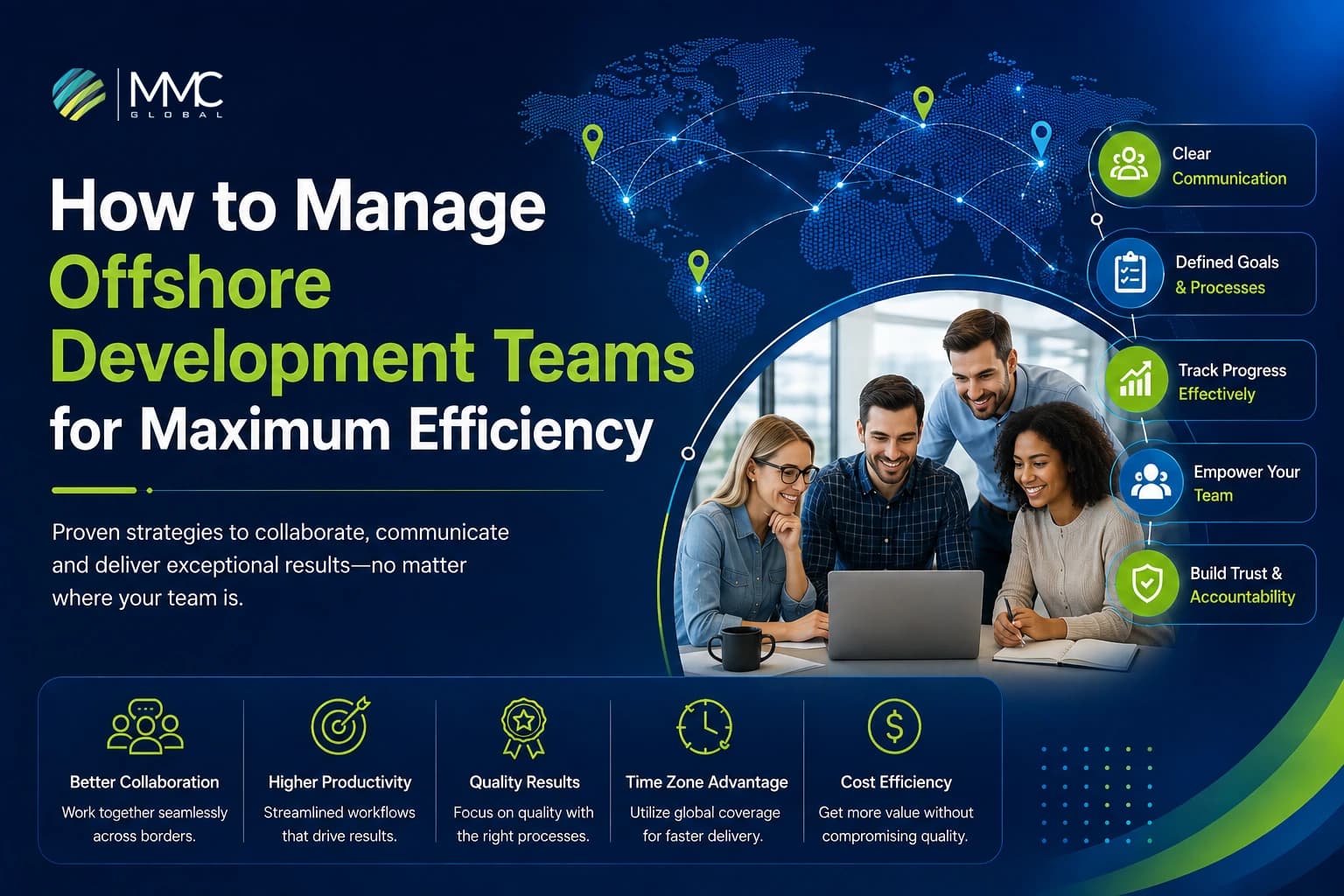
How To Successfully Manage An Offshore Software Development Team? Best Practices
Successful offshore software development means treating a vendor as a real extension of your business. Whether you are running offshore application development or scaling a product, a transactional mindset leads to failure.
This is how you should run a highly effective global partnership.
Define Clear Project Requirements
Vague scopes kill custom software programming offshore. Provide detailed Product Requirement Documents (PRDs), user stories, and wireframes before any coding starts. When developers understand the exact “why” and “how” of a feature, they build it right the first time
Establish Communication Protocols
To avoid the friction of offshore software outsourcing, set up a strict communication medium. Schedule a mandatory 2-to-3-hour daily overlap window for live syncs. For the rest of the workday, rely on tools like Loom videos and Slack updates to keep development moving without timezone bottlenecks.
Set Realistic Milestones
Do not try to ship a massive platform all at once. Break your roadmap into agile, two-week sprints with highly realistic deliverables. Shipping functional slices of code incrementally allows you to test, gather feedback, and catch bugs while they are still cheap and easy to fix.
Use Collaborative Project Management Tools
Centralize your sprint planning in Jira or Linear, document system structure in Notion, and host your codebase in GitHub. This transparent setup guarantees that anyone on either side of the globe can see project progress and blockers in real time.
Measure Performance with KPIs
Ditch timesheets and evaluate output using data-driven engineering metrics. Align your team with modern offshore software development trends by tracking sprint velocity, cycle time (from task start to deployment), and code churn.
Build Long-Term Collaboration
The key to successful offshoring application development is treating global teams as peers, not just disposable keyboard-renters. Involve them in company wins, share your product vision, and keep the team stable. When engineers feel genuinely valued, they build higher-quality products.
Partner With MMC Global For Reliable Offshore Software Development
Picking the right partner should never feel like taking a chance. Once you know what to look for, making the decision becomes simpler than ever. The right team listens to you, talks openly, delivers premium work, and grows with your business instead of disappearing after the final launch.
This is the approach we follow at MMC Global. We work with startups, growing businesses, and established enterprises to turn their ambitious ideas into secure and scalable digital products via reliable offshore software development services. Our experts are always at the front, ready to support you in solving any challenge, even if it is creating a new product, modernizing a legacy system, or expanding your development capacity.
We follow the latest development trends and stay compliant with security, regional, and industry-relevant regulations so you do not have to face any hurdles in the future. Great software is built on the foundation of strong partnerships.
So, your wait and hunt for a skilled team is officially over. Talk to our experts and gain the technical excellence that keeps you ahead of everyone.
Frequently Asked Questions
What is offshore software development?
Offshore software development means handing over the creation of your project to developers in a different country. You can hire these experts for different aspects of your project, like consultation, wireframing, designing, development, modernization, and maintenance, etc. Teams collaborate remotely via communication platforms and provide updates through project management tools like ClickUp and Trello to stay on the same page.
Why should businesses choose offshore software development?
Businesses should choose offshore software development to gain access to worldwide technical experts. Outsourcing to offshore developers also helps you align your software with multiple regions and cultures to capture a wider audience. Moreover, it also reduces development cost and speeds up the entire development lifecycle to hit the market in the nick of time.
How to choose the best offshore software development company?
There are a few but core key points to choose the best offshore software development company. Check their expertise with advanced technologies, review their live portfolio of apps created for other international clients, check reviews on authoritative sites, see how they approach the collaboration and development process, their previous experience in your industry, and what set of technologies they use for secure development.
What is the difference between nearshore and offshore software development?
The difference between nearshore and offshore software development is that nearshore means hiring developers closer to your region, working in the same time zone as the location of your business. Meanwhile, offshore developers are located in another country, operating in with a huge hours gap as you.
What are the common challenges in offshore outsourcing?
The common challenges in offshore outsourcing are cultural differences, communication due to language differences, and different working hours. It also brings in security and quality concerns as confidential information gets shared between external teams.