
Did you know that by 2026, more than 60% of people around the world will use mobile wallets?
That’s because digital wallets are easier, faster, and often more reliable than traditional banking.
Apps like STC Pay are already changing how people manage money. No long lines, no need for cash just quick payments, money transfers, and bill payments in a few taps.
STC Pay works like a digital bank and is approved by the Saudi Central Bank, making it a trusted option for millions.
If you’re thinking about building a digital wallet app like STC Pay, our expert app developers in Dubai are here to help.
In this guide, we’ll walk you through the full process from features and technology to estimated cost so you can launch a secure and user-friendly digital wallet app.
What is STC Pay?
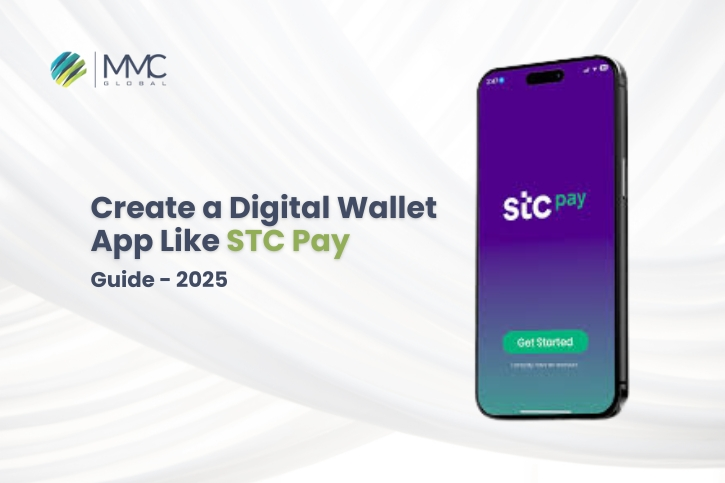
STC Pay is a digital wallet app that lets users easily send, receive, and manage money from their mobile phones.
With STC Pay, you can transfer money to friends, pay bills, send money overseas, and even pay at stores all in one secure app.
The app is backed by Saudi Telecom Company and is trusted by millions across the GCC region:
- STC Pay Saudi Arabia: The main market where the app follows local laws and fits perfectly with everyday needs.
- STC Pay Kuwait: Popular among young people and expats, with over 300 monthly searches showing high interest.
- STC Pay Bahrain: Still growing, but more users are showing interest in using mobile wallets here.
- STC Pay Dubai: A smaller market, but full of potential for fintech growth and innovation.
Since it’s licensed and approved by Saudi Arabia’s central bank, STC Pay stands out as one of the top digital wallet apps in the Middle East.
Also Read: “Check Out these 20 best instant loan apps in UAE that let you start loan right away no investment needed.”
Step-by-Step Guide to Creating a Wallet App Like STC Pay
Building a digital wallet app like STC Pay takes careful planning, strong tech skills, and attention to security and user experience.
You’ll be entering a space where rules are strict, security is critical, and users expect smooth, fast, and reliable service. But if done right, the rewards can be huge.
Here’s a simple step-by-step guide to help you build a mobile wallet app like STC Pay:
Step 1: Study the Market and Follow the Rules
Before you start building a wallet app like STC Pay, it’s important to understand your market and the local laws.
Figure out who your users are are they individuals, freelancers, or small businesses? This will help you plan the app’s design and features the right way.
Also, check out what other apps like Tabby, Paytm, Venmo, and Cash App are doing. See what works well and where they’re lacking. Those weak spots can be your chance to stand out.
Most importantly, know the legal requirements. If you’re launching in Saudi Arabia, for example, you must follow the rules set by the Central Bank. Getting licenses and approvals can take time often months.
That’s why it’s smart to begin the legal process while you’re also building the product. It saves time and keeps everything on track.
Step 2: Create a Simple and User-Friendly App Design
The way your app looks and feels plays a big role in its success. In fact, a strong user interface and smooth experience can boost user engagement by up to 400%.
Your goal should be to make it easy for people to send money, check their balance, and pay bills without any confusion.
Here are some tips to improve your app’s design:
- Use a clean and simple layout that guides users step by step.
- Make the app accessible including multiple languages, easy-to-read fonts, and clear color contrast.
- Add small touches like animations or loading icons to make users feel more confident and secure.
If your app is easy to use and feels safe, people are more likely to keep using it for the long run.
Step 3: Build a Minimum Viable Product (MVP)
Don’t aim to build a full-featured super app right from the start it rarely works that way.
Our mobile app development company in Saudi Arabia suggests beginning with a Minimum Viable Product (MVP). This is a basic version of your app with only the key features needed to test how users respond.
Nearly 72% of startups use the MVP method because it helps them learn fast and avoid costly mistakes.
Focus only on the most important functions like money transfers, bill payments, or balance checks. Then, share this version with a small group of beta users.
Watch how they interact with it, gather feedback, and improve the experience before launching to the wider market.
Step 4: Make Security Your Top Priority
When your app handles people’s money and private information, security isn’t optional it’s a must.
Users are trusting you with their personal data, and that trust must be protected at all costs.
If you want to build a wallet app like STC Pay, you need to focus on security from the very beginning. Here are some key ways to keep your app safe:
- Use end-to-end encryption to protect data during transfers
- Follow secure API development practices
- Add two-factor authentication (2FA) for extra protection
- Run regular code reviews and security tests
Also, don’t forget about data privacy laws. To stay ahead of the competition, make sure your app follows all major regulations like GDPR, CCPA, or any local privacy laws in your target region.
Step 5: Partner with Banks and Payment Gateways
To allow users to add or withdraw money from their digital wallets, you need to work with the right financial partners.
This usually means connecting to banks through APIs or building direct partnerships with them.
You should also include trusted payment gateways like Stripe, PayTabs, or Checkout.com to handle transactions smoothly.
Don’t forget about card networks like Visa and Mastercard, which are important for processing payments.
When picking partners, choose those with easy-to-use, reliable, and secure APIs that follow local rules.
If Open Banking is available in your area, consider using it to offer users a safer and clearer payment experience.
Step 6: Test Your App Thoroughly
Before launching your wallet app like STC Pay, make sure it works perfectly.
Run detailed tests to find and fix problems early, including:
- Different devices like iPhones, Android phones, and tablets
- Various network speeds such as 3G, 4G, and WiFi
- Multiple languages and currencies
- Special cases like failed transfers or app crashes during payment
Focus your testing on three main areas: how the app works, its security, and the user experience.
Functionality testing checks if everything runs smoothly.
Security testing helps mobile app developers in Bahrain find and fix any weak spots.
User experience testing makes sure the app is easy and enjoyable to use.
A strong first impression matters so put in the effort to get it right.
Step 7: Launch Your Wallet App in the Market
After finishing all the work, it’s time to launch your wallet app like STC Pay into the tech world.
Launch confidently, but stay alert this is when you’ll learn the most from your users.
Watch how people use your app by tracking usage and error reports closely.
Collect feedback regularly through in-app surveys or customer support to find out what’s working and what needs fixing.
Be quick to fix bugs, answer user requests, and release updates.
Use tools like Firebase, Mixpanel, or Amplitude to understand user behavior see where users stop, which features they like, and where you can improve.
Remember, fintech app development is ongoing. Keep improving and scaling your app to stay ahead in the market.
How Much Does It Cost to Develop a Digital Wallet App Like STC Pay?
Mobile wallets are changing how people pay for groceries, send money, and handle daily expenses. They’re fast, easy, and becoming more common every day.
But creating a wallet app like STC Pay isn’t simple. It takes smart planning, strong technical skills, and a solid budget.
While it’s not a small investment, the potential return is huge especially as more countries move toward digital payments.
On average, building a digital wallet like STC Pay can cost between AED 60,000 to AED 120,000, depending on factors like app features, infrastructure, licensing, and security.
Here’s a quick breakdown of what the cost might look like:
| Type of Wallet | Estimated Cost | Timeline |
| Small MVP | AED 40,000 – AED 60,000 | 3 – 6 months |
| Mid-scale Wallet | AED 80,000 – AED 90,000 | 6 – 9 months |
| Enterprise-level Wallet | AED 100,000 – AED 120,000+ | 9 – 18 months |
Keep in mind, your final cost will depend on the region, features, and technology stack you choose.
Want a more accurate estimate? Try our app development cost calculator to get a personalized quote.
White Label vs Building from Scratch: What’s the Right Choice for Your Wallet App?
If you want to launch your digital wallet quickly and keep costs low, a white-label solution could be a smart option.
These platforms are pre-built, so you can customize the basics and launch faster. Prices usually range from AED 30,000 to AED 100,000, making them budget-friendly for early-stage startups.
But while white-label wallets save time and money, they often come with limits. You may not get full control over features, design, or user experience.
On the other hand, building your wallet app from scratch gives you total freedom. You can design everything your way custom features, flexible user journeys, and complete control over your data.
A fully custom solution usually costs around AED 250,000 to AED 300,000+, and it takes longer typically 6 to 18 months to develop.
The final price depends on many factors like security, infrastructure, compliance, your development team, and how complex your app is.
In the end, choosing between white label vs building from scratch depends on your goals, budget, and how much control you want over your fintech app development.
Essential Features for a Digital Wallet Like STC Pay
For both fintech startups and banks, the rise of digital wallets brings big opportunities and big competition.
The success of STC Pay in the Gulf region shows there’s strong and growing demand for mobile financial solutions.
But what key features should app development experts in Kuwait focus on to build a winning e-wallet?
Below, we’ve listed the must-have features that help build user trust, boost engagement, and support long-term growth.
Simple and Easy-to-Use Interface
Your digital wallet should be easy to use from the first tap.
Users should quickly find key features like money transfers or balance checks no instructions needed.
A smooth and simple design builds trust and keeps users coming back.
Send Money to Friends and Family (P2P Transfers)
One of the most important features in a wallet app like STC Pay is the ability to send money to others.
Whether users are splitting a dinner bill or sending money home, transfers should be quick, safe, and clear about any fees.
Connect Bank Accounts and Cards
Your wallet app should let users link their bank accounts or cards easily.
This gives them more control making it simple to add money, withdraw funds, or pay directly from their bank or card.
Rewards, Points & Cashback Offers
To keep users interested, add features like loyalty points, cashback, or rewards for using the app.
These perks encourage people to use the wallet more often and make larger or repeat transactions.
24/7 Customer Help
Users expect quick help when something goes wrong.
Adding a support center, chatbot, or live chat option in the app can make users feel heard and improve their overall experience.
Push Notifications and Alerts
Keep users updated with instant alerts for payments, account activity, and important updates.
You can also send friendly messages about special offers or promotions to bring users back.
Notifications not only improve the user experience but also help prevent fraud and build trust.
Digital Payment Receipts
Users need clear proof of every transaction for confidence and easy tracking.
Each payment should generate an automatic digital receipt that users can share through email, WhatsApp, or other messaging apps.
They should also be able to view or download these receipts anytime for personal records, refunds, or support questions.
Top STC Pay App Alternatives
Competition helps improve services. In fintech, STC Pay is not the only option anymore.
There are many great alternatives to STC Pay that you can choose from, depending on your lifestyle, device, and financial needs.
Big names like Apple Pay and Google Pay, along with local favorites like Urpay, mada Pay, and SNB QuickPay, offer strong choices.
Let’s begin by looking at Urpay.
1. Urpay
Urpay is quickly gaining popularity in Saudi Arabia’s digital payment space.
Created by Al Rajhi Bank, it provides a user-friendly wallet app that lets you send money abroad, pay bills, and use virtual cards for online purchases.
What makes this STC Pay alternative stand out are its low exchange rates for money transfers and seamless connection with local services like SADAD.
| Pros | Cons |
| Easy to use with a clear interface | Limited availability outside Saudi Arabia |
| Low fees for international transfers | May lack some advanced features found in bigger apps |
| Works well with local services like SADAD | Newer app, so fewer user reviews and feedback available |
| Supported by a trusted bank | Not yet widely accepted in all stores |
2. Apple Pay

If you use an iPhone, Apple Pay is a simple and safe way to pay directly from your device.
It works with many banks in Saudi Arabia and lets you pay online or in stores using NFC technology.
Apple Pay is quick, secure, and built right into Apple devices like iPhone, Apple Watch, iPad, and Mac.
| Pros | Cons |
| Very easy to use on Apple devices | Only available on Apple devices |
| Works with many banks in Saudi Arabia | Not accepted everywhere, especially some small shops |
| Secure payments with encryption | Requires device compatibility (NFC) |
| Supports both online and in-store payments | Depends on Apple ecosystem updates |
3. Google Pay
Google Pay is becoming very popular in Saudi Arabia and around the world.
It gives Android users an easy way to pay with NFC, buy within apps, and make safe online payments.
Many local banks now support Google Pay, so its availability is growing fast.
| Pros | Cons |
| Easy to use on most Android devices | Only works on Android devices |
| Supports NFC payments and in-app purchases | Not accepted everywhere yet |
| Supported by many local banks | Requires internet connection |
| Safe and fast transactions | Limited features compared to some wallets |
4. PayTabs Group

Though not a typical wallet, PayTabs is a popular payment gateway used by many businesses in the MENA region.
Unlike other STC Pay alternatives, it’s great for small businesses and freelancers who want a safe way to accept online payments and manage their transactions.
What makes PayTabs stand out are features like multi-currency support, strong fraud protection, and customizable APIs.
| Pros | Cons |
| Supports multiple currencies | Not a full digital wallet |
| Strong fraud detection | Mainly for businesses, not personal use |
| Customizable APIs for integration | Less suitable for casual users |
| Trusted by many businesses in MENA | Can be complex for beginners |
5. mada Pay

Created by the Saudi Payments Network (mada), mada Pay is a mobile wallet designed mainly for local users.
It lets people turn their mada cards into digital ones and pay using NFC at any contactless payment terminal across Saudi Arabia.
Mada Pay is one of the top STC Pay alternatives because it’s supported by local financial authorities and works well in retail stores.
| Pros | Cons |
| Backed by local financial authorities | Mainly focused on Saudi Arabia |
| Easy NFC payments at many stores | Limited international use |
| Converts mada cards to digital form | Features may be basic compared to other wallets |
| Secure and reliable payment method | Less popular outside Saudi Arabia |
6. PayPal

For online shopping and freelance payments worldwide, PayPal is still one of the best options.
While it’s not used much for in-store payments in Saudi Arabia, PayPal is a strong alternative to wallets like STC Pay.
It works great for buying online and sending or receiving money across countries.
| Pros | Cons |
| Widely accepted for online payments | Not common for in-store payments in Saudi Arabia |
| Great for international money transfers | Fees can be higher than some local options |
| Trusted by millions worldwide | Requires internet connection |
| Easy to use for freelancers and shoppers | Limited local features |
7. Alinma Bank App

Alinma Bank provides a mobile app packed with features that also acts as a safe way to make payments.
The app supports sending money, paying bills, using SADAD services, and making payments with QR codes.
Though it’s not a separate wallet app, it offers many of the same functions as STC Pay, with direct access to your bank account.
| Pros | Cons |
| Secure and trusted by a major bank | Not a separate digital wallet |
| Supports bill payments and money transfers | Limited to Alinma Bank customers |
| Includes SADAD and QR code payments | May lack some advanced wallet features |
| Easy to use with direct bank integration | Less flexible than independent wallets |
Also Read: “Curious about a flexible app with payment options? Check out our latest article on apps like Tabby that let you buy now and pay later.”
8. Samsung Pay

If you use a Samsung device, Samsung Pay is a great choice.
It works with both NFC and MST, so you can pay at almost any payment terminal.
Samsung Pay connects with most major banks in Saudi Arabia, providing a safe and easy payment experience.
| Pros | Cons |
| Works on almost all payment terminals | Only available on Samsung devices |
| Supports NFC and MST technology | Limited to Samsung users |
| Linked with major Saudi banks | Some smaller merchants may not accept it |
| Secure and easy to use | Requires compatible device and software updates |
9. Al Rajhi Bank App

The Al Rajhi Bank app combines banking and payment features in one place.
It offers Quick Transfers, international money transfers, digital cards, and works with Apple Pay and Google Pay.
If you already use Al Rajhi Bank, this app is a convenient alternative to STC Pay.
| Pros | Cons |
| Combines banking and payments | Only for Al Rajhi Bank users |
| Supports fast local and international transfers | Limited wallet-only features |
| Works with Apple Pay and Google Pay | May be complex for new users |
| Digital cards included | Requires bank account |
10. SNB QuickPay
SNB QuickPay, from the Saudi National Bank, is a trusted way to send money abroad fast and at low cost.
It’s especially popular for sending funds to countries like India, the Philippines, and Egypt.
While it’s not as widely used as STC Pay, it offers good exchange rates and affordable fees.
| Pros | Cons |
| Fast and affordable international transfers | Not widely used compared to STC Pay |
| Good exchange rates | Limited to specific countries |
| Trusted by a major Saudi bank | Mainly focused on remittances |
| Easy to use | Fewer features beyond money transfer |
How to Pick the Right Tech Stack to Build a Wallet App Like STC Pay
Choosing the right technology is very important when making a digital wallet app.
The tech stack you select affects how fast your app works, how easily it grows, how it connects to banks, and how safe it is.
It’s best to pick tools that your developers know well to keep things simple at the start.
You can always improve or change parts of the tech later as your app grows.
Here is a simple list of recommended technologies to build an app like STC Pay:
| Category | Suggested Technologies |
| Frontend (Mobile) | Flutter, React Native, Swift, Kotlin |
| Backend | Node.js, Django, Spring Boot |
| Database | PostgreSQL, MongoDB |
| Cloud Hosting | AWS, Google Cloud, Microsoft Azure |
| Third-party Tools | Twilio (for SMS/OTP), Plaid (bank links), Stripe (payments), CurrencyLayer (exchange rates) |
| Security | OAuth 2.0, AES Encryption, PCI DSS Compliance |
How Does a Digital Wallet App Like STC Pay Make Money?
STC Pay may look like a simple and easy-to-use app, but behind it is a smart business model that helps it earn money in many ways often without charging the user directly.
To help you understand how apps like this make profit, here’s a breakdown of where the money comes from:
| Revenue Source | How STC Pay Earns |
| Transaction Fees | Charges a small fee when users send money abroad or convert currency. |
| Merchant Commissions | Takes a small cut when users pay at stores using STC Pay just like card machines. |
| Premium Features | Offers extra features or higher transaction limits for a monthly or yearly fee. |
| Partner Deals & Ads | Brands pay STC Pay to promote their offers or discounts inside the app. |
| Interest on Balances | Earns interest by safely investing unused wallet funds without affecting your money. |
| Bill Payment Commissions | Makes a small commission when users pay bills through the app. |
| Lending & Credit (Future) | May offer small loans or Buy Now, Pay Later options and earn from fees or interest. |
The Real Challenges of Launching a Wallet Like STC Pay
Creating your own digital wallet app like STC Pay isn’t as simple as it may seem.
Behind the smooth user experience is a lot of hard work, advanced technology, and strict rules to follow.
You’ll need to build a secure system, stay compliant with financial laws, and make sure everything runs without issues.
Here are some key challenges you may face when building a wallet app like STC Pay:
Regulations Can Be Complicated
If you plan to launch your wallet app in countries like Saudi Arabia, the UAE, or Oman, you’ll need to follow strict financial rules.
You must get security licenses, approval from central banks, and follow rules like KYC (Know Your Customer) and AML (Anti-Money Laundering).
If you don’t follow these laws, you could face serious fines anywhere from AED 50,000 to AED 5 million depending on the violation.
Apps like STC Pay follow Saudi Central Bank rules, and that approval process takes time and a lot of effort.
And if your app supports international money transfers, things get even more complex.
Tight Security Is a Must
When users trust your app with their money, you can’t take any risks with security.
Even one weak point can lead to big losses and destroy user trust.
That’s why security should be your top focus from the very beginning of fintech app development.
This means using strong encryption, watching for fraud, protecting logins, and keeping your APIs safe.
You’ll also need strong user verification like biometrics or two-factor login, along with a clear plan to handle any security issues fast.
Also Read: “New to Dubai or UAE? From buying cars to bidding online, these apps like Emirates Auction can make your experience easier and smarter!”
Scaling the System Isn’t Easy
Building a wallet app like STC Pay that runs smoothly for thousands or even millions of users is a big challenge.
Digital wallets often handle heavy traffic. If your system isn’t built to manage busy times, things can slow down or crash.
This could lead to failed payments, delays, or full system downtime which can hurt your business and users’ trust.
As you add more features like instant transfers or bill payments, the system becomes more complex.
That’s why your app must be designed to scale easily and stay stable, even during high usage.
Easy-to-Use Design = Happy Users
Even if your app works well in the background, users won’t stick around if it feels hard to use.
If the sign-up process is slow, menus are confusing, or payments take too many steps, people will leave and probably won’t come back.
Your goal should be to make everything simple and fast, whether it’s sending money or scanning a QR code.
Since your app will be used by people of all ages and tech skills, it must be easy to use, support multiple languages, and be fully accessible for everyone.
Banks Aren’t Always Easy to Work With
To make your wallet app work in the real world, it needs to connect with banks, payment services, and money transfer networks.
But these connections are not always simple. You’ll need APIs to move money, check balances, and make in-store payments.
The tricky part? Every partner uses different systems. Some have old technology, some are slow, and some may go offline unexpectedly.
That’s why you need a smart plan for integration with backup options and strong communication with all your partners to keep things running smoothly.
The Industry Keeps Changing
Launching your wallet app is just the beginning the real work continues afterward.
Rules and regulations change, and new competitors often launch better features based on what users want.
What feels new and modern today might seem old in just a few months.
To stay ahead, you must keep improving your app. That means updating features, improving the user interface, fixing backend issues, and staying compliant with the latest laws.
Fighting Fraud Is a Real Challenge
Today’s fraudsters are smart and always finding new tricks.
They may use fake IDs, find gaps in your system, or try to trick the app in ways you didn’t expect.
That’s why your app needs smart fraud detection tools that catch unusual activity like big transfers, mismatched fingerprints, or strange login attempts.
Fraud is a serious threat. It can damage your reputation and waste your investment.
Your mobile app development company in Qatar must stay alert, use human checks, and stay updated on the latest scam tactics.
How MMC Global Can Help You
Creating a wallet app like STC Pay is a big step and it’s both exciting and full of opportunity.
It may seem complex in the beginning, but with the right strategy and the right team, it’s completely achievable.
That said, building a fintech app also means taking on big responsibilities like protecting user data and following strict financial rules.
At MMC Global, we’ve helped startups and banks build secure, scalable, and user-friendly fintech solutions.
With over 10+ years of experience, we focus on doing things right from legal compliance to smooth user journeys.
We’ve worked with major banks, telecom companies, and financial platforms across the Middle East.
Our app development company in Saudi Arabia handles thousands of transactions every day and supports millions of users.
If you’re planning to launch a wallet app or any fintech product, our expert team is ready to help you build it the right way.
Frequently Asked Questions
What Is the Best Online Payment App Right Now?
Worldwide, popular apps like PayPal, Apple Pay, and Google Wallet are used by millions. In the Middle East, STC Pay, UrPay, and mada Pay are some of the top choices. The best app for you depends on what you need most whether it’s sending money abroad, paying bills easily, or using a simple and reliable app.
Can I Use STC Pay Outside Saudi Arabia?
Yes, you can use STC Pay outside Saudi Arabia, but there are some limits. The app is mainly made for users with a Saudi mobile number and ID or Iqama. If your account is already set up, you might be able to use it abroad, but some features may not work well without local bank connections.
Which Digital Wallet Is Most Popular in Saudi Arabia?
Right now, STC Pay is the most popular digital wallet in Saudi Arabia. It is supported by Saudi Telecom Company and fully licensed by the Central Bank, which makes it trustworthy and reliable. People use it for sending money to friends, paying bills, and shopping easily.
What Are Some Alternatives to STC Pay?
There are many good alternatives to STC Pay, depending on what you need:
- UrPay: A strong option with many payment features and an easy-to-use design.
- mada Pay: Lets you pay with your Saudi bank cards using NFC technology.
- Apple Pay: Becoming popular in Saudi Arabia for fast payments in stores and online.
- Tahweel Al Rajhi: A money transfer service linked to Al Rajhi Bank.
Each alternative has its own advantages, so it’s a good idea to try a few and find the one that works best for you.
How Does STC Pay Qatar Earn Money?
STC Pay Qatar makes money by charging fees on some transactions, like sending money abroad and currency exchanges. It also offers premium services for extra features. Additionally, STC Pay partners with brands for promotions and cashback offers, earning commissions from these deals.
Is STC Quick Pay Bahrain Reliable?
STC Quick Pay in Bahrain usually works well for recharging prepaid STC numbers and sending money internationally. But, like any app, sometimes there might be technical problems. If you face any issues, contact their support team they are generally quick to help.