


Congratulations, you have built and launched an amazing app! Now, what’s next? You have gone through a long process of designing and developing a mobile application. It is time to work on your mobile app performance, which is a matter of elevating credibility in the mobile application world.
To make your app successful, you have to measure mobile app performance. But the question is HOW?
- How to manage the performance and the quality of your mobile app?
- What are the key factors that you need to look for in evaluating app performance?
- Does your app reach the expected outcome that you decided before launching?
- And lastly, what are the main KPIs that help to assess mobile app performance?
Being an appreneur, you have to work on mobile app performance metrics strategy and make your app more immersive and engaging. If you have chosen a leading company for mobile app development, you can ask to keep track of your app and handle any inconvenience before it arises.
What are Mobile App KPIs?
KPIs stand for key performance indicators, and in terms of mobile app KPIs, it means the criteria that help to track your mobile app performance. After creatively designing your app, you have to measure your mobile app’s success to validate your app’s health and quality. Once you know the progress, you will make the right decision at the right time and spot major problems before they get chaotic.
Some mobile app performance metrics, such as the users per device type, total number of users, users per browser type, total daily users, percentage of unique users, and users by location, help you to track the app’s success.
To get in-depth details about mobile app KPIs, you can use effective mobile app analytics tools like Mixpanel, Flurry, Firebase, etc., to track your app monetization, user acquisition, response time, custom components, metrics monitoring, etc. In short, automated trackers help you to provide monthly, daily, or annual mobile app performance analytics and reports.
Why We Need To Measure Mobile App Performance
Let’s take an example to understand why we need to measure mobile app performance. You set the goal of your app development, and you get users drastically after launching. But after a few days, the number of users dropped. So, how would you determine who is responsible for taking care of or what is the cause behind all these disruptions?
Here is the main reason that you need to evaluate mobile app performance with important KPIs.
Establish quality performance: KPIs will enable you to ascertain whether or not your app is functioning up to par.
Give a Health Check: KPIs can help you develop a practical strategy for managing the hazards connected to an app.
Make Improvements: KPIs assist you in gaining insight into what is and is not working in your favor so that you can make well-informed decisions quickly.
The more you keep monitoring your mobile app, the more you can earn money with it. You can boost your in-app purchases and subscriptions to generate revenue. Retaining users is also a factor that can be maintained if you maintain your app’s effectiveness. Mobile application development is ongoing; you can determine your users’ demands and add new features that fulfill their requirements. Mobile app KPIs also help analyze what your users need and study the user behavior patterns.
Every stage of the mobile app has its KPIs to measure mobile app effectiveness. We have categorized every stage KPI so you can perform effective analysis throughout the app lifecycle. Let’s dive into the mobile app KPIs and how important it is to measure your app performance.
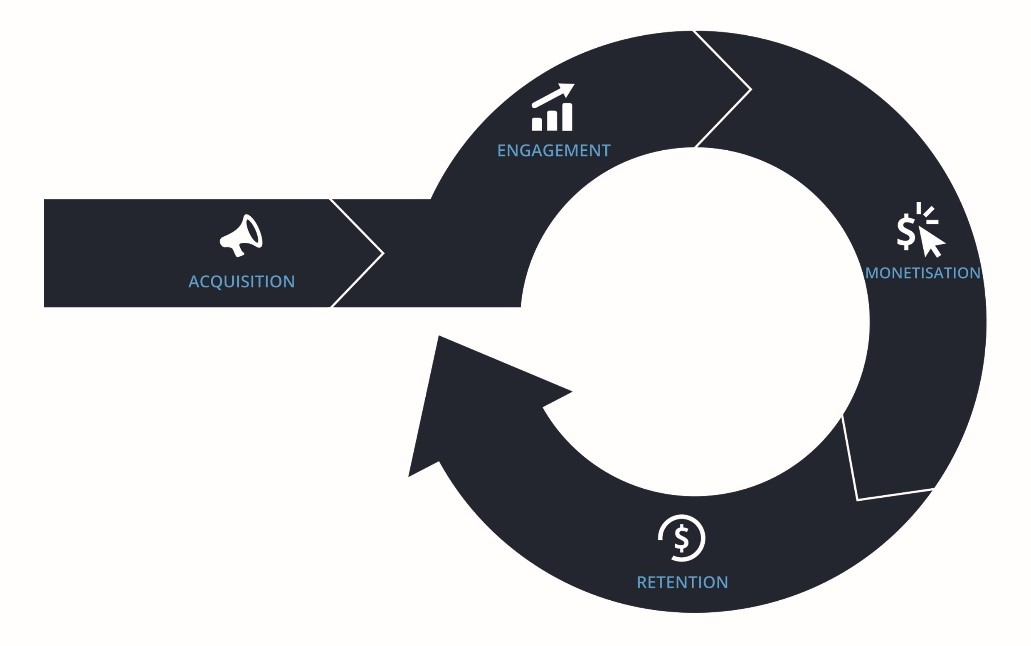
Top 15 KPIs to measure app performance to track mobile app success
Mobile app KPIs based on the General app performance
- User growth rate
- App installation/uninstallation
- Registration
- Subscription
Mobile app KPIs based on user interaction within the app
- User retention rate
- Session
- Churn rate
Mobile app KPIs based on Monetization & revenue
- The average revenue per user
- Customer Acquisition Cost
- Return On Investment
- Cost Per Install
- Customer Lifetime Value
Mobile app KPIs based on App Store Optimization
- Keywords
- App Store Category Ranking
- App Reviews & Ratings
KPIs To Measure General App Performance
You can consider the following KPIs to identify your app’s general performance.
User growth rate
It helps you to determine at what rate your user base is rising. You must know your current and past users to get the numeric result of your app user growth.
(Current users – past users/ past users) x 100
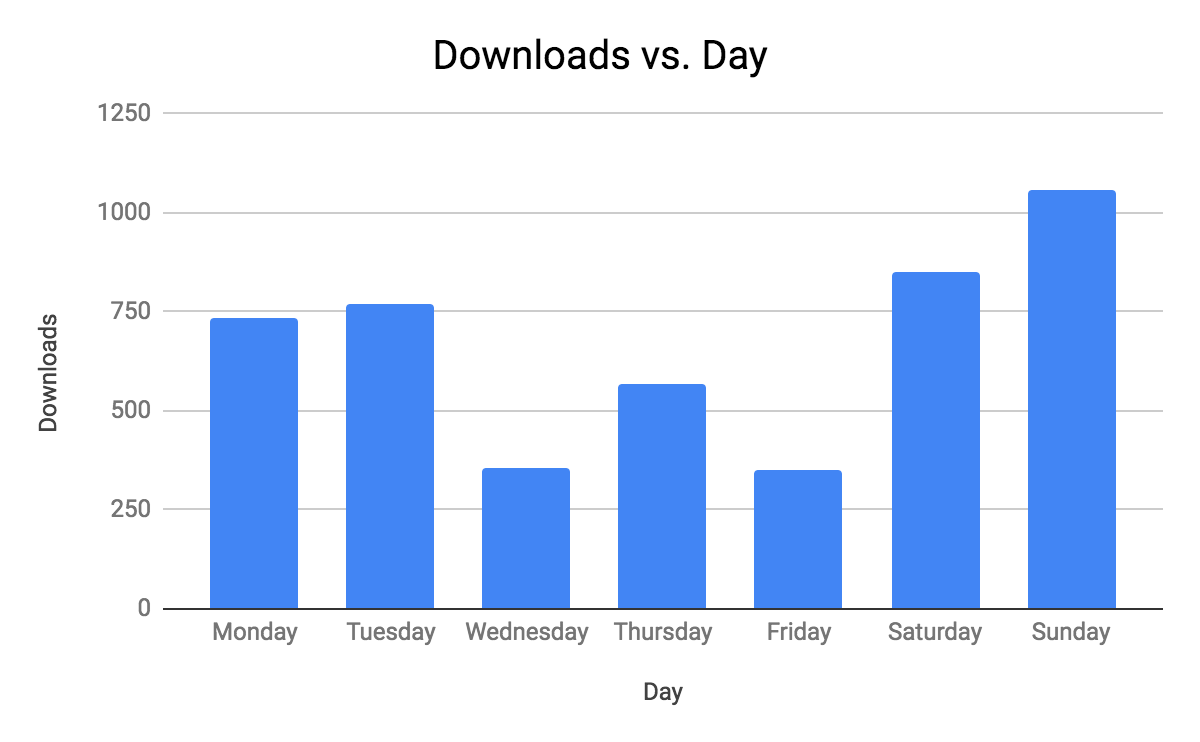
App installation/uninstallation
It is one of the important key performance indicators that help you monitor the installation and uninstallation patterns of users. You will understand what is advantageous to you and what else you can do to keep your current users.
Registration
Many applications need users’ registration, which creates a record of users, such as their personal information or card details. It is one of the KPIs that can be tracked over time and is counted on registration. You can get your entire onboarding experience to understand user behavior if you discover that users are not interested in registering after downloading it.
Subscription
The number of subscriptions and unsubscriptions matters a lot. You can easily monitor your new subscribers to identify how well your app is performing and where it is lacking.
KPIs to Measure User Interaction With An App
These KPIs will help you measure the number of interactions between users and apps.
User retention rate
User retention rate refers to those users who use your app continuously and do not jump over your competitors’ apps. It is another mobile app KPI that helps to measure app performance and success.
CE = ((Users at the end of the period – New users acquired during the period) / Users present at the start of the period) x 100
Session
The number of times users use the daily app counts as a session. In some cases, users download the app but last opened it a few days ago. When a user frequently makes sessions, it indicates stickiness.
Stickiness = Daily Active Users / Monthly Active Users
Churn rate
The churn rate refers to the users who uninstalled and unsubscribed from the app. You have to keep an eye on your app performance else you can encounter a higher churn rate. You can calculate the churn rate with this formula:
Churn Rate: Users who left / (Users at the beginning of the period + New users acquired during the period) X 100
KPI To Measure Monetization & Revenue
Track your revenue stream by giving KPIs with your application.
The average revenue per user
To maintain a profitable app, you must determine how much value or money has been produced per user through in-app purchases, registrations, installations, commercials, and clicks.
Average revenue per user = Lifetime revenue / Number of users
Customer Acquisition Cost
To maintain a profitable app, you must determine how much value or money has been produced per user through in-app purchases, registrations, installations, ads, and clicks.
CAC = Cost of acquiring a new user / Number of new users
Return On Investment
It is a metric that defines how effective the investment is and what the gains are over the investment. The Cost of your app designing, development, launching, and advertising represents your investment.
ROI = (Gain from Investment – Cost of Investment) / Cost of Investment
Cost Per Install
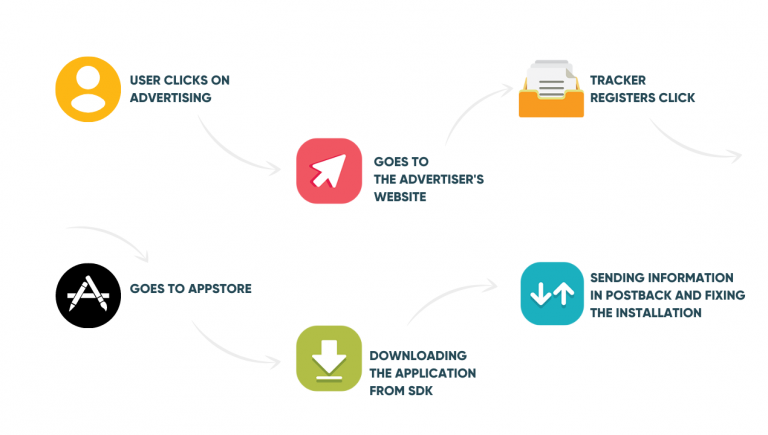
To run an effective ad campaign and obtain the maximum number of installs via advertisements, you must monitor CPI.
CPI: Ad Spend / Number of Installs You Get Directly From Marketing Campaign
Customer Lifetime Value
To ensure your app is operating effectively, measuring the user’s customer loyalty is critical. A successful app has a higher CLV to CAC ratio since each customer contributes significantly more profit than you spent on customer acquisition.
CLV: (Annual profit contribution per customer X Average number of years that they remain a customer) – The initial Cost of customer acquisition
KPIs To Measure App Store Optimization
To ensure the visibility of an app on the App Store or Google Store, you need to optimize your app with SEO practices and standards. Paid promotions and marketing campaigns are the best options to target your app users and audience. Launching your app on the Play Store or App Store would require expertise on how to launch apps on them concerning App Store optimization standards.
Keywords
Your users can find your app in app stores using keywords or phrases. It boosts the chances that users will download your app. So, you can use a wide range of ASO tools to monitor keyword ranks.
App Store Category Ranking
Your app’s ranking within a specific category directly impacts its visibility in organic searches. An effective App Store Optimization (ASO) strategy can help improve your ranking, leading to greater visibility, more downloads, and overall enhanced app performance on both the App Store and Google Play Store.
App Reviews & Ratings
The best way to track your app’s performance is to analyze feedback from your users on the number of both favorable and negative reviews you receive. Constructively take user feedback to improve user experience and enhance the functionalities of your app. Reviews will also provide important information about what users want most from your app.
All mobile app performance metrics have been divided into four major categories and further divided into fifteen parameters. Now, you may select your unique requirements and monitor your app’s performance.
Bottom Line
The Mobile app KPIs help you track app performance and identify potential challenges to improve and optimize user experience, monetization, functionalities, etc. You can outsource the mobile app development and management that keeps track of your mobile app performance and delivers an exceptional experience.
At MMC Global, our developers build and maintain robust mobile applications with diverse tech stacks and custom features and functionalities. We do not just design and develop apps, but we have enchanting strategies to build, manage, and maintain mobile app performance.
Moreover, our strategy to track app performance involves gathering and extracting from different KPI metrics. Every app is distinct in its functionalities and features, which ultimately affect its performance.
If you still need to create an app but want to make one that performs well and is easy to use, get in touch with us and let us know what you need. Get a free consultation with our expert mobile app developers and initiate building your application.