
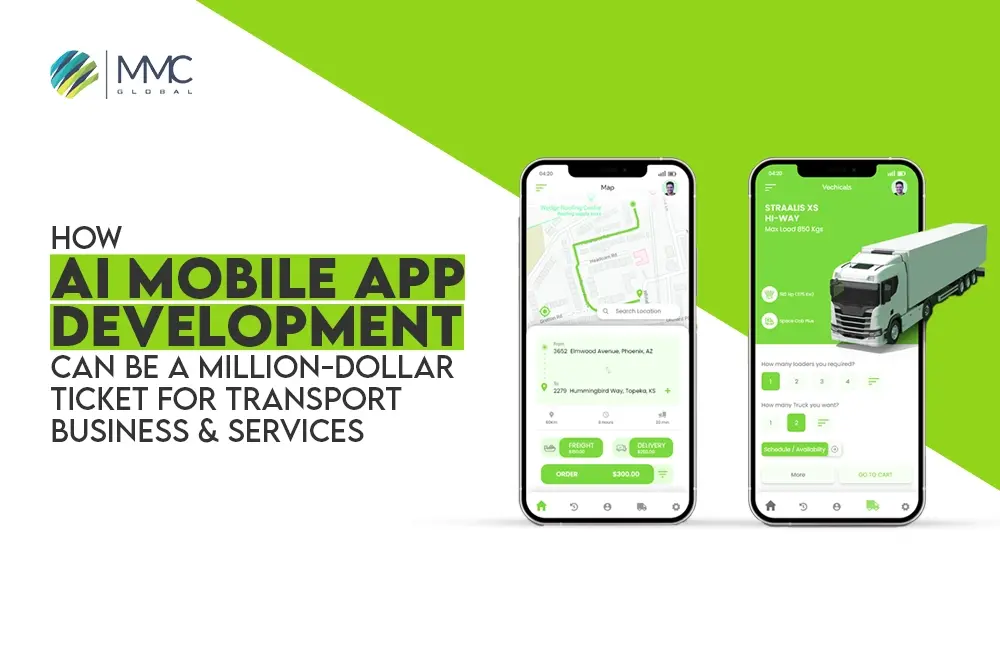
Do you belong to the transport business and want to elevate success with a digital-first solution? You are on the right track. The traditional way of doing business is now revamped with digitalization, and the best part is the surge of implementing AI mobile app development to eliminate the steady traditional strategies that take so long.
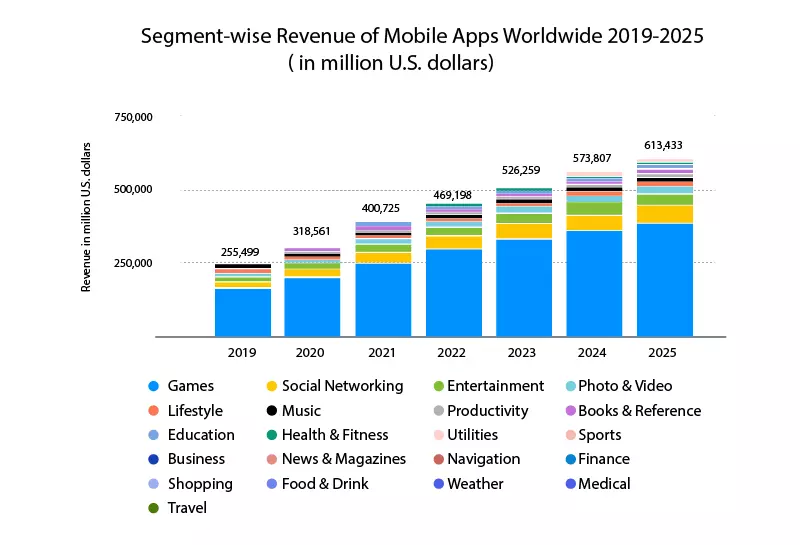
You must check out these stats if you don’t know how much mobile app development generates revenue for a business. We widen that bracket and look at the revenue figures for the top 800 apps; the daily revenue drops to around $3,500.
Interesting?
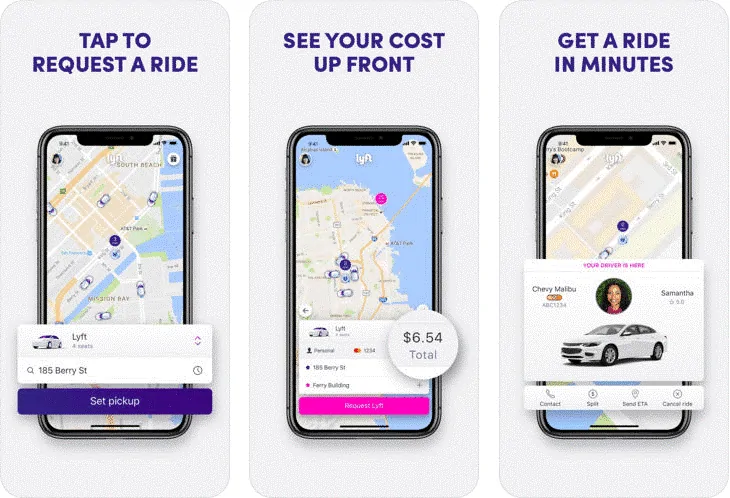
Transport businesses and services are emerging firms in the Middle East and North America. There is an outstanding real-life example of ride-hailing and ride-booking apps like Uber, LYFT, Careem, etc.
But where is the twist? The infusion of AI in mobile app development is the most incredible twist that makes an ordinary app into a million-dollar app as well as a key to the success of your transport business and services.
AI App Development For Transport Business
AI or artificial intelligence technology enhances our way of life, from eating food to shopping, traveling, and doing business. Nothing is left to the influence of AI, including the transportation business and services.
In today’s rapidly evolving business landscape, staying ahead of the competition is vital for the success of the transportation business. One way to achieve this is by embracing cutting-edge technology like Artificial Intelligence (AI) to develop a taxi app that improves operational efficiency and attracts more customers.
Moreover, AI mobile app development for transport businesses allows you to earn more by providing personalized, data-driven experiences. In fact, we’ll explore how AI taxi app development can be the million-dollar ticket your taxi business needs to thrive.
Let’s see how AI mobile app development can transform the transport industry.
Understanding the Need for AI in Taxi Booking Apps
Traditional transportation services, like a cab or taxi business, often struggle with several challenges:
- Inefficient Booking: Booking a cab can sometimes be cumbersome and time-consuming.
- Route Optimization: Drivers may not always take the most efficient routes, leading to longer trips.
- Cost Management: Managing operational costs and pricing can be challenging.
- Data Handling: Real-time data is crucial for drivers and passengers, but may not always be readily available.
- Demand Prediction: Predicting demand as well as optimizing service availability can be hit or miss.
The Power of AI in Taxi Booking Apps
AI-powered taxi booking apps have revolutionized the transportation sector by leveraging the capabilities of artificial intelligence, machine learning, and data analytics. Here’s how AI is transforming the transport industry:
Predictive Analytics
AI-powered mobile apps analyze historical data to predict future demand patterns. Predictive analytics allows taxi companies to deploy drivers strategically. It also reduces wait times for passengers and increases the likelihood of booking conversions.
Personalized User Experience
AI enables apps to provide personalized recommendations and user experiences to their passengers. The app can suggest nearby destinations and favorite routes by analyzing passenger preferences and behavior, and even offer discounts. As a result, Personalized user experience escalates user engagement and conversion rates.
Dynamic Pricing
AI mobile app development services can adjust pricing in real-time based on factors like demand, traffic, and weather conditions. This dynamic pricing approach ensures fares remain competitive, attracting more users and increasing booking conversions during peak hours.
Route Optimization
AI-driven route optimization ensures that passengers reach their destinations faster, with less fuel consumption and lower cost. With the help of AI mobile app development features, passengers can save their routine destinations like home, office, etc. That not only improves user satisfaction but also encourages repeat bookings.
Enhanced Safety
AI can enhance safety through driver monitoring systems and predictive maintenance. Users are more likely to choose an app that prioritizes safety, thus convincing passengers with trust issues to sit in a stranger’s cab. Additionally, the AI mobile app encourages security by providing robust safety features like emergency calls, sending current locations to family or friends, etc. However, many AI-powered transport or taxi business apps connect with IoT devices to track the location of their vehicle and monitor any unusual activities that can be challenging for a company’s reputation.
10 Applications of AI in the Transport Industry
Artificial Intelligence (AI) is reshaping the transportation industry, making it more intelligent, secure, and efficient. As mobile apps become the center of users’ interactions with transportation networks, AI implementation is changing everything from route planning to predictive maintenance. This blog discusses 10 impressive applications of AI in transportation through mobile apps, highlighting how businesses and users can gain from innovative technologies.
Smart Route Optimization
AI-based transport apps scan real-time traffic flow, past trends, weather forecasts, and user behavior to recommend the optimal routes. Ride-hailing services like Uber and Lyft utilize AI to reduce wait times, save fuel, and increase driver and passenger satisfaction. This adaptive routing provides quicker rides even during rush hour.
Predictive Maintenance Notifications
Machine learning-based mobile applications for fleet management can track the performance of vehicles with IoT sensors. The applications read data such as engine temperature, brake pads, or tire pressure and provide forecasts for when maintenance is needed. In doing so, transportation businesses can avoid expensive breakages and increase the lifespan of their fleets.
Personalized Travel Assistance
Mobile app AI tailors travel suggestions for individuals based on their past travel, interests, and context data. Examples include Google Maps or Citymapper proposing preferred modes of transit (bus, train, scooter) and even predicting popular destinations in advance, eliminating effort and time for commuters.
Autonomous Ride-Booking Apps
While self-driving cars continue to develop, some ride-booking apps already leverage AI to operate autonomous fleets. They employ machine learning algorithms to send out self-driving cars, track their performance, and make sure that they take the best routes without the need for humans to intervene.
AI-Powered Traffic Incident Reporting
Applications like Waze use community feedback, supported by AI, to identify and alert to traffic accidents, hazards on the road, or police presence. AI eliminates spurious reports, anticipates accident hotspots, and automatically recommends diversions, leading to safer and more intelligent driving experiences.
Dynamic Pricing & Demand Forecasting
AI assists transportation apps in forecasting demand variations according to time of day, location, weather conditions, and events. This information drives dynamic pricing algorithms (e.g., surge pricing in ride-sharing apps) while assisting organizations to assign drivers or vehicles where they are most required to minimize wait times.
AI-Based Public Transport Tracking
Public transport apps employ AI to offer precise, real-time information regarding buses, trains, or trams. Through GPS tracking and schedule compliance patterns, AI offers better-than-traditional predictions of arrival times, decreasing uncertainty among passengers.
Smart Parking Solutions
Parking in city centers can be frustrating. Real-time parking availability data is analyzed by AI-based parking apps, which forecast parking space turnover and direct users to empty spaces around their destination. Such solutions minimize traffic congestion and emissions from drivers cruising around for parking.
Voice-Activated Navigation & Assistance
AI allows voice assistants in mobile apps to assist users in driving, hail rides, or access public transit information without using their hands. This not only enhances accessibility for riders and drivers alike but also increases safety by reducing distraction.
AI for Environmental Impact Monitoring
Sustainability-oriented transportation apps have included AI to track carbon emissions, fuel consumption, and environmentally friendly route recommendations. Apps even gamify ecologically friendly options, incentivizing users to minimize their carbon footprint based on AI-based insights and rewards.
Real-World Examples of AI in Transportation
Uber
Uber utilizes AI for route optimization, dynamic pricing, and matching riders with nearby drivers. Machine learning helps reduce wait times, ease congestion, and enable a more efficient ride-sharing experience.
Tesla
Tesla’s self-driving technology is powered by AI. The company’s Autopilot and Full-Self-Driving (FSD) systems use neural networks, computer vision, and sensor fusion to enable autonomous lane keeping, automatic lane changing, and even navigating city streets with growing confidence.
Waymo (Alphabet/Google)
Waymo, a subsidiary of Alphabet, is a pioneer in autonomous vehicle technologies. It utilizes sophisticated AI to process data from its sensors, make real-time decisions, and safely navigate complex environments — from city streets to highway merges.
Siemens Mobility
Siemens Mobility applies AI for rail network optimization. This includes predictive maintenance for signals and track components, optimizing schedules to reduce delays, and improving energy usage across its vast transportation networks.
DHL
DHL utilizes AI-powered route planning and delivery operations. Machine learning helps predict delivery bottlenecks, track packages in real time, and maximize delivery speed while reducing emissions and operational costs.
Deploying AI in Transport: Major Challenges and Success Solutions
Although the future of AI in transportation is gigantic, embracing this technology includes its challenges. Organizations must be careful and creative to maximize their AI projects, from data quality and availability to implementation costs. These are the typical challenges and their Success Solutions:
Challenge 1: Data Quality and Availability
AI algorithms need enormous volumes of high-resolution, precise, and fresh data. Mostly, transport organizations are plagued by incomplete, unstable, or poorly tagged data, directly affecting algorithm performance.
Solution:
Enforce robust data governance policies, spend on IoT sensors and enrichment, and engage stakeholders to validate data formats and enhance their quality.
Challenge 2: Security and Privacy Issues
AI solutions gather and process vast amounts of sensitive information — from car locations to passenger habits — which raises essential privacy and cybersecurity concerns.
Strong Solution:
Embrace sophisticated data encryption, access controls, and compliance solutions (such as GDPR). Anonymize data wherever practicable, and have robust network security against cyber attacks.
Challenge 3: Integration with Legacy Systems
Most transport businesses operate with a hybrid model of legacy technologies combined with their new digital platforms. Introducing advanced AI with older systems can be complex and cumbersome.
Effective Solution:
Hire API-layer integration, microservices, or data lakes to facilitate seamless information passing from legacy to newer parts. This allows businesses to leverage their existing resources with additional functionality.
Challenge 4: Algorithm Explainability and Accountability
Specific AI models — particularly deep neural networks — may be difficult to interpret, and it can be challenging to explain their decisions to regulators, stakeholders, or users.
Effective Solution:
Use Explainable AI (XAI) methods to render algorithm decisions more interpretable. Offering transparent explanations encourages trust, compliance, and fairness.
Challenge 5: Talent Gap and Implementation Costs
Acquiring talented AI engineers and data scientists and finding funding for mass implementation may pose a significant barrier to most companies in the transportation sector.
Effective Solution:
Upskilling in-house teams, co-operating with niche technology providers, or outsourcing parts can help alleviate economic pressures and allow companies to learn and evolve. Having a realistic step-by-step implementation can make it more manageable.
Steps to Develop an AI-Powered Taxi Booking App
To create an AI-powered taxi booking app that can thrive in the US market, we follow essential steps with diverse methodology as well as flexible working models.
Market Research
We first understand your target audience and their needs. Identify your competitors and what features they have included in their apps. After sorting out your competitors, we create a list of features that must be added to your future app.
Choose the Right Technology Stack
We have extensive tech talent and multiple options, but we suggest a future-proof tech stack that can be scalable and affordable for your business. Our primary focus in this step is selecting the appropriate tech stack for your app, considering factors like scalability, real-time processing, and data analytics.
Data Collection and Integration
AI and ML are viable on datasets and are pre-trained on these datasets. Gathering and integrating data sources such as GPS, maps, traffic, and user behavior data is paramount for building an AI mobile app for the cab booking business. This forms the foundation for AI-powered features.
AI Algorithm
Develop or integrate AI algorithms for predictive analytics, route optimization, and dynamic pricing. These features will set your app apart from the competition because the complex AI algorithm makes your app capable of understanding human preferences, analyzing behavior, predicting situations, and reacting accordingly.
User-Friendly Design
Our specialized UI UX designers for AI mobile app development will never disappoint you with their creativity. From creating a highly navigable yet intuitive user interface to picking up soothing hues and themes, our designers can ensure an exceptional user experience throughout the application. By using immersive animated graphics, best wireframe implementation, and prototyping for high-fidelity design, we create apps that attract users and provide seamless and engaging experiences.
Testing and Quality Assurance
Our dedicated SQA team rigorously tests the app to eliminate bugs and ensure it functions smoothly. We also conduct beta testing to gather user feedback and make necessary improvements.
Launch and Marketing
We help you to launch your app on popular app stores and promote it through various marketing channels. Moreover, our services include App Store optimization and highlighting the AI-powered features that make it stand out.
Feedback and Continuous Improvement
Our tech support team will continuously gather user feedback and make updates to enhance the app’s functionality and user experience.
Estimated cost of developing an AI-powered taxi mobile app
The estimated cost of developing an AI-powered taxi mobile app ranges from $50,000 to $250,000. This cost includes the following:
- Design and development of the app
- Testing and deployment of the app
- Integration with third-party services, such as payment processors and mapping services
- Development of the AI-powered features, such as dynamic pricing and route optimization
Additional costs
In addition to the development costs, there are several other costs that you need to consider, such as:
- Marketing and advertising costs: To attract users, you must market and advertise your app.
- App maintenance costs: You must maintain and update your app with new features and bug fixes.
Final Thoughts
AI-powered cab or taxi booking apps have redefined the transportation industry by providing users convenience and efficiency while offering businesses innovative ways to increase conversion rates. By leveraging predictive analytics, personalized user experiences, and real-time features, you can create an app that stands out in a competitive market and attracts and retains a loyal user base. As technology advances, the opportunities for AI-powered transportation solutions are limitless, making it an exciting space to explore and invest in. However, the benefits of AI mobile app development are that it can infuse the utmost AI-powered features that make an app outstanding. But how can you build a one-of-a-kind AI mobile application for a taxi booking app?
Here we are! At MMC Global, we are highly committed to developing AI mobile applications for transport business services. Furthermore, we have flexible working models to build mobile applications and highly qualified AI engineers to unpuzzle AI algorithms. Leading mobile app development companies like us, MMC Global, proudly say that we have a capable AI mobile app development team that helps build applications tailored to your requirements with a hassle-free development approach.