
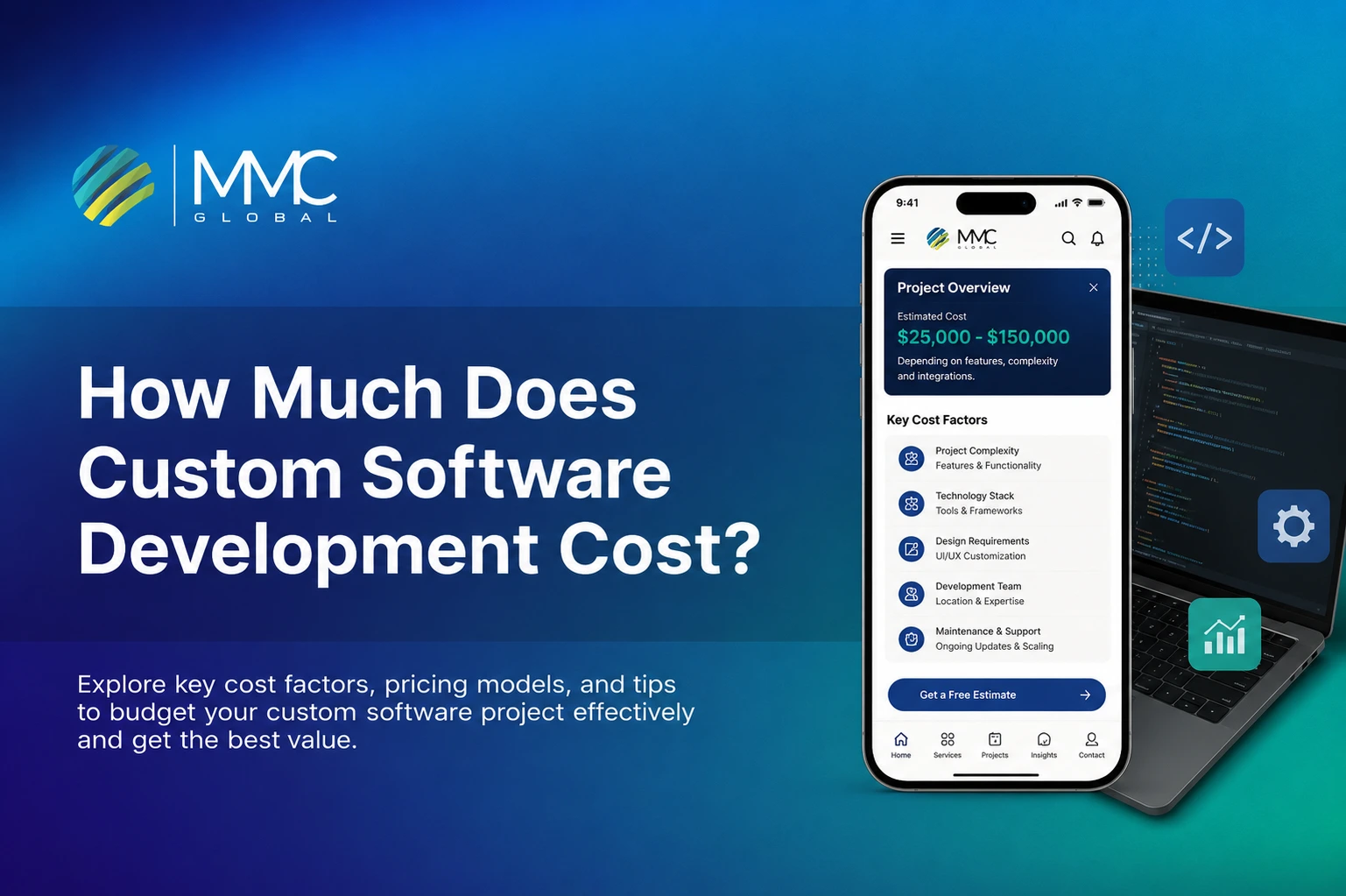
Creating custom software seems exciting, and indeed is a necessary step for an enterprise, until someone asks, “What’s the actual price tag?” The most common situation of hitting a wall. Reality is, there is no fixed custom software development cost. And that factor alone makes the budgeting process full of confusion.
Different resources on the internet quote different estimates. One might set the ballpark at $30,000, while another one stretches it over the limit of $250,000 for a similar project.
Even after countless studies, founders are still left with one unresolved mystery: “How much does custom software cost?” Every estimate relies on what type of product you have envisioned and dozens of development decisions made long before initiation.
That’s why MMC Global is representing this guide for you. Have our words when we say that by the end, you will completely understand what decides the final cost, where your investment goes, and how to plan a budget realistically instead of guesswork.
Average Cost of Custom Software Development in 2026
The answer for all of the businesses wondering “how much does it cost to develop software?” is that in 2026, it falls between $30,000 and $300,000+.
The reason for such diversity is the type of platform you want to build and the complexity of the development scope and integrations. We have divided the pricing into 3 easy tiers as follows:
Let’s have a quick discussion to identify your requirements and business needs. Get a complete plan ready with the exact tier you need.
Get A Cost Audit| Project Type | Estimated Cost | Estimated Timeline |
| MVP | $10,000 to $50,000 | 2 to 4 months |
| Medium Scale | $50,000 to $150,000 | 4 to 8 months |
| Enterprise Software | $150,000 to $500,000+ | 6 to 18+ months |
These custom software development rates are a realistic ballpark. Each tier has its own set of features, functionality, frameworks, integrations, and customization, which also determines the timeline of project completion.
Key Factors That Influence Custom Software Development Cost
A detailed study by Standish Group states that 52.7% of software development projects exceed the initial budget by 150 to 200%. This margin indicates the scope alteration, complexities, and overall feature additions throughout the entire project.
Let’s have a look at what factors influence the entire budget:
Feature Complexity
Incorporating any feature impacts the digital product development cost. A standard login screen and an admin dashboard need less development effort. Meanwhile, AI recommendations, messaging, workflow automation, data analysis, or RBAC increase development hours.
Project Scale
There is different software for a diverse user base. An internal system used by a single department costs less than a large-scale enterprise tool, which is supported by different teams, locations, and numerous users. When a project scales, the system requirements, integrations, and capabilities also change, influencing enterprise software development cost, higher than that of small business applications.
Technology Stack Selection
The technologies you use tell how the platform will function. Cloud-native tools require a higher investment initially, but they reduce further operating costs as your product grows.
| Technology Stack | Best For | Cost Impact |
| MERN (MongoDB, Express.js, React, Node.js) | SaaS platforms, web applications, MVPs | Moderate |
| .NET | Enterprise software, finance, healthcare | Moderate to High |
| Java + Spring Boot | Large-scale enterprise systems | High |
| Python (Django/FastAPI) | AI applications, automation, data-driven platforms | Moderate to High |
| PHP (Laravel) | Business portals, CMS, custom web solutions | Moderate |
| Flutter / React Native | Cross-platform mobile apps | Lower than separate native development |
Third-party Integrations
Modern custom software relies on external systems to work smoothly. Integrating with third-party tools and existing systems like payment gateways, CRMs, ERPs, or cloud requires additional testing. API limitations and flowing synchronized data through every channel in real time can add more development hours as well.
UI/UX Design Complexity
A perfect design involves more than pretty colors and layouts. It starts with analyzing user behavior before wireframing and high-fidelity prototyping. Design decisions shape UX and also development effort.
Team Structure
The team working behind your software is also important, just like knowing what you are developing. Freelancers and in-house development teams are a good fit for specific projects; however, growing organizations must consider partnering with a skilled software development company.
Although the dedicated development team cost is higher upfront, choosing to hire software developers provides consistent expertise, seamless collaboration, and long-term value for your project.
Development Engagement Model
Engagement models differ from custom software development pricing. A project with a fixed-price scope aligns well once the requirements are clearly defined, while time-and-materials or team models offer flexibility for growing systems. Selecting the right approach helps in balancing the custom software development cost.
Security And Compliance Requirements
Industry-specific software needs critical additional planning and validation. Compliance standards like HIPAA, SOC 2, and GDPR demand secure data protection measures and regular security checks.
Infrastructure Planning
Infrastructure planning affects development and operating costs. Modern cloud-based systems provide flexibility, but AWS and Azure add continuous expenses. Planning early DevOps and CI/CD pipelines also improves deployment efficiency and prepares the software for further scalability.
Cost Breakdown Across the Software Development Lifecycle
Custom software development costs are distributed across different stages. Every phase needs specific skill sets, timeframes, and technicalities, which makes the reason of why budgets are never evenly split a lot more clear.
| Development Phase | Typical Budget Share | Estimated Timeline |
| Discovery And Requirements | 5 to 10% | 1 to 3 Weeks |
| UI/UX Design | 10 to 15% | 2 to 4 Weeks |
| Front End Development | 20 to 25% | 4 to 8 Weeks |
| Back End Development | 25 to 35% | 6 to 12 Weeks |
| Quality Assurance And Testing | 15 to 20% | Throughout Development |
| Security Audit | 5 to 10% | 1 to 3 Weeks |
| Deployment Stage | 3 to 7% | 1 to 2 Weeks |
| Maintenance After Launch | 15 to 25% per Year | Ongoing |
Let’s dive into the depths of it to easily understand the spending.
Discovery And Requirements
Software development consultation has more influence than the credit it gets. Businesses often skip this part to save on budget, considering it “just an unnecessary discussion” without knowing that this phase makes the entire scope clear. The quality of early discussions decides how smooth or difficult the project is going to be. If requirements are not clear, the scope keeps changing throughout the project.
Even a minor misinterpretation can lead to massive corrections in development.
- MVP Scope: $1,500 to $5,000
- Medium Scale: $5,000 to $15,000
- Enterprise Systems: $15,000 to $50,000+
UI/UX Design
A simple app with linear user flows needs few iterations, but when a digital product supports different roles, conditional workflows, or layered dashboards, the design process becomes more demanding.
UI/UX design is more than adding fancy elements left and right. It must be in accordance with keeping the user flow in mind. Teams go through multiple rounds of wireframes, user journeys, and prototypes before confirming a particular direction.
- MVP Scope: $3,000 to $7,500
- Medium Scale: $7,500 to $22,500
- Enterprise Systems: $22,500 to $75,000+
Front End Development
The complexity of interaction begins to reveal its real impact on the budget during frontend development. Everything you see and interact with is developed in this stage.
Static interfaces become dynamic with real-time updates and responsiveness. The web application development cost goes up when the UI includes advanced component behavior.
- MVP Scope: $6,000 to $12,500
- Medium Scale: $12,000 to $37,500
- Enterprise Systems: $37,500 to $125,000+
Back End Development
The core logic of the software is carried by the backend systems, which decide how data is stored, processed, and retrieved. It also decides the communication path of different services.
Decisions around data schemas and processing workflows have long-term implications. API integrations and connecting with external systems or third-party services introduce complexity and complexity, which should be carefully handled with surgical attention.
- MVP Scope: $7,500 to $17,500
- Medium Scale: $15,000 to $52,500
- Enterprise Systems: $52,500 to $175,000+
Quality Assurance And Testing
The testing phase challenges assumptions against real system behavior. Each feature should be checked in different scenarios to check consistency and reliability. As the number of elements increases, so does the number of tests and edge conditions.
This phase also requires precision to avoid missing any issues, as fixing them becomes more expensive and time-consuming, making software development cost estimation rarely accurate.
- MVP Scope: $4,500 to $10,000
- Medium Scale: $9,000 to $30,000
- Enterprise Systems: $30,000 to $100,000+
Security Audit
Security validation becomes important if the system is dealing with sensitive data or user credentials. Apps with financial transactions or healthcare records need deeper vulnerability checks, stricter access control, and detailed penetration testing to keep them bulletproof against cyberattacks.
- MVP Scope: $1,500 to $5,000
- Medium Scale: $4,000 to $15,000
- Enterprise Systems: $15,000 to $50,000+
Deployment Stage
The stage that makes the entire software ready to be used by everyone. Deployment includes configuration and management of release processes. Simple apps are quickly deployed with minimal setup. Huge systems need staging environments and automated deployment workflows for stability.
Leveraging CI/CD pipelines helps in minimizing manual hard work, although setting them up needs extra engineering effort at the beginning.
- MVP Scope: $1,000 to $3,500
- Medium Scale: $2,500 to $10,500
- Enterprise Systems: $10,500 to $35,000+
Maintenance After Launch
Operating systems keep changing, and external APIs alter their connectivity rules. Even after rolling out in the market, your software demands continuous checks and balances to see which areas are working the best and what features need special care. Bugs can still appear once the digital product is live.
Calculate the annual software maintenance cost, which takes 15% to 25% of your overall build investment every year to avoid system failure.
Cost of Custom Software Development by Software Type
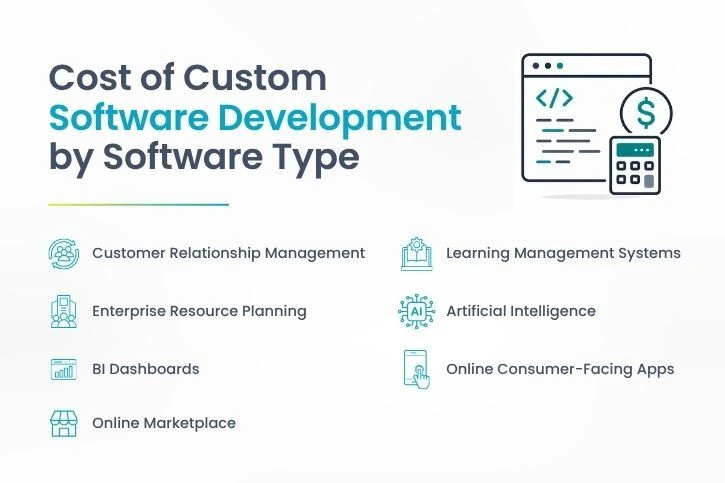
Custom software development services fall into multiple categories, and each category comes with its own budget range as per the roles added to it. To calculate the estimated custom software development cost, you need to identify what application you actually need.
Customer Relationship Management (CRM)
A CRM lets businesses organize scattered customer information into one place, including managing sales pipelines and follow-ups to strengthen client relationships. The CRM software development cost is identified by checking how much of a client’s lifecycle is managed by the system.
Key Cost Drivers:
- Contact and lead management.
- Workflow automation.
- Third-party integration (ERP, email, VoIP).
- Reporting and analytics dashboards.
- Role-based user permissions.
Estimated Price: $30,000 to $200,000+
Timeframe: 3 to 18+ months.
Enterprise Resource Planning (ERP)
An Enterprise Resource Planning System runs on a massive scale than a CRM system. It centralizes every business operation in a unified platform, giving multiple departments like HR, finance, supply chain, inventory, and manufacturing software solutions the flexibility to operate from a shared source.
Key Cost Drivers:
- Department-specific modules.
- Migration of legacy systems.
- Multi-location operations.
- Workflow automation.
- Custom reports and dashboards.
ERP Development Cost: $30,000 to $2,000,000.
Timeframe: 6 to 12+ months.
Online Consumer-Facing Apps
These platforms are developed for public users to access products or services via a web or mobile application. The most common examples in the industry are social media apps, food delivery apps, streaming platforms, online booking systems, and subscription-based SaaS tools.
To figure out the mobile app development cost, the complete investment relies on traffic, features, and the architecture required to maintain the experience.
Key Cost Drivers:
- User authentication.
- Payment processing.
- Push notifications.
- Real-time data synchronization.
- Cloud.
- Prioritized platform (iOS, Android, or cross-platform.)
Investment Estimation: $20,000 to $150,000+
Timeframe: 3 to 9+ months.
Marketplace Platforms
A marketplace platform links buyers and sellers on a single system, which lets them discover products and securely communicate. Examples are B2B and eCommerce marketplaces and service booking platforms.
Also Read: How To Choose & Build Best Shopping Cart Software for eCommerce App Development.
Unlike a traditional eCommerce website development, it should support multiple user journeys at the same time.
Key Cost Drivers:
- Multi-vendor onboarding and management.
- Payment gateways.
- Order and inventory management software.
- Reviews and rating systems.
- Order tracking systems.
Estimated Cost: $15,000 to $300,000+
Timeframe: 3 to 18+ months.
Business Intelligence Dashboards
A BI dashboard creates visual reports of business data, which helps enterprises track performance and make relevant decisions based on them. It gathers information from multiple systems and brings them under a centralized view.
Primary Cost Drivers:
- Data source integrations.
- Interactive dashboards.
- real-time reporting.
- KPI visualization.
- Custom analytics.
Cost estimation: $30,000 to $120,000
Timeline: 3 to 6 months.
AI Software
Businesses are actively adopting AI software to quickly and smoothly overcome operational challenges. Organizations are investing in creating AI chatbots for customer support, generative AI platforms for content ideation, and intelligent assistants to overtake repetitive daily tasks.
The complete investment relies on the type of AI solution you want to create.
Key Cost Drivers:
- Large Language Model (LLM) integration.
- Custom AI.
- Business data preparation.
- AI automation.
- Model training and optimization.
AI Software Development Cost: $40,000 to $400,000+
Timeline: 2 to 12 months.
Learning Management System (LMS)
An LMS is used by businesses and educational institutions to deliver online training. Organizations can create courses, monitor learner progress, and measure training results. As part of custom software development for education, businesses can build LMS platforms tailored to their specific training and learning requirements. Multiple companies also leverage them to onboard employees.
Get a clear cost breakdown of completely secure and optimized software to remove assumptions that put you in endless confusion.
Book A Call Today!Development requirements differ as per the learning experience you want to deliver.
Key Cost Drivers:
- Course and content management.
- Virtual classrooms.
- Assessments and quizzes.
- Video streaming.
- Certification management.
- Advanced progress tracking and analytics.
Estimated cost: $15,000 to $250,000.
Timeline: 4 to 14 months.
Also Read: How Does It Cost To Build A Lead Management Software To Boost Business Sales.
Cost of Custom Software Development by Industry
The growth of software development has expanded into high-value industries around the globe. Custom software prices significantly vary in industries, as every sector operates under different rules and demands.
Healthcare
The medical software market has continued to expand ever since providers have adopted digitized systems for patient care and virtual consultations.
You may also read: Healthcare ERP Software: Why Do Healthcare Organizations Need To Integrate It?
Mordor Intelligence reveals that the healthcare market around the world is valued at $37.68 billion in 2026.
This growth is driven by mhealth apps and telemedicine platforms, which strictly require compliance with HIPAA and regional data protection laws. This demand and requirement increase the overall healthcare software development cost.
Cost: $40,000 to $500,000
Fintech
Fintech stands as one of the biggest rapidly growing software-enabled industries after the rise of online payments and neobanking services.
As stated by IMARC, the fintech market is expected to reach a revenue of $938.7 billion by 2034. A whopping CAGR of 15.19% from 2026 to 2034.
The real cause of this market boom is real-time payments, fraud detection, and KYC and AML verifications, influencing fintech software development costs.
Cost: $50,000 to $300,000+
Logistics And Fleet Management
The Global trade complexity and rising needs for real-time visibility across transportation networks have quickly increased the demand for logistics software.
The numbers also tell about the demand, as in 2026, the logistics software market is expected to reach $17.47 billion.
This massive growth is the outcome of fleet tracking systems, warehouse automation, and route optimization systems.
Cost: $30,000 to $300,000+
Supply Chain
Supply chain systems are also taking the lead in the growing industry, since enterprises are investing in resilience and global supplier coordination.
The global SCM software market is expected to cross the value of $43 million by 2033.
This growth is a clear reflection of the high demand for supplier collaboration tools and end-to-end visibility across the operations.
Cost: $40,000 to $600,000+
Retail And eCommerce
Retail platforms and eCommerce software power online stores and order management systems. With custom retail software solutions, organizations can efficiently manage the entire buying journey, from product browsing and inventory management to order processing and customer support.
Moreover, the eCommerce software market is expected to grow from $13.10 billion (2026) to $44.32 billion (2034).
After the rise of online shopping and multi-vendor stores, businesses are more focused towards building advanced platforms that contain personalization, inventory, search filters, and AI-enabled features for high transaction volumes.
Cost: $30,000 to $300,000+
SaaS Platforms
Software-As-A-Service continues to take over modern software delivery models; however, it is also becoming more expensive to create and optimize them due to rising infrastructure costs and AI integration.
Forbes states that companies in 2026 are now investing $55.7 million every year in SaaS. Factors like AI features and customer expectations are increasing SaaS development costs.
Cost: $15,000 to $500,000+
Cost of Custom Software Development by Region
The same software carries different price tags based on where it is built. Availability of developers, local labor markets, and technical expertise all influence regional pricing. Even when evaluating software development cost in USA, the hourly rate changes by region.
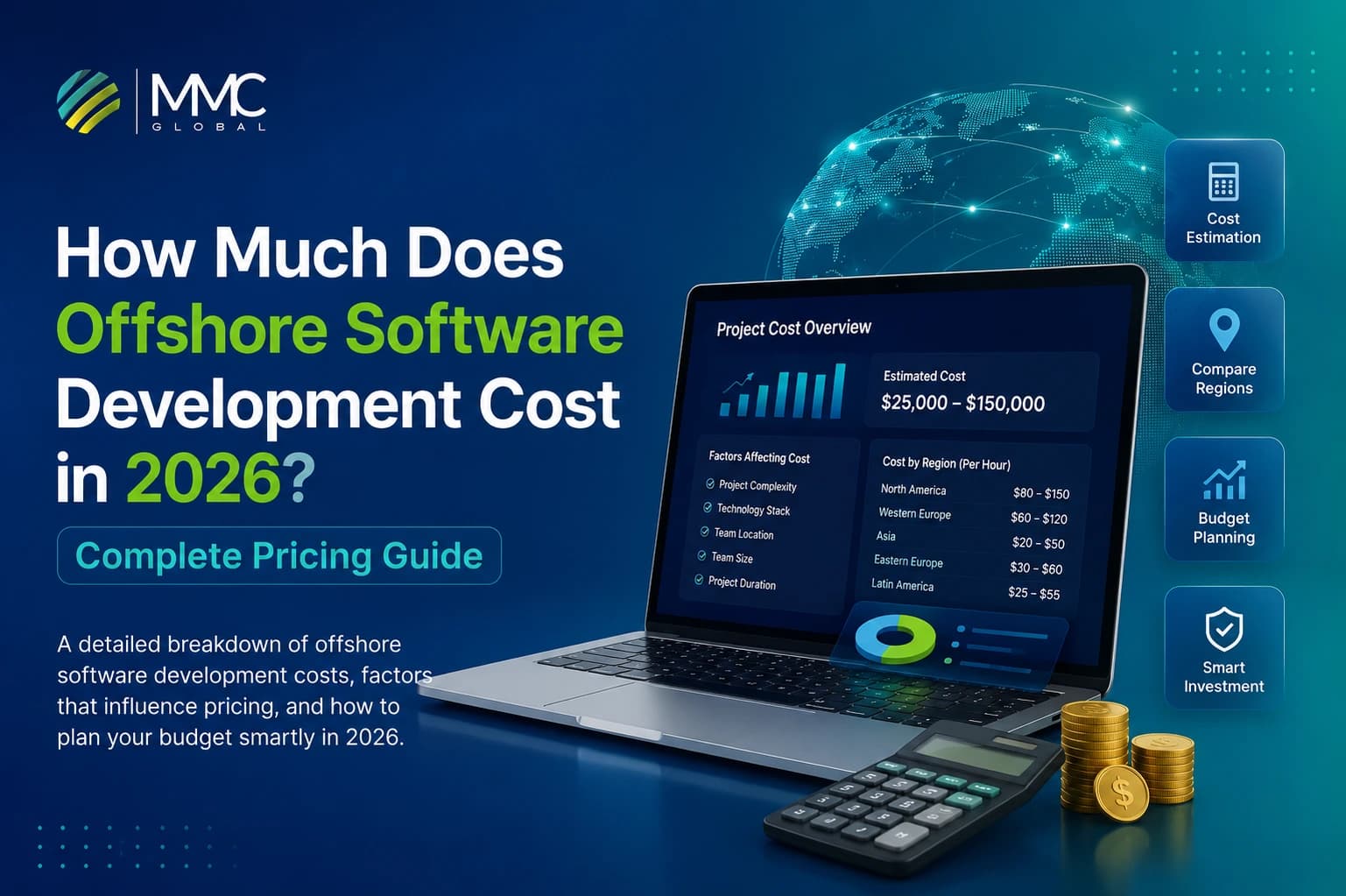
North America remains the most expensive region. Businesses looking to hire offshore development teams often choose more affordable destinations, where offshore software development costs are lower, helping them streamline their budgets while still gaining access to comparable expertise.
| Region | Average Hourly Rate | Cost Level |
| United States | $120 – $250/hr | High |
| Canada | $90 – $180/hr | High |
| United Kingdom | $80 – $170/hr | High |
| Western Europe | $80 – $160/hr | High |
| Eastern Europe | $40 – $90/hr | Moderate |
| Latin America | $35 – $80/hr | Moderate |
| MENA (UAE, Saudi Arabia, Egypt, Jordan) | $40 – $100/hr | Moderate to High |
| South Asia (Pakistan, India, Bangladesh) | $25 – $60/hr | Low |
Selecting a custom software development region should never be based only on hourly prices. Communication, experience, skills, time zone, security practices, and post-launch support have a more massive impact on the success of a project than the lowest quoted cost.
A Short Note: See how our app developers in Washington, DC, are helping startups and enterprises adapt to the new wave of technology with customized solutions.
Pricing Models Used in Custom Software Development
The numbers at the bottom of the page only tell half of the story while asking for a software development quote. The other half is how those numbers are calculated and billed. Industry experts differentiate commercial frameworks based on who is taking on financial risk.
Have a look at the table below to analyze the three distinct models stacked up against each other:
| Pricing Model | Scope Flexibility | Budget Predictability | Typical Project Duration |
| Fixed Price | Low | High | 2–6 months |
| Time And Materials | High | Moderate | 4–12+ months |
| Dedicated Team | Very High | Moderate | 6 months to multiple years |
1. Fixed Price
Here, you gain extreme peace of mind with a finalized budget, but you have to compromise on the ability to add or remove even any minor element right away. The teams will create the same thing as defined in the initial scope sheet.
2. Time And Materials
T&M offers you the freedom to swap features according to new feedback gathered from users. The actual catch is that this framework needs a strong internal project management to make sure you do not slip out of the scope completely.
3. Dedicated Team
For enterprise-grade and ongoing projects, this model keeps your budget predictable while providing you with a team of experienced engineers who understand your business logic in depth over the long haul.
How to Reduce Custom Software Development Costs Without Compromising Quality
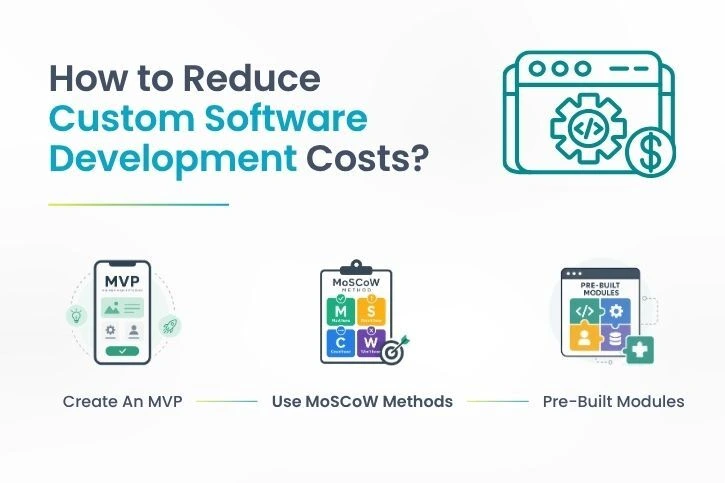
Planning smartly reduces engineering efforts without compromising on product quality. The main objective remains to provide immense value to users while removing unnecessary development cycles that also waste time.
Create An MVP
Consider a minimum viable product instead of building a full-scale enterprise solution. This way, you can check which features are highly demanded by users and what else you can improve or remove. Focusing entirely on essential features helps control MVP development cost.
Use Agile Or MoSCoW Methods
Break requirements into prioritized stages. Use Must Have, Should Have, Could Have, and Won’t Have ideology to improve decisions and increase software development ROI.
Reuse Frameworks And Pre-Built Modules
Leverage current frameworks, libraries, and market-ready components. It accelerates time to market and minimizes efforts without affecting stability.
How Can MMC Global Help In Custom Software Development?
The conclusion of our entire research is that there is no fixed price, albeit depends on every single choice you make. It’s up to you what you envision, and your users demand the most.
At MMC Global, we believe in transparency. In our software development cost consultation, we help you identify what’s trending in your industry and how to process a project that performs impeccably.
To make your every penny worth it, we combine agile methods, utilize cloud infrastructure, and employ scalable system planning to deliver software development services for better business. We build software that performs well today and continues to scale in the future.
MMC Global maps out cost-effective strategies without cutting essential corners of the software that helps lead your team through the workflows.
Talk To Our ExpertsFrequently Asked Questions
How much does custom software development cost in 2026?
The custom software development cost in 2026 falls in the range of $30,000 to $300,000+. This price range reveals that the budget relies on types of software, functionalities it requires, framework choices, team size, and infrastructure integrations.
Are there any hidden factors that affect the total budget of custom software development?
Yes, there are hidden factors that affect the cost of software development. The most common factors that always get overlooked are scope creep, integrations, ongoing maintenance, security patches, and license renewals.
What is the total timeline to develop custom software?
The custom software development timeline is divided into different categories. An MVP costs around 2 to 4 months, while an enterprise-level tool takes 12 to 18+ months to complete.
Does MMC Global follow regulatory compliance in development?
Yes, MMC Global thoroughly follows regulatory compliance for industry-specific software development. We adhere to HIPAA in healthcare platforms, PCI-DSS for fintech solutions, and mandatory data security laws like GDPR and SOC 2 to keep your users’ trust intact and your operations running smoothly.