
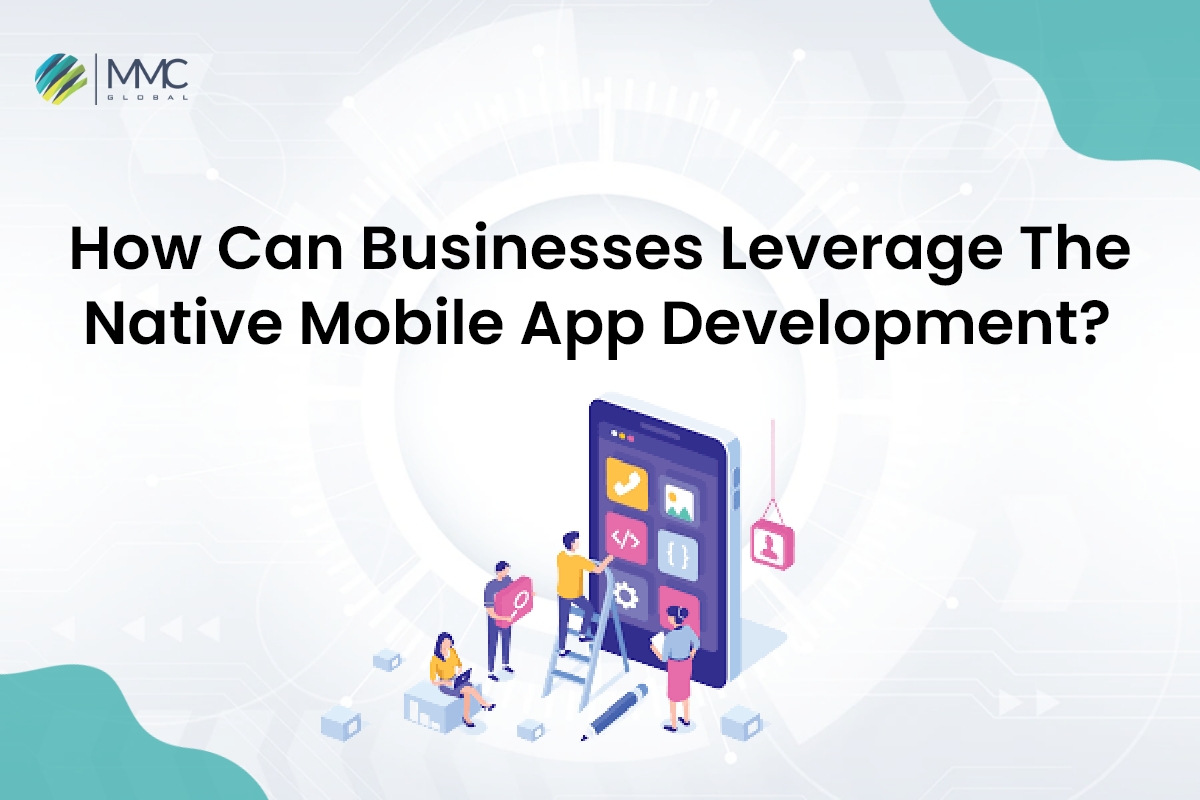
Improving the business operations to get the most out of an investment is the primary goal of any business. Business owners are highly invested in making the business operation fast, increasing productivity, providing an exceptional customer experience, engaging users, and doing more in less time. Business owners make every possible effort to invest in technology to rule the market. One of the most emerging trends is native mobile app development, which targets the intended audience to start the conversion from the initial point.
Mobile application development encourages you to engage, communicate with users, and deliver accessibility and reachability to the business and consumers. Moreover, it improves accessibility, increases brand awareness, and helps to connect with consumers. By 2025, mobile apps could generate over $613 billion in revenue. That’s impressive!
Investing in Native mobile app development can be a dominant tool to grow your business and streamline connectivity with your end users. Many businesses use it to improve performance, high-end security, application running, compilation speed, and effective UX/UI.
Let’s discover how Native mobile app development rules the world and how we can develop an effective solution from native app development.
What is Native Mobile App Development?
Native mobile app development is the art of developing apps built specifically to be run on a single OS, either iOS or Android. Native applications are developed according to platform-specific standards, best practices, and technologies to achieve optimum performance, reliability, and compatibility with the relevant OS.
Typically, native applications are divided into two broad platform types: iOS and Android. Some organizations might also create native apps for Windows, but this is not so common considering its dwindling market share. When you develop a native app for one specific platform, for example, for iOS, you employ its native programming languages (such as Swift or Objective-C) and framework (such as SwiftUI or UIKit) to allow the application to take advantage of its distinctive features. This includes accessing phone-specific hardware, providing smooth UI animation, and integrating platform-native services.
For instance, you could create a mobile game or a health tracker app specifically for iOS. That implies it can be downloaded and installed only by iOS users and will not be accessible to Android users. Likewise, an Android-native app, usually developed in Java or Kotlin, can’t be used directly by iOS users.
This model lets you get the best possible performance, deliver a more polished user experience, and fully leverage the phone’s tools and service ecosystem. However, creating independent apps for each platform usually takes more time, personnel, and upkeep, which is something that firms have to factor into when deciding on their mobile app strategy.
Key Note: More than 2.9 million apps are currently available in the Google Play Store. On the other hand, there are 4.75 million apps available in the Apple App Store. (Statista)
Key Benefits of Native Mobile App Development
There are various advantages to utilizing native applications for enterprises. There are several drawbacks, which we’ll go over in this section. Let’s look at the advantages this can provide you.
Running and Compilation Speed
The native mobile app development is mainly run on a single platform, which helps run faster. The less loaded the app, the faster it will run. It runs and compiles only on specific architectures and system-specific programming languages. The app processing speed of the device, loading, and runtime are faster.
Latest SDK Improvements
Android and Apple give their development tools, interface components, and Software Development Kits to developers who use their platforms (SDKs). Access to SDKs speeds up the development process and gives developers direct access to the most updated features.
When the operating system (iOS or Android) is updated, developers can access native APIs. As a result, it benefits from exciting new features and upgrades that it can include in its program.
Simplified Debugging Process
Compared to other apps, such as hybrid or web apps, native apps address bugs more easily. This is because native apps do not require cross-platform mobile development tools (such as Cordova or Xamarin), which require a bridge to access the hardware or device.
This extra specification present in hybrid apps is uncontrollable by your developer. Additionally, it increases the likelihood of a bug appearing and makes it more difficult to debug when it does. Having bug-free apps can improve your app’s performance, enhance user loyalty, optimize your app’s reputation, and, eventually, income.
Skilled & Professional Native Developers
Markets are full of tech-savvy people. And surprisingly, you can build connections with native app developers by joining native mobile app communities. You can find a pool of candidates specialized in iOS app development or Android app development. Android developers are more easily accessible in the market as it is an open-source platform. However, it is not a big deal to search for iOS developers. There is a massive demand in the US market that makes people drive to learn more. However, I have a cost-effective suggestion that hiring a leading native app development company is the best idea instead of hiring the whole team and paying considerable amounts to individuals. Companies like MMC Global provide you with excellent services and lifetime support. It will be a practical approach to join hands with us.
Effective UI/UX Standards
Without providing a clean and delightful UI/UX, your app is nothing, and don’t expect much from it. However, you can find individual guidelines for iOS and Android to help you build a user-friendly interface that ultimately provides a more significant user experience.
You can embed push notifications, a chatbot for real-time assistance, etc. These implementations can be done with iOS server (APNS) and Google Cloud Messaging (GCM). You can implement all the standards and practices to get an engaging user interface for native applications.
Better User Experience (UX)
Native apps provide an unparalleled user experience since they are optimized for a particular platform. They adhere to every platform’s UI/UX principles, which improves usability, recognizability, and overall satisfaction. For example, Instagram’s Android and iOS apps are both optimized separately, providing seamless animations and platform-specific interactions.
High Performance and Speed
Because native apps are compiled into machine code, they are faster than hybrid or web apps. This translates to faster loading, better navigation, and improved handling of intensive tasks such as real-time conversations, payments, and rendering updates.
Scalability and Maintenance
While developing distinct apps for iOS and Android can appear expensive in the short term, native apps are simpler to expand and update in the long term. Companies can deploy platform-specific features, debug quickly, and conduct focused testing.
Full Access to Device Features
Native apps can utilize all the intrinsic device features without any effort, from GPS and Bluetooth to push notifications and biometric authentication, enriching functionality and user interaction. For instance, a shopping app can utilize GPS to deliver location-based promotions or store locator functionality.
These advantages add up to enabling your native apps to be more exciting for users and easier to construct and maintain for developers. All of which may help you save money on one end of development while increasing revenue. Nevertheless, there are specific situations where native apps may be weaker than online or hybrid applications. Let’s look at some of the disadvantages of native mobile app development.
Drawbacks of Native Mobile App Development
The other side of the mirror defines the downside of the Native app development. You can neglect this section to target a specific platform audience. Otherwise, go ahead.
Time-Taking Development Process
Most businesses want their app to run on both platforms, i.e., iOS and Android. Native apps do not give you this opportunity, as it is specific to a single platform. To build on multiple platforms, you must develop the whole app from scratch according to the related OS standards.
Hire a Separate Team
Native app development is not cost-effective; you need two development teams to develop the same app on different platforms. Hiring individual iOS and Android developers requires time to get onboard and a hefty budget to pay for their services. Moreover, you must first decide if you need Native mobile app development or want to run your app on a multi-platform. You can opt for Hybrid application development to build a single app for both platforms.
Not Reusable Code
The written code for one platform can not be used for the other platform. For instance, if you build an Android app, you must write code separately. And if you want to jump over the iOS app, you must start from scratch and write different code. It requires loads of effort, which is highly time-consuming.
Why Go for Native Apps Rather than Hybrid or Web Apps?
Why native apps outperform hybrid or web apps in most cases, let’s get this out of the way before discussing business benefits:
- Performance: Native apps are responsive and faster.
- User Experience: Native apps are built following the platform’s design philosophy.
- Device Integration: Native access to device hardware and system APIs.
- Reliability: Improved performance in low network or offline modes.
- Security: An Improved number of built-in security features.
Use Cases Where Native Apps Excel
- E-commerce Apps: Smooth shopping experience with in-app payments, cart handling, and custom offers.
- Banking & FinTech: High-performance secure apps with biometric authentication, OTPs, and transaction notifications.
- Healthcare & Telemedicine: Seamless integration with wearables, alerts, and video calls.
- On-Demand Services: Food delivery, ride-hailing, performance, and real-time updates are crucial.
- Gaming Apps: Native development suits graphics-intensive and high-speed games.
Alternatives to Native Mobile App Development
If we discuss multi-platform app development, we are moving toward another topic, i.e., Cross-platform or Hybrid app development. As Native mobile app development is specific, the cross-platform is vice versa. It allows building one application for both platforms by deploying a single codebase.
We have multiple powerful frameworks that you can take help with and start building your Cross-platform app development.
Best Native App Development Framework
In developing native apps, selecting the appropriate technology stack is essential to provide users a seamless, high-performance, and solid experience. These are some of the best technologies employed for native application development currently:
1. Swift (For iOS)
Swift is Apple’s native development programming language for creating native iOS apps. Released in 2014, Swift has a clean, modern, and safe syntax and is the go-to choice for writing apps that run on iPhones, iPads, Apple Watch, and Macs. Swift’s robust memory management, compiler performance, and mature standard libraries facilitate quicker and more reliable app performance. Additionally, Swift’s expanding ecosystem, backed by Apple’s IDE, Xcode, streamlines the process of building apps and makes developers’ lives easier.
2. Objective-C (For iOS)
Objective-C was the norm for writing native iOS apps before Swift took over. Although Swift has dominated it with its simplicity and strength, some huge and intricate apps still use Objective-C. The case is strongest when it comes to preserving or growing legacy codebases. Objective-C provides low-level access and a huge universe of libraries that support building strong and advanced iOS apps.
3. Kotlin (For Android)
Kotlin is the language of choice for native Android app development today. With Google and Android Studio support, Kotlin is more concise, readable, and safer than Java. Kotlin minimizes boilerplate code, guards against errors made in general programming, and enables engineers to build robust, high-performance apps faster. In addition, its interoperability with Java enables a seamless transition when introducing new functionality to legacy codebases.
4. Java (For Android)
For years, Java was the go-to for creating native Android apps. Although Kotlin is becoming more popular, Java’s huge ecosystem, large libraries, and solid community backing make it a stable and dependable option, particularly for enterprise use. Java’s platform independence and robustness allow a large array of functionality on numerous Android devices.
Let’s Wrap Up
Businesses use Native mobile app Development to cater to audiences, improve user experience, provide an intuitive UI, and much more. By choosing native development, you can launch your apps faster, with a high-standard user interface, offline access, and scalable functionalities and features. When choosing a native app development technology, it’s crucial to consider your project’s goals, platform, team’s expertise, and long-term maintenance plans. Swift and Objective-C are best for developing high-performance iOS apps, while Kotlin and Java remain the dominant technologies for Android. Each offers unique benefits, making native apps a powerful way to provide users with a tailored and sophisticated experience. If you want a Native mobile app, we are here to support you. Our professionals will help you define your project’s scope and consult you with the best. Let’s start it today.