
If you have your smartphone in your hand, go to the App Store or Play Store and see the number of apps. Millions of apps, is it a wonder? You can easily find versatile mobile apps with one search. With the classification and categories, we can build different types of mobile apps on diverse platforms, including web, Android, iOS, or all platforms.
Whether you want solution-oriented or entertainment apps, a wide range of tech stacks can build customized multi-platform applications tailored to your requirements and your business domain. However, the mobile app market is experiencing steady growth, with projections indicating a global revenue exceeding $1 trillion by 2026. Mobile apps generated over $935 billion in revenue in 2024, with consumer spending on apps projected to reach $150 billion in 2025. These stats show a notable rise in demand for mobile apps in diverse business approaches.
The contribution of mobile app development companies plays a vital role in designing highly-performing different types of mobile apps, including e-commerce apps, lifestyle apps, healthcare apps, management apps, utility apps, and others. No matter how complex the application your business wants, a professional mobile app development company like MMC Global can help you build an app that fits your unique needs.
6 Types of Mobile Apps Across Industries
Lifestyle Mobile Apps
The significant growth of the lifestyle and healthcare industry is seen in a notable transformation with mobile apps, allowing users to actively engage in entertainment, fitness, traveling, and other social activities. With the surging demand for lifestyle apps, it is one of the most trending types of mobile apps to engage your users more frequently. The lifestyle market is segmented into different categories, such as:
- Fitness and sports
- Music and Entertainment
- Food and traveling
- Dating and other social entertainment apps
With the broad spectrum of lifestyle applications, businesses develop thousands of ideas that somehow solve routine user problems. For example, a fitness app helps users remember workout activities, count walking steps, locate the nearest gyms, set individual goals, use wearable devices, etc.
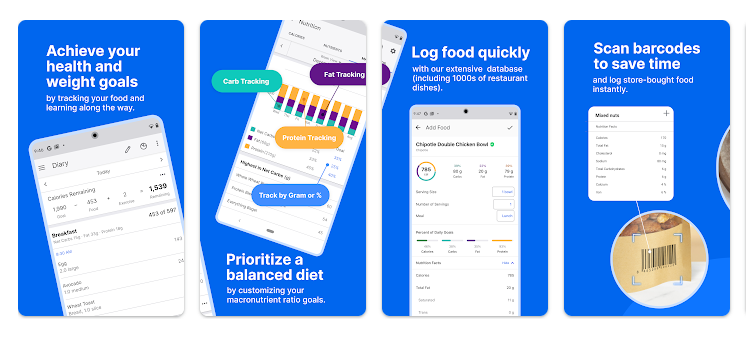
In addition, you can see a trend in building apps for restaurants and food delivery apps. Like Uber Eats and Guru, you can build food delivery apps to expand food businesses and satisfy foodie customers’ cravings. Also, knowing the nearby restaurant, booking or reservation seats, or even booking rooms while traveling or tickets can all be summarized in one mobile app solution. You just need to specify which service(s) you will target. Moreover, we use many apps in our routine, such as Spotify, Uber, Tinder, FastHabit, etc., the best examples of mobile apps targeting the lifestyle and healthcare industry.
Social Media Mobile App
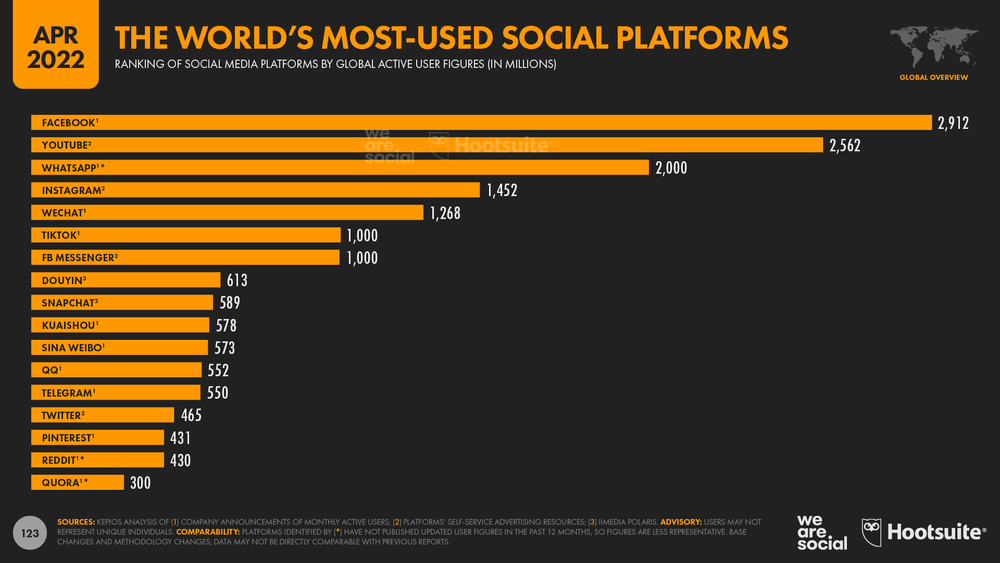
Social media apps are the most significant and pervasive type of apps, helping people connect, communicate, and entertain. Almost every social media marketing app is available on both platforms (i.e., Android and iOS), targeting a worldwide audience. Social media apps like Facebook, Instagram, X, Reddit, etc., have gained unprecedented popularity and earned trillions.
On the other hand, millions of other apps like Zoom (a video conferencing app), now one of the most popular apps after COVID, are used to connect teams. When the need for communication arises, Zoom helps employees, students, friends, and even relatives talk to each other by introducing free Zoom calls, including video, audio, and conference calls.
It is worth mentioning that Zoom made its place in COVID-19 to help many businesses run operations. Another platform, “Telegram,” suddenly appeared on the screen when the news spread of WhatsApp’s Security issues to make a substitute for users. Fortunately, WhatsApp recovered, and the security issues were resolved. Moreover, we have countless social media apps such as TikTok, Reddit, YouTube, WeChat, Quora, Pinterest, Sina Weibo, Kuaishou, etc.
Utility Mobile Apps
Utility apps are among the most in-demand types of mobile apps on every smartphone. They are categorized into different apps, such as scanners, filter-based cameras, calculators, calendars, themes, and wallpapers.
We often use these mobile applications more frequently but for a shorter time. Your calculator is usually only open to calculate an equation (such as figuring out the tip at a restaurant), and then it is put away.
To successfully monetize your utility app, try improving user experience and providing additional features tailored to user needs. Although brief visits are less profitable, many can build up to a sizable cash stream.
Gaming Mobile Apps
Game mobile apps are the most revenue-generating type of mobile app globally. In fact, games are consistently one of the most downloaded types of apps across all platforms. Children, youngsters, and even elders love to play games. There are dedicated companies for game app development, designing diverse types of apps in different genres, such as action-packed games, learning games, role-playing video games, puzzles, racing, etc.
The growing gaming industry is breaking ground and generating revenue in the Games market, projected to reach US$522.46bn in 2025. Investing in video game app development is a lucrative approach, as the video games industry alone is worth an estimated $107.6 billion.

For example, when everyone was confined to their homes and wanted entertainment during the COVID-19 pandemic, PUBG was the most-played game worldwide and made $270 million a month in revenue. By the end of 2020, PUBG Mobile, the game with the biggest revenue, collected close to $2.6 billion. According to Sensor Tower, in March 2020, China accounted for 61% of PUBG Mobile’s income, and the US market contributed 11%. Now, you can imagine the worth of gaming apps.
Productivity Mobile Apps
Organizations are keen to get robust solutions to improve time management, increase focus, and foster better collaboration, ultimately speeding up employee productivity and enhancing efficiency. These types of apps can evaluate performance, quicken the task, monitor projects, provide real-time data and analytics, etc.
Organizations can invest in building tailored productivity applications per their organization’s needs. For example, an employee attendance app where users can track their productive hours, leaves, early going, late arrivals, etc. However, app development companies also launch SaaS apps and market them as products so that organizations and individuals can access them for free or pay a subscription fee. Google Docs and Drive are the most common apps that we use in our daily lives.
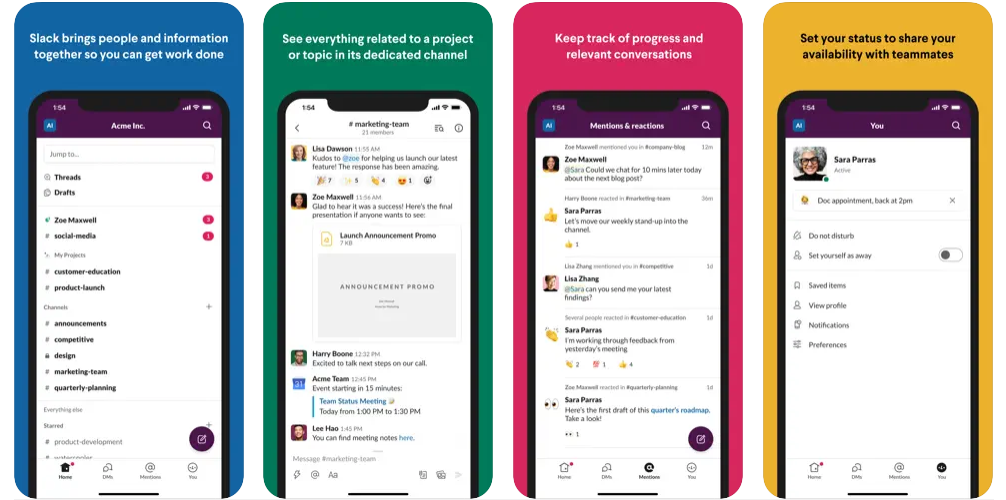
Another example of a popular AI-powered productivity app is “Slack,” which organizations use for team communication and collaboration. Features include text messaging, voice messaging, media sharing, seamless document exchange, and other user-friendly tools that simplify and enhance employees’ daily tasks.
Informative Mobile Apps
Informative mobile apps help users stay connected with their surroundings’ information. These apps include news apps, educational apps, free book apps, e-magazines, and much more. Users can download the app and engage with informative content by accessing thousands of resources.
Moreover, news apps transform printing media into digitalization, allowing users to stay up-to-date with current affairs worldwide. Some amazing real-life examples of informative mobile apps include Buzzfeed, Smart News, Google News & Weather, Feedly, Flipboard, Yahoo News Digest, and LinkedIn Pulse.
If you’re creating a news app, you’ll need to develop a special approach to interacting with your users since the market has become saturated with diverse, informative applications.
How To Make A Successful Result-Driven Mobile App For Your Business?
Building an app is not a one-day task. It takes months to build an app that actually works for your business growth, delights your end users, and generates high ROIs. To ensure your app provides lucrative benefits, you must follow a strategic approach to building result-driven mobile apps. From requirements elicitation to designing and development, high-performing apps require critical attention to every component, and professionals must build them. Here are some quick steps that you must consider in your mobile app development process.
Project Scope & Market Analysis: First, you must identify the project objective and scope to validate your app idea and market demands. It will help you discover your target audience, analyze competition, identify market trends, and reduce the risk of app failure.
Requirement Gathering: It is important to clarify what you think and what your end-users need within an app that attracts them every time they interact. In this step, discover app requirements, conduct feature analysis, select the tech stack, and draft the low-fidelity designs.
User Interface & Experience: Using advanced UI/UX design principles, techniques, and software, create user-friendly interfaces with wireframing and prototypes, delivering an exceptional and easy-to-navigate user experience.
Development & Testing: After approving the app design, dedicated developers can convert the design into a functional app by developing the front and back end with suitable technologies. During development, QA engineers also perform testing for app quality assurance.
Deployment & Support: Once the app is developed, let’s deploy your app over suitable platforms, i.e., iOS or Android, to go live for the public. Moreover, pre- and post-support helps you optimize your app over time, strengthen app security, and quickly act on bugs and errors.
Bottom Line
Now, you can think about all types of mobile apps and generate out-of-the-box solutions related to your business domains. If you want to invest in mobile apps, hire a professional development company with expertise in all types of app development. Whether you need a problem-solving app, an entertainment app, or anything in between, the expertise of your developers aligns with your goals.